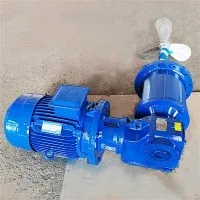
The operation of a propeller agitator is closely intertwined with various factors, among which the fluid's flow rate stands out as a critical element. As a reputable supplier of propeller agitators, we have witnessed firsthand how the flow rate of the fluid can significantly impact the performance and efficiency of these vital pieces of equipment.
Understanding Propeller Agitators
Before delving into the effects of fluid flow rate, it's essential to understand what propeller agitators are and how they function. Propeller agitators consist of a propeller mounted on a shaft that rotates, creating a flow pattern within the fluid. This flow disrupts the fluid's natural state, ensuring thorough mixing and preventing sedimentation. They are widely used in industries such as chemical, food and beverage, pharmaceutical, and wastewater treatment, where consistent agitation is required.

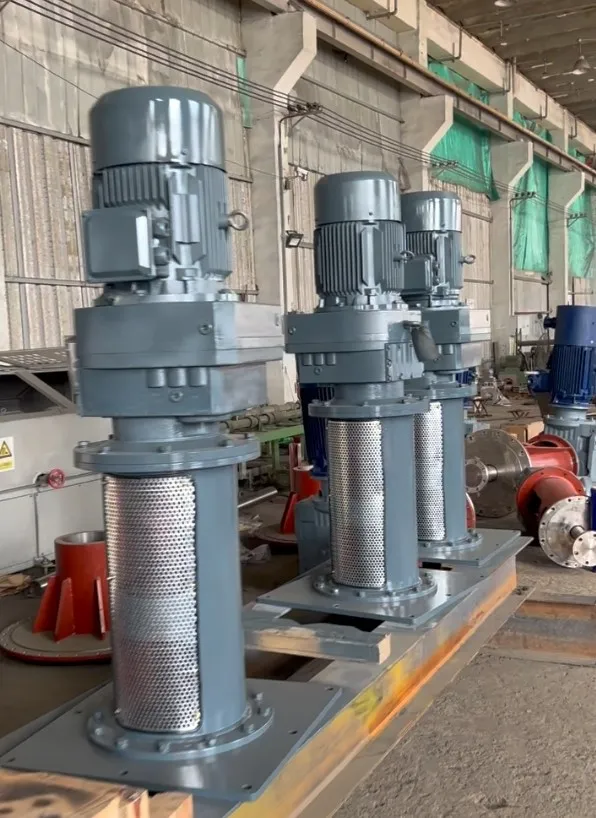
Effects of Fluid Flow Rate on Propeller Agitator Operation
Mixing Efficiency
The flow rate of the fluid directly influences the mixing efficiency of the propeller agitator. When the fluid flow rate is low, the propeller has more time to interact with each volume of fluid. This allows for better shearing and dispersion of particles, resulting in a more homogeneous mixture. For instance, in a chemical reactor where different substances need to be thoroughly mixed, a low flow rate can ensure that every molecule of the reactants comes into contact, promoting complete chemical reactions.
Conversely, a high fluid flow rate can reduce the mixing efficiency. The rapid movement of the fluid can cause the propeller to lose its ability to effectively engage with the fluid. The propeller may simply be carried along by the high - velocity flow, rather than actively creating the desired flow patterns for mixing. This can lead to uneven mixing, with pockets of unmixed fluid remaining in the tank.
Power Consumption
Another significant aspect affected by the fluid flow rate is the power consumption of the propeller agitator. At low flow rates, the agitator faces less resistance from the fluid. The propeller can rotate more freely, requiring less power to maintain its speed. This is beneficial from an energy - efficiency perspective. For example, in a small - scale food processing plant where cost - effective operation is crucial, running the agitator at a low fluid flow rate can result in substantial energy savings over time.
On the other hand, high fluid flow rates increase the drag force on the propeller. The agitator has to work harder to overcome this resistance, leading to a significant increase in power consumption. In large industrial applications, such as wastewater treatment plants, where agitators operate continuously, the additional power consumption due to high flow rates can translate into substantial financial costs.
Wear and Tear
The fluid flow rate also has an impact on the wear and tear of the propeller agitator. Low flow rates generally result in less stress on the propeller and shaft. The slow - moving fluid exerts less force on the components, reducing the likelihood of mechanical failures and extending the lifespan of the agitator. This means less frequent maintenance and replacement costs, which is a major advantage for businesses.
In contrast, high flow rates subject the propeller and shaft to greater mechanical stress. The constant impact of the high - velocity fluid can cause erosion of the propeller blades, leading to a decrease in their efficiency. Over time, this can also cause damage to the shaft bearings, resulting in more frequent breakdowns and higher maintenance costs.
Optimizing Propeller Agitator Operation Based on Fluid Flow Rate
As a propeller agitator supplier, we understand the importance of optimizing the operation of our equipment to meet the specific needs of our customers. Here are some strategies for adjusting the propeller agitator to different fluid flow rates:
Variable Speed Drives
One effective way to adapt to different fluid flow rates is by using variable speed drives. These devices allow the operator to adjust the rotational speed of the propeller according to the flow rate of the fluid. When the fluid flow rate is low, the agitator can be set to a lower speed, reducing power consumption and wear. When the flow rate increases, the speed can be increased to maintain mixing efficiency.
Propeller Design
The design of the propeller also plays a crucial role in adapting to different fluid flow rates. For low - flow applications, a propeller with a larger pitch and more blades can be used. This design allows the propeller to generate more thrust at lower speeds, ensuring effective mixing. For high - flow applications, a propeller with a smaller pitch and fewer blades may be more suitable, as it can better withstand the high - velocity flow.
Our Product Range
We offer a wide range of propeller agitators designed to meet the diverse needs of our customers. In addition to our standard propeller agitators, we also provide Submersible Mixer, which are ideal for applications where the agitator needs to be submerged in the fluid. Our High Speed Mixing And Stirring Flow Generator is perfect for high - intensity mixing tasks, while our Side Entry Tank Mixers are suitable for large - scale industrial tanks.
Contact Us for Procurement
If you are in the market for a propeller agitator or need advice on how to optimize your existing agitator based on fluid flow rate, we are here to help. Our team of experts has extensive knowledge and experience in the field of agitation technology. We can provide you with customized solutions that meet your specific requirements. Whether you are a small - scale business or a large industrial corporation, we have the right product for you. Contact us today to start a procurement discussion and take your mixing operations to the next level.
References
- Levenspiel, O. (1999). Chemical Reaction Engineering. Wiley.
- Perry, R. H., & Green, D. W. (1997). Perry's Chemical Engineers' Handbook. McGraw - Hill.
- Tatterson, G. B. (1991). Fluid Mixing and Gas Dispersion in Agitated Tanks. McGraw - Hill.