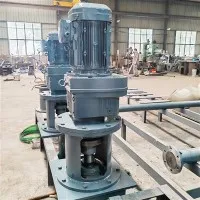
Alright, folks! As a supplier of Reactor Agitators, I've seen my fair share of scaling issues on these machines. Scaling can be a real pain in the neck, reducing the efficiency of the agitator, leading to increased energy consumption, and even causing damage to the equipment over time. So, today I'm gonna share some tips on how to prevent scaling on a reactor agitator.
Understanding Scaling
First off, let's talk about what scaling is. Scaling happens when minerals and other deposits build up on the surface of the agitator. This usually occurs in environments where the liquid being mixed contains high levels of dissolved solids, such as in some industrial processes or sewage treatment. When the conditions are right, these solids come out of the solution and stick to the agitator's surface, forming a hard layer.
1. Choose the Right Material
One of the fundamental ways to prevent scaling is by selecting the appropriate material for the reactor agitator. Different materials have different levels of resistance to scaling. For instance, stainless steel is a popular choice because it's relatively resistant to corrosion and scaling. It has a smooth surface that makes it harder for deposits to adhere to. However, not all stainless steels are created equal. Make sure to choose a grade that's suitable for the specific application and the type of fluid you'll be mixing.
If you're dealing with extremely corrosive or scaling - prone environments, you might even want to consider using specialized coatings. Some companies offer coatings that can significantly reduce the adhesion of deposits on the agitator. These coatings create a non - stick surface, allowing the deposits to be easily removed.
2. Control the Operating Conditions
The operating conditions of the reactor can have a huge impact on scaling. Temperature is a crucial factor. In many cases, scaling occurs more readily at certain temperatures. For example, in water treatment, calcium carbonate scaling is more likely to happen at higher temperatures. By controlling the temperature of the reactor, you can minimize the risk of scaling. You can use a temperature control system to keep the temperature within an optimal range where scaling is less likely to occur.
pH level is another important aspect. Some minerals and deposits are more likely to precipitate out of solution at certain pH values. For example, acidic solutions can sometimes dissolve certain types of scale, while alkaline solutions might promote the formation of others. So, it's essential to monitor and adjust the pH level of the fluid being mixed as needed.
Flow rate also plays a role. A higher flow rate can help prevent the accumulation of deposits on the agitator. When the fluid is moving quickly, it's less likely for the solids to settle and stick to the surface. You can adjust the speed of the agitator or the flow rate of the incoming fluid to maintain a proper flow within the reactor.
3. Implement Regular Cleaning and Maintenance
Regular cleaning is a no - brainer when it comes to preventing scaling. You should have a cleaning schedule in place for your reactor agitator. There are different methods of cleaning, and the choice depends on the type of scale and the material of the agitator.
For light scaling, a simple flush with clean water might do the trick. You can run clean water through the reactor for a certain period to wash away loose deposits. For more stubborn scale, you might need to use chemical cleaning agents. There are various descaling chemicals available in the market that are designed to dissolve different types of scale. However, be careful when using these chemicals, as some of them can be corrosive to the agitator material. Always follow the manufacturer's instructions and test the chemical on a small area first.
In addition to cleaning, regular maintenance is equally important. This includes inspecting the agitator for any signs of wear and tear, checking the seals to prevent leaks, and ensuring that all the components are working properly. A well - maintained agitator is less likely to develop scaling problems.
4. Use Filtration Systems
Installing a filtration system is an effective way to remove solids from the fluid before it enters the reactor. There are different types of filters available, such as mechanical filters, cartridge filters, and membrane filters. Mechanical filters can remove large particles, while cartridge and membrane filters can remove smaller particles and even some dissolved solids.
By removing the solids at the source, you reduce the amount of material that can potentially form scale on the agitator. This can significantly extend the time between cleanings and reduce the overall scaling problem.
5. Employ Anti - Scaling Additives
Anti - scaling additives can be a great solution in some cases. These additives work by inhibiting the formation of scale crystals or by keeping the solids in suspension so that they don't settle on the agitator surface. There are different types of anti - scaling additives available, such as polymers, phosphates, and acids.
The choice of additive depends on the type of fluid and the scaling problem you're facing. For example, in water treatment, polyphosphates can be used to prevent calcium carbonate scaling. However, it's important to use these additives in the right concentration. Too little, and they won't be effective; too much, and they can cause other problems.
The Role of Different Types of Agitators
It's also worth mentioning that different types of agitators can have different susceptibilities to scaling. For example, Industrial Agitators are widely used in various industrial processes. Their design and operating parameters can affect scaling. Some industrial agitators are designed with features that help prevent scaling, such as smooth surfaces and efficient flow patterns.
Side Entry Mixers are another type of agitator. They are commonly used in large - scale tanks. The way they are installed and operated can influence scaling. For instance, proper positioning and angle of the side - entry mixer can ensure a better flow distribution and reduce the chances of scale formation.
Sewage Treatment Mixers are specifically designed for sewage treatment applications. Since sewage contains a high amount of solids and organic matter, these mixers are particularly prone to scaling. However, with the right design and preventive measures, it's possible to minimize scaling issues.


Final Thoughts and Call to Action
Preventing scaling on a reactor agitator is not a one - time thing. It requires a combination of proper material selection, control of operating conditions, regular cleaning and maintenance, the use of filtration systems, and the right anti - scaling additives. By implementing these strategies, you can ensure that your reactor agitator operates at its best and has a longer lifespan.
If you're facing scaling problems with your reactor agitator or are in the market for a new one, don't hesitate to reach out. We're here to help you find the best solution for your specific needs. Whether it's choosing the right agitator type or implementing the most effective scaling prevention methods, we've got you covered.
References
- Smith, J. (2020). "Industrial Agitator Design and Operation." Industrial Publishing.
- Johnson, A. (2019). "Sewage Treatment Mixing Technologies." Environmental Science Press.
- Brown, C. (2021). "Preventing Scaling in Industrial Equipment." Chemical Engineering Journal.