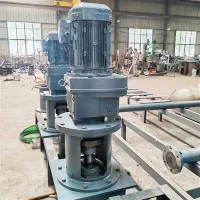
The maximum mixing capacity of side entry mixers is a crucial factor that industries need to understand when considering these mixing solutions. As a side entry mixers supplier, I've witnessed firsthand the diverse requirements and applications of these mixers, and in this blog, I'll delve into the details of their maximum mixing capacity.
Understanding Side Entry Mixers
Side entry mixers are designed to be installed on the side of a tank or vessel. They are commonly used in large - scale industrial applications, such as oil storage tanks, chemical processing plants, and wastewater treatment facilities. The main advantage of side entry mixers is their ability to create a large - scale, efficient mixing pattern within the tank with relatively less power consumption compared to top - entry mixers.
Factors Affecting the Maximum Mixing Capacity
Tank Size and Geometry
The size and shape of the tank play a significant role in determining the maximum mixing capacity of side entry mixers. Larger tanks generally require more powerful mixers to achieve uniform mixing. For example, in a cylindrical tank, the diameter and height ratio can influence the flow patterns created by the side entry mixer. A tall and narrow tank may require a different mixing strategy compared to a short and wide one. If the tank has internal baffles or other structures, these can also impact the mixing capacity as they can either enhance or disrupt the flow created by the mixer.
Viscosity of the Fluid
The viscosity of the fluid being mixed is another critical factor. High - viscosity fluids, such as heavy oils or some polymer solutions, require more energy to mix effectively. Side entry mixers need to be selected with appropriate impeller designs and power ratings to handle these viscous fluids. For instance, a mixer with a large - diameter impeller and a high - torque motor may be necessary to achieve the desired mixing in a high - viscosity environment. On the other hand, low - viscosity fluids like water or light solvents are easier to mix, and the mixer can operate at lower power settings.
Density of the Fluid
The density of the fluid also affects the mixing capacity. Dense fluids may require more force to move and mix compared to less dense ones. In some cases, the difference in density between different components in a mixture can cause stratification, and the side entry mixer needs to be able to overcome this tendency to ensure a homogeneous mixture. For example, in a tank containing a mixture of water and a heavy chemical, the mixer must be capable of creating enough turbulence to prevent the heavy chemical from settling at the bottom.
Impeller Design
The design of the impeller is a key determinant of the mixing capacity. There are various types of impellers available, such as propellers, turbines, and paddles. Each impeller design has its own characteristics in terms of the flow patterns it creates and the amount of shear it generates. Propeller - type impellers are typically used for low - viscosity fluids and can create a strong axial flow, which is useful for large - scale mixing in tanks. Turbine impellers, on the other hand, are better suited for high - viscosity fluids and can generate a combination of radial and axial flow. The number of blades, blade pitch, and impeller diameter all contribute to the overall performance of the mixer.
Calculating the Maximum Mixing Capacity
Calculating the maximum mixing capacity of side entry mixers is a complex process that involves considering all the factors mentioned above. Engineers often use computational fluid dynamics (CFD) simulations to model the flow patterns and mixing performance within the tank. These simulations take into account the tank geometry, fluid properties, and impeller design to predict the mixing efficiency and the maximum capacity of the mixer.
In addition to CFD simulations, empirical data from past projects and laboratory tests can also be used. By analyzing the performance of side entry mixers in similar applications, we can estimate the maximum mixing capacity for a new project. For example, if we have successfully mixed a certain volume of a particular fluid with a specific side entry mixer in a previous project, we can use that data as a reference for a similar project with some adjustments based on the differences in tank size, fluid properties, etc.


Applications and Their Mixing Capacity Requirements
Oil Storage Tanks
In the oil and gas industry, side entry mixers are widely used in oil storage tanks to prevent sedimentation and ensure uniform temperature distribution. The maximum mixing capacity required in these tanks depends on the size of the tank, which can range from small storage tanks with a capacity of a few thousand liters to large - scale tanks with capacities in the millions of liters. For large oil storage tanks, side entry mixers with high - power motors and large - diameter impellers are needed to create a strong enough flow to keep the oil well - mixed.
Chemical Processing Plants
Chemical processing plants often deal with a wide range of fluids with different viscosities and densities. In these applications, side entry mixers need to be able to handle both batch and continuous mixing processes. For example, in the production of polymers, the mixer may need to mix monomers and additives to form a homogeneous solution. The maximum mixing capacity in chemical processing plants is determined by the production rate and the properties of the chemicals being mixed.
Wastewater Treatment Facilities
In wastewater treatment, side entry mixers are used to mix chemicals with the wastewater to facilitate the treatment process. The mixing capacity requirements depend on the volume of wastewater being treated and the type of treatment chemicals used. For example, in a large - scale municipal wastewater treatment plant, side entry mixers need to be able to mix large volumes of wastewater with flocculants and disinfectants to achieve effective treatment.
Our Side Entry Mixers and Their Capabilities
As a side entry mixers supplier, we offer a wide range of products to meet different mixing capacity requirements. Our side entry mixers are designed with high - quality materials and advanced impeller designs to ensure efficient and reliable mixing.
For small - to medium - sized tanks, we have side entry mixers with relatively lower power ratings that are suitable for low - viscosity fluids. These mixers are cost - effective and easy to install and maintain. For large - scale industrial applications, our high - power side entry mixers are capable of handling high - viscosity fluids and large tank volumes.
We also provide customized solutions based on our customers' specific requirements. If you have a unique tank geometry or fluid properties, our engineering team can design a side entry mixer that is tailored to your needs.
Related Products
If you are interested in other types of mixers, we also offer Stainless Steel Sewage Mixer and Desulfurization Agitator. These products are designed for specific applications and can complement our side entry mixers in various industries. You can also explore our full range of Side Entry Tank Mixers to find the best solution for your mixing needs.
Conclusion
Understanding the maximum mixing capacity of side entry mixers is essential for industries to select the right mixing equipment for their applications. By considering factors such as tank size, fluid viscosity, density, and impeller design, we can accurately estimate the mixing capacity requirements. As a side entry mixers supplier, we are committed to providing high - quality products and customized solutions to meet our customers' needs. If you are in need of side entry mixers or have any questions about mixing capacity, please feel free to contact us for a detailed consultation and procurement discussion.
References
- Perry, R. H., & Green, D. W. (1997). Perry's Chemical Engineers' Handbook. McGraw - Hill.
- McCabe, W. L., Smith, J. C., & Harriott, P. (2005). Unit Operations of Chemical Engineering. McGraw - Hill.