


Speed Reducers
Why Choose Us
Customized Service
The company can customize the machine according to the production needs of different customers, processing speed, moving speed, processing size, etc. can be adjusted to meet the individual needs of different customers.
Professional Team
The company has a professional technical team and after-sales service team, which can provide customers with timely and professional technical support and solutions.
Integrity
The company adheres to the business philosophy of honesty and trustworthiness, focuses on product quality and service quality, and has won wide praise from customers.
Continuous Cooperation
The company has established long-term and stable cooperative relationships with customers in many parts of the country, and many customers have purchased the machines for many times due to their superior performance, which further proves the quality of the company's products and service level.
What is Speed Reducers
Speed reducers are fairly simple pieces of machinery. A speed reducer is simply a gear train between the motor and the machinery that is used to reduce the speed with which power is transmitted. Speed reducers, also called gear reducers, are mechanical gadgets by and large utilized for two purposes. Gear reducers essential use is to duplicate the measure of torque produced by an information power source to expand the measure of usable work.
-
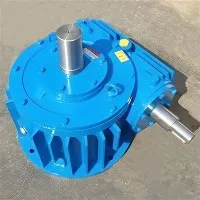
 Cylindrical Worm Gear ReducerThe cylindrical worm gear reducer is a precision speed reduction device that adopts cylindricalAdd to Inquiry
 -
 Annular Worm ReducerAnnular Worm Reducers, with their unique toroidal worm structure design, combine high precision,Add to Inquiry
 -
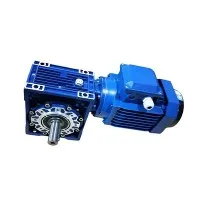
 NRV Gear ReducerNRV Gear Reducer (usually refers to RV worm gear reducer) is a reduction device that uses worm gearAdd to Inquiry
 -
 Toroidal Worm Gear ReducerThe Toroidal Worm Gear Reducer produced by our company is a high-efficiency reduction device thatAdd to Inquiry
 -
 XWD Series Cycloidal Gear ReducerXWD Series Cycloidal Gear Reducer is a high-efficiency reduction device based on the principle ofAdd to Inquiry
 -
 Concentration Tank ReducerThe JWZ scraper drive device adopts a single-stage worm gear reduction transmission, which can beAdd to Inquiry
 -
 Clarifier ReducerThe reducer of the scraper is a driving device that adopts a single-stage worm gear reductionAdd to Inquiry
 -
 Sewage Pool Special Scraper ReducerThe JWZ scraper drive device adopts a single-stage worm gear reduction transmission, which can beAdd to Inquiry
 -
 LAP Electric Push Rod, Linear ActuatorThe LAP electric push rod, a type of linear actuator, is a power device that can provide linearAdd to Inquiry
 -
 Chain-plate Sludge ScraperThe chain - plate sludge scraper is mainly composed of a driving device, chains, scrapers, tracks,Add to Inquiry
 -
 Peripheral-driven Sludge ScraperThe peripheral - driven sludge scraper is mainly composed of a driving device, scraper arms,Add to Inquiry
 -
 High-efficiency ThickenerAfter the ore feed of the thickener is mixed with the flocculant, it enters the thickener throughAdd to Inquiry

What Are the Benefits of Using a Speed Reducer?
Reduce costs
Generally the purchase cost of the motor is relatively much higher than that of the speed reducer. The motor torque is increased by the speed reducer, which means the output capacity of the motor is increased, too. The required output power is achieved by a smaller motor equipped with a speed reducer instead of purchasing a high power motor. The cost of the overall configuration can also be reduced greatly.
Protect the motor
The speed reducer is installed between the motor and the machinery, and will bear a large torque loading from the machinery during operation. The speed reducer will be damaged first when overload, to prevent the motor from high loading and damage directly. At the same time, the cost of repairing or replacing the speed reducer is relatively low, which can also reduce maintenance costs.
Save energy
The motor may run at a lower speed in order to meet the required torque when the motor is directly connected to the machinery or equipment. Lower rotation speed will result in current rise significantly and consume more energy. The motor will also generate heat at the same time. High temperature may affect the performance and service life of the motor, and is likely to cause the motor to burn out in case of poor ventilation. Therefore, the use of a speed reducer can help to reduce energy consumption and to avoid damage to the motor.
Types of Speed Reducers
Cyclo reducers
A cyclo reducer, also known as a cycloidal speed reducer, is a device that reduces the speed of an input shaft by a certain factor. Cycloidal speed reducers offer high ratios in a small package with extremely little backlash. Cyclo reducers work by using a round disc that rotates off center to decrease the input speed and bring it down to a more controllable level, which is beneficial or necessary for the components that receive the output. The reduction ratio, which compares the input and output speeds, is a common way to identify these systems. Cyclo reducers can achieve large reduction ratios with excellent accuracy while remaining compact; nevertheless, they are poor at producing ratios below 50:1, which other devices like shaft mounted speed reducers can't do in a single stage. Heavy-duty steel or other robust metals, such as aluminum or cast iron, are utilized to create and house them.
Worm gear reducers
A worm gear reducer is one type of speed reducer consists of a worm pinion input, an output worm wheel, and are set at a right angle output orientation. Worm gear reducers are a popular type of speed reducer because they offer low initial and maintenance cost, high ratios and high output torque in a compact design package. The worm cannot be driven backwards due to high friction between the worm pinion and the worm wheel. They are easily to be mounted or coupled to an electric motor, but the efficiency decreases as the ratio increases.
Planetary gearheads
Planetary gearboxes have properties of high precision, high output torque, high efficiency , low backlash and low noise. High transmission ratios can be easily achieved by planetary gearboxes. Besides, quality planetary gearboxes are maintenance-free for service life, and have no need to change lubricant. Because of the features and compact design, the gear manufacturing processes are more complicated, and the precision machining are required. Planetary gearheads are commonly installed with servo motors or stepping motors to increase output torque and to meet the needs of dynamic control and precise positioning.
Harmonic reducers
Harmonic reducers are gearboxes based on the strain-wave principle in which a flexible ring with external tooth driven by an oval wave generator and rotates in a rigid ring gear. They provide extreme high transmission accuracy, high ratios, low inertia and compact installation. The features make harmonic reducers a great solution for robotic and accurate positioning applications.
Magnetic speed reducers
By using magnetic attraction instead of physical contact between moving parts, magnetic speed reducers can effectively replace traditional gear reducers to assure speed and torque multiplication. The diffusion of this magnetic technology has been hampered by the complex assembly, high weight, and poor torque. Magnetic gears, on the other hand, do not require oil, lowering maintenance expenses. Without lubrication, mechanisms can work at severe temperatures (now tested from -200 to 350 degrees Celsius).
Hypoid speed reducers
A hypoid is a spiral bevel gear with an axis that does not meet the meshing gear's axis. A hypoid gear has a revolving hyperboloid shape (that is, the pitch surface of the hypoid gear is a hyperbolic surface), whereas a spiral bevel gear has a conical shape. Because the pinion is off-axis to the crown wheel (ring gear) with the hypoid gear, the pinion can be wider in diameter and have a larger contact surface.
In hypoid gear design, the pinion and gear are almost always of the same hand, and the pinion's spiral angle is usually greater than the gear's. The hypoid pinion has a greater diameter than a bevel pinion of equal size. A hypoid gear combines a straight-cut gear and a worm gear that involves some sliding. Hypoid gears require special gear oils due to the sliding action, which necessitates good lubrication under tremendous pressure between the teeth. Hypoid gearings are more efficient than standard worm gearing in power transmission products.
They are much more powerful since any load is distributed across numerous teeth at the same time. Bevel gears, on the other hand, are loaded one tooth at a time. Hypoid gearing's many contacts can also be practically silent if properly lubricated.
Considerations When Choosing a Speed Reducer
The considerations when choosing speed reducers include
Torque of the motor
A reducer boosts your motor's torque, allowing a receiving part to rotate under the influence of a new torque. Manufacturers of gear reducers list the minimum and maximum torque (in newton meters, N.m) that each of their products can handle. Depending on the gear reducer, the torque density changes. Planetary gearboxes, for example, have a high torque density.
Geometry of the shaft housing
The geometry of the housing, input, and output shafts is one of the most important factors to consider when choosing a gear reducer. The type of gear reducer required and how it will interface with the equipment, the motor, and the load will be determined by geometrical considerations.
Operating Hours of the speed reducer
Operational variables such as the needed number of operating hours and if the equipment will be exposed to harsh chemical, thermal, shock, or vibration conditions should also be addressed. For example, a gear reducer in an aggregate conveyor may be subjected to severe shock, vibration, and temperature stresses while operating for lengthy periods of time in a dirty environment.
Speed of motor
Another function of a gear reducer is to reduce motor speed, and we recommend that you consider the best reduction ratio for your application. The reduction ratio is utilized to calculate the output rotational speed based on the rotational speed of your motor. It's measured in RPM (revolutions per minute).
Selection of speed reducer
Because there are so many types of gear reducers created to satisfy the requirements of a wide variety of functions and parameters, an expert, engineer, or designer who is experienced in gear reducers is required at this stage of the selection process. The input and output shaft configurations are the first factors to consider when selecting a gear reducer.
Performance of the motor
Motors are subjected to shock or cyclic stresses in some applications. When selecting a gear reducer, it is critical to consider these factors in order for the gear reducer to cope with the higher torque.
Backlash in the gearbox
Backlash is the amount of mistake or play in the meshing of the gears in the gearbox that causes mechanical shock when the transmission is started or stopped. To minimize premature mechanical failure in applications where the motor is driven sporadically, it may be advantageous to use a gearbox with minimal backlash, such as a planetary gearbox.
Mounting and connection
If space and profile constraints exist in the gearbox mounting location, the gearbox's size, shape, and arrangement are critical in choosing which alternative is best. Different types of gears have different size efficiencies, with planetary gear trains being the smallest and spur gears requiring the greatest space. It may also be viable to use a gearbox that serves as the motor's mounting in smaller applications. On the other hand, larger applications usually necessitate mounting them individually on a chassis.
Machine tools
Metal cutting machines, machining centers, CNC drilling machines, lathes and turning machines, milling and boring machines, grinding machines, metal forming machine tools, presses, tube and wire processing machines, water jet.
Industrial machinery
Packaging machinery, food and beverage machinery, bakery equipment, agricultural machinery, textile machinery, shoemaking machinery, wood working machinery, printing machinery, plastic processing machinery, PET blowing molding machines, laser cutting and welding machines.
Automation
Conveyors, automated storage, industrial robotics, automated guided vehicles, automatic labeling machines, automatic filling systems, packing palletizers, capping machines.
Aerospace & energy sectors
Radio telescope actuator, solar panel tracking.
Medical & testing sectors
Electric wheel chairs, moving assist robots, face mask machines, MRI bed, physiotherapy products, auto sampling system
Electric vehicles & transportation
Scooters, electric motorbikes, e-bikes, electric mobility, speed gates, access control gates

Maintenance of Speed Reducers
1. Gear reducer overheating
Overheating indicates that the gear reducer is not getting enough lubricant. Overheating can be avoided by checking the surface temperature of the gear reducer on a regular basis. Overheating can be caused by a shortage of lubricant, causing friction between the gears. If the spacing between gears is too narrow or the gap is irregular, gear overheating might occur. Adjusting the gear gap that has been built can also resolve this problem. Maintaining a gear reducer properly ensures that it will continue to work for many years.
2. Lubrication of the gears
Every manufacturer of gear reducers supplies or recommends the proper lubricant for their devices. To improve performance, the lubricant must have the necessary characteristics. Filtering the lubricant to remove impurities may be necessary at first during the break-in process. The lubricant's quality and level should be checked regularly.
3. Reducer vibration or noise
Noise is the first sign of a problem with a gear reducer. Operating it without a load can be used to assess it. Essentially, noise and vibration indicate that the gear reducer has to be overhauled or replaced. Disassemble the gearbox and either remove the blur together with sharp corners or the problematic gears. Disassemble the clip and adjust the gasket to the space until no clapping occurs. Keep the housing clean by cleaning the bearings and housing. Examine the housing and gears to see if they fulfill the standards.
4. Contamination is reduced
The lubricant is the only thing that can be used in a gear reducer. Dust and water can cause substantial damage to gears if they enter through inadequate seals.
5. Storing gear reducers
All of the covers, vents, and drains on gear reducers are closed and sealed, and they are stored in a clean, dry, and climate-controlled environment. The lubrication cycle of the gear reducer must be maintained even when it is not in use. It should be rotated throughout the procedure to ensure even lubricant distribution.
Correcting mechanical noise levels
Before being released on the market, gear motors should be subjected to frequency measurement tests. It's critical to pay attention to mechanical vibrations and have your gear motor provider understand how to use vibration monitoring devices to avoid unpleasant frequencies.
Torque measurement
The appropriate measurement of the beginning torque, output torque, and rated torque ensures proper motion transmission and machine or application adaptability.
Electricity consumption
Another factor to consider while deciding between two models is the speed reducer's energy efficiency. The location of the gear train, the location and characteristics of rolling bearings, and the surface treatments of components all help to improve overall system performance. Rolling bearings are used and placed in a variety of ways.
The use of rolling bearings in geared systems reduces friction between the multiple moving parts, resulting in significant energy savings.
Self-lubricated plain bearings
Friction is reduced to a lesser amount by these parts than by rolling bearings. Despite this, they minimize axial motion-induced axial motion-induced axial motion-induced axial motion-induced axial motion-induced axial.
Use of vibration-dampening components
Several solutions can be applied to reduce vibrations, such as the use of rolling bearings, washers, and plain bearings. In the long term, using all of these items will increase the proper operation of the gear motor. Because of the lower vibration levels, it will be more precise, quieter, and last longer.
Dezhou Jinmai Machinery Equipment Co., Ltd. is one of the early manufacturers in the field of transmission equipment in North China, with the development and growth of China's chemical equipment, conveying equipment, mining equipment industry and long-term cooperation with major equipment manufacturing research units, relying on their own innovative product technology research and development, the company's business continues to grow and provide excellence for many large and medium-sized equipment manufacturing enterprises in China Quality transmission equipment and services.
The company has all kinds of advanced production equipment and inspection equipment 50 sets, a young design and manufacturing team for product quality escort, has a high reputation in the industry. "Xurui brand" reducer in the selection of materials, materials and processing technology is unequivocal. Since 2018, our company has been implementing the real-name responsibility system for the production of product parts, who produces, who is responsible, effectively improving product quality.


FAQ
We're well-known as one of the leading speed reducers manufacturers and suppliers in China. If you're going to buy customized speed reducers, welcome to get quotation from our factory. For price consultation, contact us.
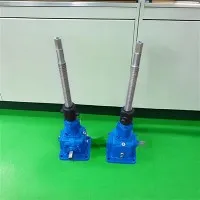
Bevel Gear Ball Screw Jack, bevel gear jack, hydraulic speed reducers