


Agitators
Why Choose Us
Customized Service
The company can customize the machine according to the production needs of different customers, processing speed, moving speed, processing size, etc. can be adjusted to meet the individual needs of different customers.
Professional Team
The company has a professional technical team and after-sales service team, which can provide customers with timely and professional technical support and solutions.
Integrity
The company adheres to the business philosophy of honesty and trustworthiness, focuses on product quality and service quality, and has won wide praise from customers.
Continuous Cooperation
The company has established long-term and stable cooperative relationships with customers in many parts of the country, and many customers have purchased the machines for many times due to their superior performance, which further proves the quality of the company's products and service level.
What is Agitators
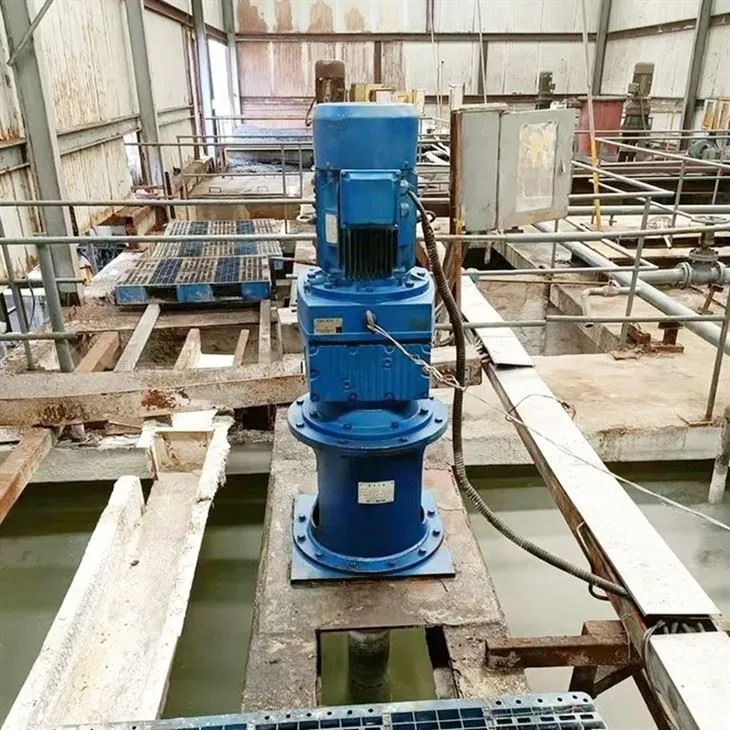
Agitators are equipment used to homogenize media inside a tank. They operate by rotating immersed impellers at a controlled speed, known as revolutions per minute (RPM). The impeller's action induces flow and shear within the tank, facilitating the homogenization of single or multi-component media. This ensures that the media flows uniformly and maintains a consistent pattern.
-
 Industrial Top Entry Agitator MixersIndustrial Top Entry Agitator Mixers adopt a top-mounted installation design that occupies no lateral tank space, enabling flexible workshop layout. They deliver full-range mixing coverage and evenlyAdd to Inquiry
 -
 Top Entry Agitator MixersThe top-mounted design represents the core advantage of Top Entry Agitator Mixers. It reserves sufficient surrounding tank space for staff passage and tank cleaning. The stirring system delivers fullAdd to Inquiry
 -
 Side-Entry MixerSide-Entry Mixers are generally installed on tank side walls. They take up little top space of the equipment, do not hinder tank opening, feeding and maintenance work, and allow for more flexibleAdd to Inquiry
 -
 Electric AgitatorBuilt with mature industrial manufacturing techniques, the Electric Agitator undergoes rigorous quality control throughout every procedure, from raw material screening to finished product delivery.Add to Inquiry
 -
 Industrial AgitatorsThe technological evolution of sludge agitators has always revolved around the three core elements of high efficiency, energy saving, and durability. From traditional mechanical agitation toAdd to Inquiry
 -
 Vertical Turbine AgitatorSewage treatment agitators are an indispensable key equipment in modern sewage treatment systems. Their function is to promote the full mixing of sewage, chemicals and microorganisms throughAdd to Inquiry
 -
 Four Blade Propeller AgitatorAs a professional manufacturer, the Four Blade Propeller Agitator we launched is an efficient tool in the field of fluid mixing. It innovatively adopts a four-piece spiral blade structure.Add to Inquiry
 -
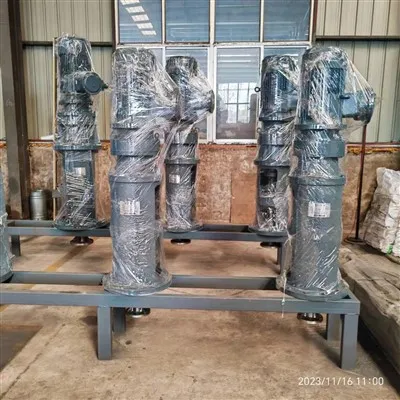 Sewage Treatment MixerAgitators are devices that force convection and uniform mixing of liquid and gaseous media. The type, size and speed of the agitator affect the distribution of stirring power between the overall flowAdd to Inquiry
 -
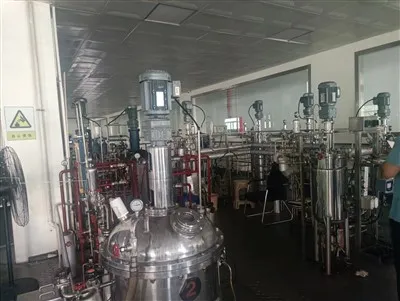 High Speed Mixing And Stirring Flow GeneratorIts working principle is: due to the use of magnetic coupling, the stirring shaft is isolated from the driving motor, and the inner strong magnetic steel is driven by the outer magnetic force, andAdd to Inquiry
 -
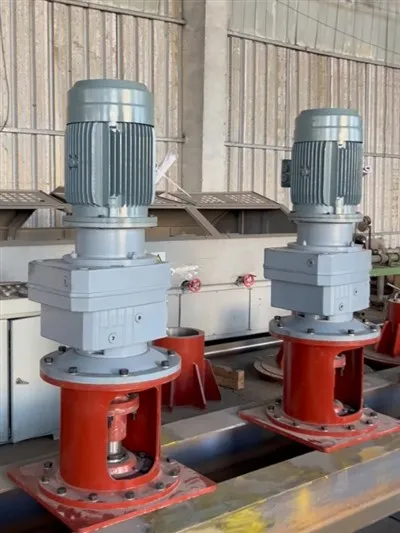 Submersible MixerIts working principle is: due to the use of magnetic coupling, the stirring shaft is isolated from the driving motor, and the inner strong magnetic steel is driven by the outer magnetic force, andAdd to Inquiry
 -
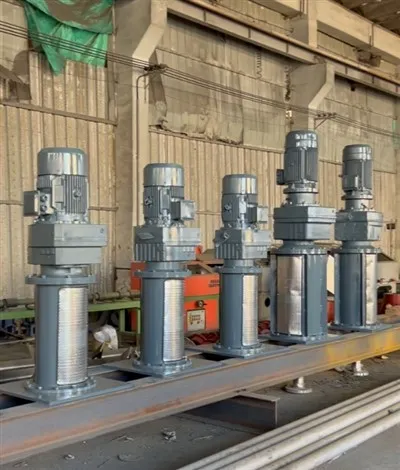 Stainless Steel Sewage MixerElectric agitator is a widely used axial flow agitator with various blades, suitable for mixing, dissolving, solid suspension, heat transfer, reaction, crystallization, etc. of low viscosity liquids.Add to Inquiry
 -
 Desulfurization AgitatorA device that forces convection and uniform mixing of liquid and gaseous media. The type, size and speed of the agitator affect the distribution of stirring power between the overall flow andAdd to Inquiry


Advantages of Agitator
High efficiency
Agitators can mix various substances well and quickly achieve the desired results. Compared with traditional manual mixing, the agitator has obvious advantages in terms of time, cost and effect.
High accuracy
The mixer can control the mixing speed and mixing time very accurately, and can be adjusted according to the specific needs, so as to get the optimal mixing effect.
Wide range of application
Stirrers can handle various types of substances, whether granules, powders or liquids, all can be easily handled. Therefore, they are widely used in many fields, such as pharmaceutical, chemical, food and so on.
What Are the Uses of Agitators?
The main function of using an agitator in any plant is:
• To mix the liquids properly.
• To promote chemical reactions within the equipment.
• To increase heat transfer during heating or cooling
• To maintain a uniform volume of liquid during storage.
• To disperse immiscible liquids.
• To maintain product in a mixed state until use.
• Mix miscible liquids.
• Dissolve some solids into liquids.
What Are the Different Types of Agitators Used?
1. Paddle agitators
Paddle agitators consist of two flat paddle-shaped impeller blades that extend into the tank wall. They are used if a lot of axial and radial flow is not required. These impellers produce laminar low shear flow and are used for mixing, crystallization, dissolution and heat transfer of low viscosity liquids. They usually operate at low speeds and produce mainly tangential flow patterns. Auxiliary blades can be fitted to the paddles to enhance mixing of more viscous materials.
2. Anchor agitator
Anchor mixers utilize anchor-shaped impellers, usually U-shaped, which match the contour of the tank. They produce mainly tangential flow patterns, but can be fitted with angled blades on horizontal supports to produce axial flow.
These agitators are used for mixing and heat transfer of high viscosity liquids. Their impellers produce laminar, low shear flow, making them ideal for mixing shear sensitive media. Anchor agitators are one of the most economical choices for laminar flow mixing and are suitable for tanks with round or conical bottoms. The impeller design allows for a small clearance to the tank wall.
3. Spiral belt agitators
Spiral belt agitators are characterized by spiral impeller blades mounted on a shaft by means of a rod. These impellers are an alternative to anchor impellers and are designed to produce an axial flow pattern. They provide a larger fluid contact area, making it possible to efficiently mix fluids with higher viscosities.
4. Double helical belt agitator
The double helical ribbon agitator features two helical blades passing through the shaft in opposite directions. This design improves the mixing of more viscous fluids. They are also used in heat transfer applications and are considered to be the best impellers for high viscosity laminar flow. The impeller can be designed to have less clearance from the tank wall.
5. Spiral impeller mixers
Spiral impellers are low clearance devices with spiral blades mounted directly on the impeller shaft. They provide excellent top-to-bottom turnover and are used for mixing highly viscous and shear-sensitive media.
6. Propeller agitators
Propeller agitators produce mainly axial flow patterns, but they can also produce tangential flow. As the impeller blades draw the fluid in, the fluid moves down the length of the tank and accelerates. The inclination of the impeller blades affects how the fluid is deflected. These blades taper towards the shaft to minimize centrifugal force and maximize axial flow.
7. Turbine agitators
Turbine agitators are in between propeller agitators and paddle agitators. Compared to propeller mixers, turbine mixers typically have a larger diameter and combine centrifugal and rotary motion. Turbine agitators are used in emulsification and dispersion processes that require high speeds of media flow. They provide a good balance between flow and shear and typically operate at high speeds. These agitators can handle materials of various viscosities while maintaining high mixing efficiencies.
8. Mixers with backward curved impellers
The backward curved impeller is designed with three curved blades with rounded edges and corners, which are suitable for coating with glass. This coating helps to prevent corrosion and contamination, which is vital for industries such as food, beverage and pharmaceuticals. These impellers produce mainly radial flow, while axial flow is affected by the ratio of impeller diameter to tank bottom clearance.
9. Agitators with hydrofoil impellers
Hydrofoil impellers have two to four narrow, tapered and curved blades, with the three-blade configuration being the most common in industrial applications. The blade angle gradually increases from tip to hub, creating an axial flow pattern. These impellers are designed to maximize fluid flow while generating low shear and consuming minimal energy, making them more efficient than inclined vane impellers. Hydrofoil impellers are also more economical than propellers for large diameter tanks.
10. Agitators with dispersing blade impellers
Dispersing vane impellers are characterized by a disc with sharp outer blades or teeth designed to break up lumps of solids and viscous liquids into fine particles. The serrated design is commonly used in a variety of industries. Over time, the outer blades become sharper due to wear and tear with the media. These impellers operate at high speeds to create high shear and turbulence. Typically, dispersing blade impellers are made of durable materials such as carbide and stainless steel.
11. Agitators with spiral impellers
Coil impellers utilize springs as impeller blades to produce a predominantly radial flow pattern. The springs have high mechanical stiffness to overcome the resistance created by the solids at the bottom of the suspension during mixing. In addition, the coil impeller helps prevent solids from settling on the bottom of the tank.
What Are the Typical Flow Patterns Associated with Agitator Impellers?



Axial flow impeller
Axial impellers allow the medium to flow parallel to the axis of rotation of the impeller. These impellers have blades that rotate at an angle of less than 90 degrees to the plane of rotation, which promotes a “top-to-bottom circulation” flow pattern in the tank. Fluid near the top is pushed downward by the impeller until it reaches the bottom, where it spreads to the bottom of the tank, then flows upward along the walls before being pulled back to the impeller. This movement effectively mixes the fluid throughout the tank, preventing solids and solutes from settling on the bottom.
Axial impellers are suitable for solids suspensions and low to medium viscosity fluids. They have low shear characteristics, making them ideal for shear-sensitive media such as non-Newtonian fluids or media subject to stress-induced viscosity changes. They are also used in heat transfer applications and are often installed in tanks with high liquid levels to generate large vertical currents.
Radial flow impellers
Radial flow impellers allow the medium to flow perpendicular to the axis of rotation of the impeller, creating a “left-right flow pattern” in the tank. The fluid ejected from the impeller moves towards the wall of the tank, then upward or downward, and finally returns to the center of the impeller. This continuous motion thoroughly mixes the contents of the tank. Unlike axial flow impellers, radial flow impellers do not have inclined blades that direct the fluid downward, so baffles are required to minimize vortex formation and swirl.
Radial flow impellers produce high shear and less total flow due to the radial flow fluid motion. They are very effective for mixing viscous fluids and for gas-liquid and liquid-liquid dispersion. These impellers are typically used for low level mixing applications in slender tanks.
Tangential flow impellers
Tangential flow impellers direct the flow of the medium along a circular path of the shaft, causing the fluid to rotate around the vessel with the impeller blades. This rotational motion results in minimal vertical flow as the fluid impacts the tank wall. Tangential flow impellers are characterized by low shear.
Close clearance impellers
Close clearance impellers belong to a class of impellers characterized by a high diameter ratio, usually about 80% of the tank diameter. These impellers maintain a small gap between the outer edge and the tank wall. This design allows them to gently scrape off sticky product that may accumulate on the tank wall, thus improving product uniformity and preventing fouling, which can reduce heat transfer efficiency. Close Gap Impellers are specifically designed for low-speed laminar flow mixing of high-viscosity liquids, typically with viscosities greater than 50,000 cP. They are commonly used in industries that process paints, inks, adhesives, greases, polymer solutions and other viscous products.
Agitator Maintenance and Troubleshooting Tips
Regular inspection and maintenance of your agitator will help keep your machine running at peak performance. To help you maintain optimal performance levels, check regularly for any signs of deterioration, such as rust or excessive wear. Performing frequent visual inspections, monitoring equipment vibration and temperature and ensuring adequate torque will help ensure a longer life for your agitator. In addition, completing regular maintenance (e.g. cleaning and lubricating parts) can reduce the risk of agitator failure.
The agitator is the spinning device inside the drum of a top-loading washing machine. Its purpose is to move the clothes through the soapy water and help them rub against each other during the wash to remove dirt and grime from the fabric fibers. Despite the growing popularity of front-loading washers, top-loading washers with agitators remain popular for their simple design.
The agitator is a spindle located in the center of a top loading washer. It is used to spin, agitate, rock and push the laundry around the drum during the washing process. These spindles take up a portion of the total volume of the machine, making it difficult for large items such as bedding and towels to move freely, thus reducing the overall efficiency of the machine. Agitator washers typically use more water than impeller washers and are therefore less energy efficient.
Dezhou Jinmai Machinery Equipment Co., Ltd. is one of the early manufacturers in the field of transmission equipment in North China, with the development and growth of China's chemical equipment, conveying equipment, mining equipment industry and long-term cooperation with major equipment manufacturing research units, relying on their own innovative product technology research and development, the company's business continues to grow and provide excellence for many large and medium-sized equipment manufacturing enterprises in China Quality transmission equipment and services.
The company has all kinds of advanced production equipment and inspection equipment 50 sets, a young design and manufacturing team for product quality escort, has a high reputation in the industry. "Xurui brand" reducer in the selection of materials, materials and processing technology is unequivocal. Since 2018, our company has been implementing the real-name responsibility system for the production of product parts, who produces, who is responsible, effectively improving product quality.


FAQ
We're well-known as one of the leading agitators manufacturers and suppliers in China. If you're going to buy customized agitators, welcome to get quotation from our factory. For price consultation, contact us.
solid waste treatment agitators, shipbuilding industry agitators, pollution control industry agitators