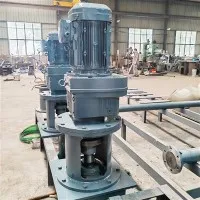
What is the back - driving ability of a worm gear reducer?


In the realm of mechanical power transmission, worm gear reducers play a pivotal role. As a trusted supplier of worm gear reducers, I am often confronted with inquiries regarding various aspects of these remarkable devices, especially the back - driving ability. This blog post aims to delve deep into this concept, providing a comprehensive understanding of the back - driving ability of a worm gear reducer.
Understanding Worm Gear Reducers
Before we explore the back - driving ability, let's first understand what a worm gear reducer is. A worm gear reducer consists of a worm (a screw - like gear) and a worm wheel (a toothed gear). When the worm rotates, it engages with the teeth of the worm wheel, causing the wheel to turn. This mechanism allows for a significant reduction in speed and an increase in torque, making it suitable for a wide range of applications such as conveyor systems, lifting equipment, and industrial machinery.
Defining Back - Driving Ability
The back - driving ability of a worm gear reducer refers to the capacity of the output shaft (worm wheel) to drive the input shaft (worm) when a force is applied to the output shaft. In an ideal scenario, the back - driving ability determines whether the output can reverse - drive the input under certain conditions.
Factors Affecting Back - Driving Ability
Friction
Friction is one of the most critical factors influencing the back - driving ability of a worm gear reducer. The high frictional forces between the worm and the worm wheel are a characteristic feature of these reducers. The friction coefficient is affected by multiple factors, including the materials of the worm and the worm wheel, the surface finish, and the lubrication.
For example, if the worm and the worm wheel are made of materials with a high coefficient of friction, such as bronze (a common material for worm wheels) and steel (usually for worms), the frictional resistance will be relatively high. This high frictional resistance can prevent the output shaft from easily driving the input shaft, reducing the back - driving ability. Adequate lubrication can reduce the friction to some extent, but if the friction is inherently high due to the material choice, the back - driving ability will still be limited.
Lead Angle
The lead angle of the worm is another key factor. The lead angle is the angle between the helix of the worm thread and a plane perpendicular to the worm axis. A smaller lead angle results in a self - locking worm gear reducer, which means it has a very low or negligible back - driving ability.
When the lead angle is small, the frictional forces acting between the worm and the worm wheel are sufficient to prevent the worm wheel from rotating the worm. This self - locking feature is highly desirable in many applications where it is necessary to prevent the load from driving the system in reverse. For instance, in a lifting mechanism, self - locking ensures that the load remains in place when the power is turned off, without the risk of the object being lowered unexpectedly.
Conversely, a larger lead angle increases the back - driving ability. As the lead angle increases, the frictional forces become less dominant, and the worm wheel can more easily drive the worm under an external load applied to the output shaft.
Applications and Back - Driving Ability
Applications Requiring Low Back - Driving Ability (Self - Locking)
In applications where safety and stability are of utmost importance, a worm gear reducer with low back - driving ability is preferred. One such example is in hoisting equipment. Imagine a crane used to lift heavy objects. If the worm gear reducer in the lifting mechanism does not have a self - locking feature, there is a risk that the weight of the load could cause the output shaft to drive the input shaft in reverse, leading to a dangerous uncontrolled descent of the load. The self - locking property of some worm gear reducers provides an additional layer of safety by preventing this reverse motion.
Another example is in valve control systems. In these systems, the worm gear reducer is used to open and close valves precisely. Once the valve is in the desired position, a self - locking worm gear reducer ensures that the valve remains in place, even if there are external forces acting on it, such as pressure differentials in the piping system.
Applications Requiring High Back - Driving Ability
On the other hand, there are applications where a certain level of back - driving ability is required. In some automated machinery, such as robotic arms, the ability to back - drive the worm gear reducer can be beneficial for position adjustment and fine - tuning. When the robotic arm needs to make small corrections to its position, the back - driving ability allows it to reverse the motion of the worm gear reducer without having to re - engage the drive motor from the input side. This can improve the responsiveness and precision of the robotic arm.
Our Product Range and Back - Driving Ability
As a supplier of worm gear reducers, we offer a diverse range of products to meet various application requirements. For applications that demand low back - driving ability, we recommend our Annular Worm Reducer. These reducers are designed with optimized lead angles and high - friction materials to ensure reliable self - locking, providing maximum safety and stability.
For applications where a higher level of back - driving ability is needed, our High Power Worm Gear Reducer is an excellent choice. These reducers are engineered with larger lead angles and advanced materials to reduce friction, allowing for smoother back - driving when necessary.
In addition, we also offer the LAP Electric Push Rod, Linear Actuator, which incorporates a worm gear reducer mechanism. This product can be customized to have different levels of back - driving ability depending on the specific application requirements.
Contact Us for Procurement
If you are in the market for a worm gear reducer and need to consider the back - driving ability for your specific application, we are here to help. Our team of experts can provide in - depth technical advice and guidance to ensure you select the right product. Whether you need a self - locking reducer for a safety - critical application or a reducer with high back - driving ability for a dynamic system, we have the solution. Contact us for procurement discussions, and let's work together to find the perfect worm gear reducer for your needs.
References
- Budynas, R. G., & Nisbett, J. K. (2011). Shigley's Mechanical Engineering Design. McGraw - Hill.
- Norton, R. L. (2012). Design of Machinery: An Introduction to the Synthesis and Analysis of Mechanisms and Machines. McGraw - Hill.
- Mabie, H. H., & Reinholtz, C. F. (1987). Mechanisms and Dynamics of Machinery. Wiley.