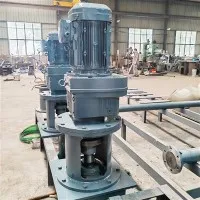
Hey there! As a gear reducer supplier, I often get asked about the noise difference between single - stage and multi - stage gear reducers. So, I thought I'd write this blog to break it down for you.
Let's start with the basics. A single - stage gear reducer is pretty straightforward. It has one set of gears to achieve the speed reduction. On the other hand, a multi - stage gear reducer uses multiple sets of gears in series to get a higher reduction ratio.
Now, let's talk about noise. Noise in gear reducers is mainly caused by gear meshing. When the teeth of the gears come into contact and move against each other, they create vibrations, which then turn into noise.
Noise in Single - Stage Gear Reducers
Single - stage gear reducers usually have less noise in some cases. The reason is simple. With just one set of gears, there are fewer contact points and less complexity. The gear meshing process is relatively uncomplicated. The vibrations generated are mainly from the interaction between the two gears in the set.
For instance, if you're using a single - stage spur gear reducer, the teeth engage and disengage in a linear fashion. As long as the gears are properly manufactured with high precision, the noise level can be kept relatively low. However, if there are issues like misalignment, poor tooth profile, or insufficient lubrication, the noise can increase significantly.
Noise in Multi - Stage Gear Reducers
Multi - stage gear reducers are a different story. Since they have multiple sets of gears, there are more contact points and more opportunities for vibrations to occur. Each stage of gear meshing adds to the overall noise level.
Let's say you have a two - stage gear reducer. The noise from the first stage of gear meshing can be transmitted to the second stage, and then the noise from the second stage combines with the first one. This cumulative effect can result in a higher overall noise level compared to a single - stage reducer.
However, it's not all bad news. Modern design and manufacturing techniques have made it possible to reduce the noise in multi - stage gear reducers. For example, using helical gears instead of spur gears can significantly reduce noise. Helical gears have a gradual tooth engagement, which results in smoother operation and less vibration.
Factors Affecting Noise in Both Types
There are several factors that can affect the noise level in both single - stage and multi - stage gear reducers.
Gear Quality
High - quality gears with precise tooth profiles and smooth surfaces generate less noise. When the gears are manufactured to tight tolerances, the meshing is more accurate, and there is less impact and vibration during operation.
Lubrication
Proper lubrication is essential for reducing noise. Lubricants act as a buffer between the gear teeth, reducing friction and wear. They also help to dampen vibrations. If the lubrication is insufficient or the wrong type of lubricant is used, the noise level can go up.
Alignment
Correct alignment of the gears is crucial. Misaligned gears can cause uneven loading on the teeth, leading to increased noise and premature wear. Even a small misalignment can have a significant impact on the noise level.
Load and Speed
The load and speed at which the gear reducer operates also play a role. Higher loads and speeds generally result in more noise. As the load increases, the forces between the gear teeth increase, causing more vibration. Similarly, at higher speeds, the frequency of gear meshing increases, which can lead to more noise.
Comparing Noise in Different Applications
In some applications, the noise difference between single - stage and multi - stage gear reducers can be more pronounced.


Industrial Applications
In industrial settings, where high torque and high reduction ratios are often required, multi - stage gear reducers are more commonly used. However, the noise can be a concern, especially in environments where workers are present. In these cases, steps need to be taken to reduce the noise, such as using noise - absorbing enclosures or choosing high - quality, low - noise gear reducers.
Automotive Applications
In automotive applications, both single - stage and multi - stage gear reducers are used. For example, in electric vehicles, single - stage gear reducers are sometimes used for simplicity and cost - effectiveness. However, in more complex drivetrains, multi - stage gear reducers may be required. The noise level in automotive applications is a critical factor as it can affect the overall driving experience.
Our Gear Reducer Offerings
As a gear reducer supplier, we offer a wide range of products, including NGW Planetary Gear Reducer, NRV Gear Reducer, and NMRV Gear Reducer. We understand the importance of noise reduction in different applications, and we've taken steps to ensure that our gear reducers operate as quietly as possible.
Our engineers use the latest design and manufacturing techniques to produce high - quality gears with precise tooth profiles. We also pay close attention to lubrication and alignment during the assembly process. Whether you need a single - stage or multi - stage gear reducer, we can provide you with a solution that meets your requirements.
Conclusion
In conclusion, the noise difference between single - stage and multi - stage gear reducers is significant. Single - stage gear reducers generally have lower noise levels due to their simplicity, while multi - stage gear reducers can be noisier because of the cumulative effect of multiple gear meshing stages. However, with the right design, manufacturing, and maintenance, the noise in both types of gear reducers can be effectively controlled.
If you're in the market for a gear reducer and want to learn more about our products or discuss your specific requirements, don't hesitate to get in touch. We're here to help you find the best solution for your application and ensure that you get a quiet and reliable gear reducer.
References
- "Gear Design and Application" by Dudley, Delbert W.
- "Mechanical Engineering Design" by Shigley, Joseph Edward