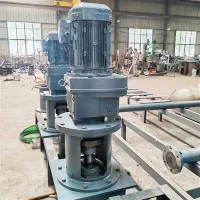
What is the difference between a single - stage and multi - stage propeller agitator?
As a supplier of propeller agitators, I've encountered numerous inquiries regarding the disparities between single - stage and multi - stage propeller agitators. Understanding these differences is crucial for customers to make informed decisions when selecting the most suitable agitator for their specific applications. In this blog, I'll delve into the key aspects that set these two types of agitators apart.
1. Structural Design
The most obvious difference lies in their structural design. A single - stage propeller agitator consists of a single propeller attached to a shaft. This simple design makes it relatively easy to manufacture and maintain. The propeller is usually designed with a specific number of blades, such as the Four Blade Propeller Agitator, which is a common configuration. The blades are shaped to generate a particular flow pattern when the propeller rotates.
On the other hand, a multi - stage propeller agitator features multiple propellers stacked along the same shaft. Each stage can have a different blade design, size, or pitch, depending on the intended application. This complex structure allows for more precise control of the agitation process but also requires more sophisticated manufacturing techniques and potentially more maintenance.


2. Flow Patterns
The flow patterns created by single - stage and multi - stage propeller agitators are distinct. A single - stage agitator typically generates a relatively simple flow pattern. It mainly produces an axial flow, which means the fluid moves parallel to the shaft of the agitator. This type of flow is suitable for applications where mixing in a straight - line direction is sufficient, such as in some simple liquid - liquid mixing processes or for promoting heat transfer in a tank.
In contrast, multi - stage propeller agitators can create more complex and customized flow patterns. By adjusting the design of each stage, it's possible to generate a combination of axial, radial, and tangential flows. Radial flow moves the fluid perpendicular to the shaft, while tangential flow causes the fluid to rotate around the shaft. This multi - directional flow can be beneficial for applications that require thorough mixing, such as in chemical reactors where different reactants need to be evenly distributed or in the blending of viscous materials.
3. Mixing Efficiency
Mixing efficiency is another important factor to consider. Single - stage propeller agitators are generally less efficient in terms of overall mixing compared to multi - stage agitators. Since they produce a simpler flow pattern, it may take longer to achieve a homogeneous mixture, especially in large - scale applications or when dealing with difficult - to - mix substances.
Multi - stage agitators, with their ability to create complex flow patterns, can achieve a more rapid and thorough mixing. The multiple stages work together to break up large pockets of unmixed material and distribute the components more evenly throughout the tank. This results in a shorter mixing time and a higher quality of the final mixture.
4. Power Consumption
Power consumption is a significant consideration for any industrial process. Single - stage propeller agitators usually consume less power than multi - stage agitators. Their simpler design and the production of a single - type flow pattern require less energy to operate. This makes them a more cost - effective option for applications where high - intensity mixing is not necessary.
Multi - stage agitators, due to their complex structure and the need to drive multiple propellers, typically consume more power. However, in applications where the benefits of better mixing efficiency outweigh the increased power cost, such as in high - value chemical production or in processes where product quality is critical, the higher power consumption may be justified.
5. Application Scope
The choice between a single - stage and multi - stage propeller agitator often depends on the specific application. Single - stage agitators are commonly used in applications such as water treatment plants for basic mixing of chemicals, in small - scale food and beverage production for simple blending tasks, and in some laboratory - scale experiments.
Multi - stage propeller agitators are more suitable for complex industrial processes. For example, in the petrochemical industry, they are used in large - scale reactors to ensure complete mixing of reactants and to enhance the reaction efficiency. They are also widely used in the pharmaceutical industry for the production of high - quality drugs, where precise mixing is essential. Additionally, in some large - scale fermentation processes, multi - stage agitators can help maintain a uniform environment for the growth of microorganisms.
6. Installation and Maintenance
Installation of single - stage propeller agitators is relatively straightforward. Their simple design means fewer components to install, and they can be easily mounted on tanks using standard mounting hardware. Maintenance is also relatively easy, usually involving routine checks of the propeller for wear and tear and lubrication of the shaft bearings.
Multi - stage propeller agitators, however, require more careful installation. The alignment of multiple propellers is crucial to ensure proper operation and to avoid excessive vibration. Maintenance is also more complex, as each stage may need to be inspected and serviced separately. This may require more specialized tools and expertise.
7. Cost
The cost of single - stage and multi - stage propeller agitators varies significantly. Single - stage agitators are generally less expensive due to their simpler design and lower manufacturing costs. They are a more budget - friendly option for small - scale operations or for applications where high - end agitation performance is not required.
Multi - stage agitators, with their complex structure and advanced functionality, are more costly. The additional cost includes not only the manufacturing of multiple propellers but also the development of more sophisticated control systems to optimize the operation of each stage. However, when considering the long - term benefits in terms of improved product quality and process efficiency, the higher initial investment in a multi - stage agitator may be worthwhile.
In conclusion, the choice between a single - stage and multi - stage propeller agitator depends on a variety of factors, including the specific application requirements, budget constraints, and the desired level of mixing performance. As a supplier of propeller agitators, we offer a wide range of products, including Side-entry Stirring Device and Top Entry Agitator, to meet the diverse needs of our customers.
If you're looking for the right propeller agitator for your project, we encourage you to contact us for a detailed consultation. Our team of experts can help you evaluate your requirements and recommend the most suitable solution. Whether you need a single - stage agitator for a simple mixing task or a multi - stage agitator for a complex industrial process, we're here to assist you. Let's work together to achieve the best results for your application.
References
- Perry, R. H., & Green, D. W. (Eds.). (2007). Perry's Chemical Engineers' Handbook. McGraw - Hill.
- Rushton, J. H., Costich, E. W., & Everett, H. J. (1950). Power characteristics of mixing impellers. Chemical Engineering Progress, 46(8), 467 - 476.