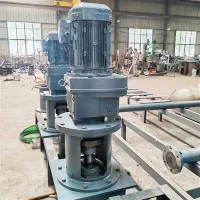
Differences between Agitators in Rural and Urban Areas
Agitators play a crucial role in various industries and applications, from chemical processing to wastewater treatment. As an agitator supplier, I've had the opportunity to observe and understand the distinct requirements and usage patterns of agitators in rural and urban areas. This blog post explores the key differences between these two settings, shedding light on how these disparities influence the selection and application of agitators.
Environmental and Infrastructure Factors
One of the most significant differences between rural and urban areas lies in the environmental and infrastructure conditions. Urban areas typically have well - developed infrastructure, including reliable power supply, advanced water treatment facilities, and modern industrial complexes. On the other hand, rural areas often face challenges such as inconsistent power supply, limited access to high - quality water, and less - developed transportation networks.
Power Supply
In urban areas, agitators can be designed to operate on a stable and consistent power source. Most industrial and commercial facilities in cities have access to grid electricity, which allows for the use of high - powered agitators without much concern about power outages. For example, large - scale chemical plants in urban industrial zones can use powerful High Speed Mixing And Stirring Flow Generator that require a continuous and substantial amount of electricity to maintain high - speed mixing processes.
In contrast, rural areas often experience power fluctuations and outages. This makes it necessary to design agitators that can operate on alternative power sources or are more energy - efficient. Solar - powered agitators or those powered by small - scale generators can be a practical solution in rural settings. These agitators are designed to provide the necessary mixing function with limited power input, ensuring consistent operation even in the face of power shortages.
Water Quality and Availability
Urban areas generally have access to treated water with relatively stable quality. This means that agitators used in urban water treatment plants or in industrial processes that require water can be optimized for consistent water parameters. For example, in a city - based wastewater treatment plant, a Dissolving Kettle Agitator can be fine - tuned to work effectively with the specific chemical and biological characteristics of the treated sewage.
In rural areas, water quality can be highly variable, and access to water may be limited. Agitators used in rural water treatment or agricultural applications need to be more adaptable. They may need to handle water with high levels of sediment, organic matter, or other contaminants. Additionally, in regions where water is scarce, agitators may be designed to operate with minimal water consumption, such as in some small - scale agricultural mixing operations.
Industrial and Application Diversity
The types of industries and applications in rural and urban areas also differ significantly, which in turn affects the demand for agitators.
Urban Industrial Complexity
Urban areas are home to a wide range of industries, including chemical, pharmaceutical, food and beverage, and manufacturing. These industries often require highly specialized and sophisticated agitators. For example, the pharmaceutical industry demands agitators that can provide precise mixing and agitation to ensure the quality and consistency of drugs. High - precision Dosing Mixer JB High - speed Submerged Mixer Side - entry Mixer Supply Starch Milk Environmentally Friendly Mixer are used to blend different chemical components with extreme accuracy.
Urban wastewater treatment facilities also require large - scale and technologically advanced agitators to handle the high volume of sewage generated by the large population. These agitators need to be designed for continuous operation, high efficiency, and low maintenance to ensure the smooth running of the treatment process.
Rural Agricultural and Small - scale Industries
In rural areas, agriculture is often the dominant industry. Agitators in rural areas are commonly used in agricultural applications such as fertilizer mixing, animal feed production, and pesticide preparation. These agitators are usually of a simpler design and lower cost compared to those used in urban industries. They need to be durable and easy to operate, as farmers and rural workers may not have extensive technical knowledge.
Small - scale rural industries, such as local food processing units or handicraft workshops, also have specific agitator requirements. These industries may need small - capacity agitators that can be easily integrated into their existing production lines. The emphasis is on affordability, ease of use, and adaptability to the rural production environment.
Cost and Affordability
Cost is a major factor influencing the choice of agitators in both rural and urban areas, but the considerations are different.
Urban Cost - Performance Balance
In urban areas, while cost is important, there is often a greater emphasis on performance, quality, and technological features. Urban industries are more likely to invest in high - end agitators that can improve production efficiency, product quality, and meet strict regulatory requirements. They are willing to pay a higher price for agitators that offer advanced control systems, better mixing performance, and longer service life.
For example, a high - tech chemical company in an urban area may choose a state - of - the - art agitator with advanced automation and monitoring capabilities. Although the initial cost is high, the long - term benefits in terms of increased productivity and reduced waste make it a worthwhile investment.
Rural Cost - Sensitivity
In rural areas, cost is a critical factor. Farmers and small - scale rural businesses often have limited budgets and are more price - sensitive. They need agitators that are affordable and can still meet their basic mixing requirements. Simple and robust agitators with low purchase and operating costs are preferred. For example, a small - scale farmer may opt for a basic manual or low - power electric agitator for mixing fertilizers. These agitators may not have all the advanced features of urban - grade agitators, but they are sufficient for the rural application and are within the farmer's budget.
Maintenance and Technical Support
The availability of maintenance and technical support is another difference between rural and urban areas.
Urban Professional Support
In urban areas, there is usually a well - established network of maintenance service providers and technical experts. Industries can easily access professional support for agitator installation, maintenance, and repair. This allows urban businesses to use more complex agitators with the confidence that they can get timely assistance if any problems arise.
For example, if an industrial agitator in a city malfunctions, the company can quickly call in a team of technicians to diagnose and fix the issue. The proximity of maintenance facilities and the availability of spare parts also contribute to minimizing downtime.


Rural Limited Support
In rural areas, the availability of maintenance and technical support is often limited. There may be a lack of local experts or service providers, and accessing spare parts can be difficult and time - consuming. This means that agitators used in rural areas need to be more reliable and require less frequent maintenance. They should also be designed in a way that makes them easy to repair by local technicians or even the end - users themselves. Simple designs with fewer moving parts and easy - to - access components are more suitable for rural applications.
Conclusion
In conclusion, there are significant differences between the use and requirements of agitators in rural and urban areas. These differences stem from environmental and infrastructure factors, industrial and application diversity, cost and affordability considerations, and the availability of maintenance and technical support.
As an agitator supplier, it is essential to understand these differences to provide the most suitable products for both rural and urban customers. Whether it's a simple, cost - effective agitator for a rural farmer or a high - tech, high - performance agitator for an urban industrial complex, we are committed to meeting the unique needs of each market.
If you are interested in purchasing agitators for your rural or urban application, we invite you to contact us for a detailed discussion. Our team of experts can help you select the most appropriate agitator based on your specific requirements and budget.
References
- Smith, J. (2018). Advances in Agitator Technology. Industrial Equipment Journal.
- Brown, A. (2019). Rural vs Urban Industrial Development: A Comparative Analysis. Journal of Regional Economics.