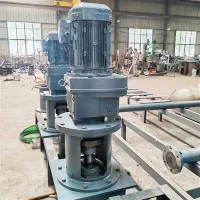
Selecting the appropriate motor for a reactor agitator is a critical decision that can significantly impact the efficiency, performance, and longevity of the entire system. As a reactor agitator supplier, I understand the importance of this choice and have witnessed firsthand the consequences of making the wrong selection. In this blog post, I will share some insights and guidelines on how to choose the right motor for your reactor agitator.
Understanding the Basics of Reactor Agitators
Before delving into motor selection, it's essential to have a basic understanding of reactor agitators. A reactor agitator is a device used to mix, blend, or stir substances within a reactor vessel. These substances can range from liquids and gases to solids in various forms. The primary purpose of an agitator is to ensure uniform distribution of reactants, enhance heat transfer, and promote chemical reactions.
Reactor agitators come in different types, including Propeller Agitator, paddle agitators, turbine agitators, and anchor agitators. Each type has its own unique design and operating characteristics, which influence the motor requirements.
Factors to Consider When Selecting a Motor
Several factors need to be considered when selecting a motor for a reactor agitator. These factors include:
1. Power Requirements
The power requirement of the motor is one of the most crucial factors. It depends on the size of the reactor vessel, the viscosity of the substances being mixed, the agitator type, and the desired mixing speed. Higher viscosity substances and larger vessels typically require more power to achieve effective mixing.
To calculate the power requirement, you can use the following formula:
[P = N_P \times \rho \times n^3 \times D^5]
Where:
- (P) is the power requirement (in watts)
- (N_P) is the power number, which depends on the agitator type and geometry
- (\rho) is the density of the fluid (in kg/m³)
- (n) is the rotational speed of the agitator (in revolutions per second)
- (D) is the diameter of the agitator (in meters)
It's important to note that this formula provides an estimate, and in practice, additional factors such as friction losses and mechanical inefficiencies need to be considered.
2. Torque Requirements
Torque is the rotational force required to start and maintain the rotation of the agitator. It is closely related to the power requirement and the speed of the motor. High-torque motors are necessary for applications where the agitator needs to overcome high resistance, such as when mixing viscous fluids or starting the agitator from a standstill.
The torque requirement can be calculated using the formula:
[T = \frac{P}{2\pi n}]
Where:
- (T) is the torque (in Newton-meters)
- (P) is the power requirement (in watts)
- (n) is the rotational speed of the motor (in revolutions per second)
3. Speed Requirements
The speed of the motor determines the mixing intensity and the efficiency of the agitation process. Different applications require different mixing speeds. For example, some chemical reactions may require slow and gentle mixing, while others may need high-speed agitation to achieve optimal results.
Most motors offer a range of speeds, and it's important to choose a motor that can provide the required speed for your specific application. Variable speed motors are often preferred as they allow for greater flexibility in adjusting the mixing speed according to the process requirements.
4. Environmental Conditions
The environmental conditions in which the reactor agitator operates can also affect the motor selection. Factors such as temperature, humidity, dust, and corrosive substances need to be considered. For example, in high-temperature environments, motors with good heat dissipation capabilities are required. In corrosive environments, motors with corrosion-resistant coatings or materials should be chosen.
5. Motor Type
There are several types of motors available for reactor agitators, including AC induction motors, DC motors, and servo motors. Each type has its own advantages and disadvantages.
- AC Induction Motors: These are the most commonly used motors in industrial applications. They are reliable, cost-effective, and have a simple design. AC induction motors are suitable for most reactor agitator applications, especially those with constant speed requirements.
- DC Motors: DC motors offer precise speed control and high torque at low speeds. They are often used in applications where variable speed control is required, such as in laboratory reactors or small-scale production.
- Servo Motors: Servo motors provide extremely precise speed and position control. They are commonly used in high-precision applications, such as in the pharmaceutical and food industries.
Step-by-Step Motor Selection Process
Based on the above factors, the following step-by-step process can be used to select the appropriate motor for a reactor agitator:
Step 1: Determine the Power and Torque Requirements
Calculate the power and torque requirements based on the size of the reactor vessel, the viscosity of the substances, the agitator type, and the desired mixing speed. Use the formulas mentioned earlier or consult with a technical expert if necessary.
Step 2: Consider the Speed Requirements
Determine the required mixing speed for your application. If variable speed control is needed, choose a motor that can provide the desired speed range.
Step 3: Evaluate the Environmental Conditions
Assess the environmental conditions in which the reactor agitator will operate. Select a motor that is suitable for the temperature, humidity, dust, and corrosive substances present in the environment.
Step 4: Choose the Motor Type
Based on the power, torque, speed, and environmental requirements, choose the most appropriate motor type. Consider factors such as cost, reliability, and ease of maintenance.
Step 5: Select the Motor Size and Model
Once you have determined the motor type, select the specific size and model that meets your requirements. Consider factors such as the motor's power rating, torque rating, speed range, and efficiency.
Importance of Working with a Reputable Supplier
Selecting the appropriate motor for a reactor agitator is a complex process that requires technical expertise and experience. Working with a reputable reactor agitator supplier can make a significant difference. A reliable supplier can provide valuable advice, help you calculate the power and torque requirements accurately, and recommend the most suitable motor for your application.
At our company, we have a team of experienced engineers who are well-versed in reactor agitator technology. We offer a wide range of Stainless Steel Mixing Tank and agitators, along with high-quality motors from leading manufacturers. We understand the unique requirements of different industries and can provide customized solutions to meet your specific needs.
Conclusion
Selecting the appropriate motor for a reactor agitator is a critical decision that requires careful consideration of various factors. By understanding the power, torque, speed, environmental requirements, and motor types, you can make an informed choice that ensures the efficient and reliable operation of your reactor agitator.
If you are in the process of selecting a motor for your reactor agitator or have any questions about our products and services, please do not hesitate to contact us. We are here to assist you in making the right decision and providing you with the best solutions for your mixing needs.

References
- Perry, R. H., & Green, D. W. (Eds.). (2008). Perry's Chemical Engineers' Handbook. McGraw-Hill.
- Oldshue, J. Y. (1983). Fluid Mixing Technology. McGraw-Hill.