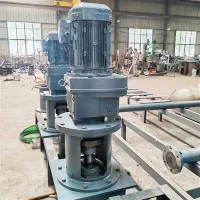
As a supplier of bevel gear jacks, I understand the critical importance of load - bearing capacity in various industrial applications. Bevel gear jacks are widely used in scenarios where precise lifting, lowering, or positioning of heavy loads is required. In this blog, I will share some effective ways to increase the load - bearing capacity of a bevel gear jack.
1. Material Selection and Enhancement
The choice of materials for the bevel gear jack components has a direct impact on its load - bearing capacity. High - strength alloy steels are often a top choice for manufacturing bevel gears and screws. These steels offer excellent mechanical properties such as high tensile strength, hardness, and toughness.
For example, alloy steels like 4140 or 4340 can be heat - treated to achieve the desired hardness and strength. Heat treatment processes such as quenching and tempering can significantly improve the material's ability to withstand heavy loads without deformation. By using these high - quality materials, the bevel gear jack can handle much larger loads compared to those made from ordinary carbon steels.
Another approach is to use surface treatment techniques. Nitriding is a popular surface treatment method for bevel gear jack components. It forms a hard nitride layer on the surface of the gear and screw, which enhances wear resistance and fatigue strength. This not only increases the load - bearing capacity but also extends the service life of the bevel gear jack.
2. Gear Design Optimization
The design of the bevel gears plays a crucial role in determining the load - bearing capacity of the jack. One important aspect is the gear ratio. A well - designed gear ratio can distribute the load evenly across the gears, reducing the stress on individual teeth. For heavy - load applications, a lower gear ratio is often preferred as it allows the motor or input source to apply more torque to the system, enabling the jack to lift heavier loads.
The tooth profile of the bevel gears also matters. Involute tooth profiles are commonly used in bevel gear jacks because they provide smooth and efficient power transmission. However, for high - load applications, modified tooth profiles can be designed to increase the contact area between the teeth. This reduces the contact stress and improves the load - carrying capacity of the gears.
In addition, the number of teeth on the gears can be optimized. More teeth on the gears can increase the contact ratio, which means that more teeth are in contact at the same time during operation. This distributes the load over a larger area and reduces the stress on each tooth, thereby increasing the overall load - bearing capacity of the bevel gear jack.
3. Screw Design and Improvement
The screw is another key component of the bevel gear jack that affects its load - bearing capacity. There are two main types of screws used in bevel gear jacks: machine screws and ball screws.
Machine screws are relatively simple and cost - effective. To increase their load - bearing capacity, the pitch of the screw can be adjusted. A smaller pitch screw can provide higher mechanical advantage, which means that less force is required to lift a given load. However, a smaller pitch also reduces the lifting speed. Therefore, a balance needs to be struck between load - bearing capacity and lifting speed according to the specific application requirements.
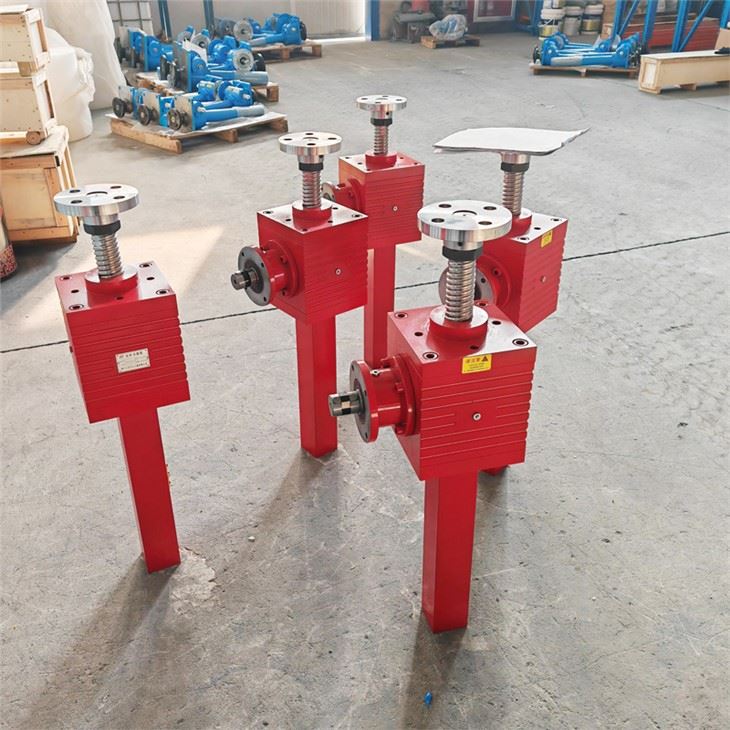
Ball screws, on the other hand, offer higher efficiency and load - carrying capacity compared to machine screws. They use ball bearings to reduce friction between the screw and the nut, allowing for smoother operation and the ability to handle larger loads. If you are looking for a high - performance bevel gear jack with a large load - bearing capacity, a Bevel Gear Ball Screw Jack might be a great choice.
4. Lubrication and Maintenance
Proper lubrication is essential for increasing the load - bearing capacity of a bevel gear jack. Lubricants reduce friction between the moving parts, such as the gears and the screw, which in turn reduces wear and heat generation. This allows the components to operate more smoothly and efficiently, enabling the jack to handle heavier loads.
For bevel gear jacks, high - quality lubricants with good anti - wear and extreme - pressure properties should be used. The lubricant should be applied regularly according to the manufacturer's recommendations. In addition, the lubrication system should be designed to ensure that all critical components are properly lubricated.
Regular maintenance is also crucial. Inspecting the bevel gear jack for wear, damage, or misalignment on a regular basis can help detect potential problems early. Worn - out components should be replaced promptly to prevent further damage and ensure the jack's optimal performance. By keeping the bevel gear jack in good condition, its load - bearing capacity can be maintained at a high level.
5. Structural Reinforcement
The overall structure of the bevel gear jack can be reinforced to increase its load - bearing capacity. This can involve adding additional support structures or using thicker and stronger housing materials. A robust housing can provide better protection for the internal components and prevent deformation under heavy loads.
For example, the base of the bevel gear jack can be made wider and thicker to provide a more stable foundation. Reinforcing ribs can be added to the housing to increase its stiffness and strength. These structural improvements can enhance the overall load - bearing capacity of the bevel gear jack and make it more suitable for heavy - duty applications.
6. Motor and Drive System Upgrade
The motor and drive system of the bevel gear jack are responsible for providing the power to lift the load. Upgrading to a more powerful motor can significantly increase the load - bearing capacity of the jack. A motor with higher torque output can apply more force to the gears and screw, enabling the jack to lift heavier loads.
In addition, the drive system should be designed to match the motor and the bevel gear jack. A well - designed drive system can ensure efficient power transmission and smooth operation. For example, using a high - quality gearbox can further increase the torque and improve the load - handling ability of the bevel gear jack.

Conclusion
Increasing the load - bearing capacity of a bevel gear jack requires a comprehensive approach that involves material selection, gear and screw design, lubrication, maintenance, structural reinforcement, and motor and drive system upgrade. By implementing these strategies, you can enhance the performance of your bevel gear jack and make it more suitable for heavy - load applications.
If you are interested in our Bevel Gear Machine Rotating Screw Jack or Bevel Gear Screw Jack, or have any questions about increasing the load - bearing capacity of bevel gear jacks, please feel free to contact us for further discussion and procurement negotiation.
References
- "Gear Design Handbook" by Dudley, Darle W.
- "Mechanical Design of Machine Elements and Machines: A Failure - Prevention Perspective" by Robert C. Juvinall and Kurt M. Marshek.
- "Screw Jack Design and Application Manual" by various industry experts.