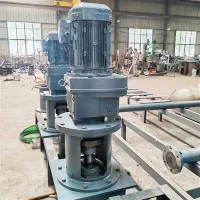
A reactor agitator is a key component in various chemical, pharmaceutical, and food processing industries. Its primary function is to enhance the mixing of reactants within a reactor, which has a profound impact on the distribution of reactants and, consequently, the overall reaction process. As a leading supplier of reactor agitators, we have in - depth knowledge of how these agitators influence reactant distribution.
1. Basic Principles of Reactant Distribution without Agitation
In the absence of agitation, reactants in a reactor tend to distribute based on natural phenomena such as diffusion and sedimentation. Diffusion is a slow process where molecules move from an area of high concentration to an area of low concentration. For example, if two liquid reactants are initially placed in a reactor, they will gradually mix through diffusion. However, this process can be extremely time - consuming, especially in large - scale reactors.
Sedimentation can also occur when one of the reactants is denser than the others. Heavier particles or substances will sink to the bottom of the reactor, creating a non - uniform distribution of reactants. This non - uniform distribution can lead to inconsistent reaction rates in different parts of the reactor. Some areas may have an excess of one reactant, while other areas may be starved of it, resulting in incomplete reactions and lower product yields.
2. How Reactor Agitators Improve Reactant Distribution
2.1. Convective Mixing
Reactor agitators create convective currents within the reactor. The movement of the agitator blades or impellers forces the fluid to flow in a particular pattern. For instance, a radial - flow impeller can push the fluid outward from the center of the reactor towards the walls, and then the fluid circulates back towards the center at the top and bottom of the reactor. This convective flow helps to break up concentration gradients and distribute the reactants more evenly throughout the reactor volume.
The High Speed Mixing And Stirring Flow Generator is an excellent example of an agitator that can generate strong convective currents. Its high - speed rotation creates a powerful flow field that rapidly mixes the reactants, reducing the time required for uniform distribution.
2.2. Turbulence Generation
Turbulence is another important factor in improving reactant distribution. Agitators can induce turbulence in the fluid, which causes the reactant molecules to collide more frequently. Turbulence breaks down large fluid eddies into smaller ones, increasing the surface area of contact between different reactants.
In a turbulent flow, the reactant molecules are constantly being re - arranged and mixed. This enhanced molecular interaction promotes more efficient reactions. The Paddle Agitator is designed to generate a certain level of turbulence while also providing a gentle mixing action, which is suitable for applications where shear - sensitive reactants are involved.
2.3. Breaking Up Agglomerates
In some cases, reactants may form agglomerates or clumps. These agglomerates can prevent the reactants from reacting effectively as the inner parts of the clumps may not be accessible to other reactants. Reactor agitators can break up these agglomerates through mechanical forces.
The Stainless Steel Agitator is particularly useful in this regard. Its robust construction and well - designed impellers can apply sufficient force to break up agglomerates, ensuring that all reactant particles are well - dispersed in the reactor.
3. Impact of Agitator Design on Reactant Distribution
3.1. Impeller Type
Different impeller types have different effects on reactant distribution. Axial - flow impellers, such as propellers, are mainly used to create a vertical flow pattern in the reactor. They are effective in mixing low - viscosity fluids and can quickly distribute reactants from the top to the bottom of the reactor.
Radial - flow impellers, on the other hand, are better at creating a radial flow that spreads the reactants towards the reactor walls. They are suitable for applications where a more uniform distribution in the horizontal plane is required.
Mixed - flow impellers combine the characteristics of axial and radial flow impellers, providing a more comprehensive mixing pattern. The choice of impeller type depends on the properties of the reactants, such as viscosity, density, and reaction kinetics.
3.2. Agitator Speed
The speed of the agitator also plays a crucial role in reactant distribution. Higher agitator speeds generally result in more intense mixing and faster distribution of reactants. However, extremely high speeds can also cause problems such as excessive power consumption, increased shear stress on the reactants, and the generation of unwanted foam.


Lower agitator speeds may be sufficient for some applications where gentle mixing is required, such as in the case of biological reactions or reactions involving heat - sensitive reactants. It is important to optimize the agitator speed based on the specific requirements of the reaction.
3.3. Agitator Placement
The placement of the agitator within the reactor can affect the mixing pattern and reactant distribution. A centrally placed agitator can create a symmetric flow pattern, which is suitable for most reactors. However, in some cases, off - center placement or multiple agitators may be used to achieve a more complex mixing pattern.
For example, in a large - scale reactor with a non - uniform shape, multiple agitators placed at different locations can ensure that all parts of the reactor are well - mixed.
4. Benefits of Proper Reactant Distribution
4.1. Improved Reaction Efficiency
When reactants are evenly distributed, the reaction rate is more consistent throughout the reactor. This leads to a more efficient use of reactants and higher product yields. In a chemical synthesis process, for example, a well - mixed reactor can ensure that all reactant molecules have an equal chance of reacting, reducing the amount of unreacted starting materials and by - products.
4.2. Product Quality
Uniform reactant distribution also contributes to better product quality. In the pharmaceutical industry, for instance, a consistent distribution of reactants is essential for producing drugs with the correct chemical composition and purity. Non - uniform distribution can lead to variations in product quality, which may not meet the required standards.
4.3. Process Stability
A reactor with proper reactant distribution is more stable. It is less likely to experience sudden changes in reaction conditions, such as temperature or pressure fluctuations, which can occur when there are large concentration gradients in the reactor. This stability is crucial for continuous and reliable production processes.
5. Conclusion and Call to Action
In conclusion, reactor agitators have a significant impact on the distribution of reactants in a reactor. They improve reactant distribution through convective mixing, turbulence generation, and breaking up agglomerates. The design of the agitator, including impeller type, speed, and placement, also plays a vital role in achieving optimal reactant distribution.
Proper reactant distribution leads to improved reaction efficiency, better product quality, and process stability. As a trusted supplier of reactor agitators, we offer a wide range of high - quality agitators, including the High Speed Mixing And Stirring Flow Generator, Paddle Agitator, and Stainless Steel Agitator, to meet the diverse needs of our customers.
If you are looking for a reliable solution to improve reactant distribution in your reactor, we invite you to contact us for a detailed consultation. Our team of experts will work with you to select the most suitable agitator for your specific application and ensure that you achieve the best results.
References
- Levenspiel, O. (1999). Chemical Reaction Engineering. Wiley.
- Perry, R. H., & Green, D. W. (1997). Perry's Chemical Engineers' Handbook. McGraw - Hill.
- Tatterson, G. B. (1991). Fluid Mixing and Gas Dispersion in Agitated Tanks. McGraw - Hill.