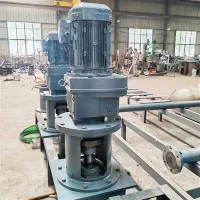
Hey there! As a bevel gear jack supplier, I've seen firsthand how important it is for these jacks to have good wear resistance. Bevel gear jacks are used in a whole bunch of applications, from industrial machinery to automotive setups. When the bevel gears in these jacks wear out too quickly, it can lead to all sorts of problems like reduced performance, increased maintenance costs, and even safety issues. So, in this blog, I'm gonna share some tips on how to improve the wear resistance of the bevel gears in a bevel gear jack.
1. Material Selection
The first step in improving wear resistance is choosing the right material for the bevel gears. Different materials have different properties, and some are better suited for high - wear applications than others.
-
Alloy Steels: Alloy steels are a popular choice for bevel gears. They offer a good combination of strength, hardness, and toughness. For example, 4140 steel is often used because it can be heat - treated to achieve high hardness levels. This hardness helps the gears resist wear from the constant meshing and friction that occurs during operation. When the surface of the gear is hard, it's less likely to get scratched or deformed by the contact forces.
-
Case - Hardened Steels: Case - hardened steels are another great option. These steels have a hard outer layer (the case) and a tough inner core. The hard case provides excellent wear resistance, while the tough core can withstand the impact and bending forces that the gears experience. A common case - hardening process is carburizing, where carbon is added to the surface of the steel at high temperatures. This creates a hard, wear - resistant layer on the gear teeth.
2. Heat Treatment
Heat treatment is a crucial process that can significantly improve the wear resistance of bevel gears.
-
Quenching and Tempering: Quenching involves rapidly cooling the heated gear in a quenching medium, like oil or water. This process hardens the steel by transforming its microstructure. However, quenched steel is often very brittle, so tempering is done afterward. Tempering involves reheating the quenched gear to a lower temperature and holding it there for a certain period. This reduces the brittleness and improves the toughness of the gear while still maintaining a high level of hardness. For example, a bevel gear made of 4140 steel can be quenched and tempered to achieve a hardness of around 40 - 50 HRC (Rockwell hardness scale), which is ideal for good wear resistance.
-
Nitriding: Nitriding is a surface - hardening process where nitrogen is diffused into the surface of the gear. This creates a hard, wear - resistant nitride layer on the gear teeth. Nitriding can improve the wear resistance, as well as the corrosion resistance of the gears. It's a great option for gears that are used in harsh environments or under high - load conditions.
3. Gear Design
The design of the bevel gears also plays a big role in their wear resistance.
-
Tooth Profile: A proper tooth profile is essential. The involute tooth profile is widely used because it provides smooth and continuous contact between the gear teeth during meshing. This reduces the stress concentration on the teeth and minimizes wear. When the teeth mesh smoothly, there's less friction and less chance of tooth damage.
-
Gear Ratio: The gear ratio affects the load distribution on the gears. A well - chosen gear ratio can ensure that the load is evenly distributed across the gear teeth. If the gear ratio is too high or too low, it can cause uneven wear on the teeth, leading to premature failure. For example, in a bevel gear jack used for lifting heavy loads, the gear ratio should be carefully selected to balance the lifting capacity and the wear resistance of the gears.
4. Lubrication
Lubrication is one of the most important factors in improving the wear resistance of bevel gears.
-
Proper Lubricant Selection: Choosing the right lubricant is crucial. The lubricant should have good viscosity, anti - wear properties, and oxidation resistance. For bevel gears in a bevel gear jack, a high - quality gear oil is usually recommended. Gear oils are formulated to withstand the high pressures and temperatures that occur during gear operation. They form a protective film on the gear teeth, reducing friction and wear.
-
Lubrication Method: The way the gears are lubricated also matters. There are different lubrication methods, such as splash lubrication and forced - feed lubrication. Splash lubrication is suitable for low - speed applications, where the gears dip into a reservoir of lubricant and splash it onto the other parts. For high - speed or high - load applications, forced - feed lubrication is often used. In forced - feed lubrication, the lubricant is pumped directly to the gear teeth, ensuring a continuous supply of lubrication.
5. Maintenance and Inspection
Regular maintenance and inspection are essential for ensuring the long - term wear resistance of bevel gears.
-
Cleaning: Keeping the gears clean is important. Dirt, debris, and metal particles can act as abrasives and cause wear on the gear teeth. Regularly cleaning the gears and the gear housing can prevent these contaminants from causing damage. You can use a suitable cleaning agent and a brush to clean the gears.
-
Inspection: Periodic inspection of the gears can help detect early signs of wear. Look for signs like tooth wear, pitting, or cracking. If any problems are detected early, you can take corrective actions, such as replacing the worn - out gears or adjusting the operating conditions.
6. Surface Coating
Applying a surface coating to the bevel gears can also improve their wear resistance.
-
Chrome Plating: Chrome plating can provide a hard, smooth surface on the gear teeth. It reduces friction and wear and also improves the corrosion resistance of the gears. Chrome - plated gears are often used in applications where the gears are exposed to harsh environments or where low friction is required.
-
Diamond - Like Carbon (DLC) Coating: DLC coating is a relatively new technology. It offers excellent wear resistance, low friction, and high hardness. DLC - coated gears can have a significantly longer service life compared to uncoated gears, especially in high - load and high - speed applications.


In conclusion, improving the wear resistance of the bevel gears in a bevel gear jack requires a combination of proper material selection, heat treatment, gear design, lubrication, maintenance, and surface coating. By following these tips, you can ensure that your bevel gear jacks perform well and have a long service life.
If you're in the market for high - quality bevel gear jacks, we've got you covered. We offer a wide range of products, including Bevel Gear Ball Screw Jack and Bevel Gear Screw Jack. Our bevel gear jacks are designed and manufactured with the latest technologies and highest quality standards to ensure excellent wear resistance and performance.
If you're interested in learning more about our products or have any questions about bevel gear jacks, feel free to reach out to us for a procurement discussion. We're always happy to help you find the right solution for your needs.
References
- Budynas, R. G., & Nisbett, J. K. (2011). Shigley's Mechanical Engineering Design. McGraw - Hill.
- Mott, R. L. (2008). Machine Elements in Mechanical Design. Pearson.
- Townsend, D. P. (2005). Dudley's Gear Handbook: Design, Manufacture, and Application. CRC Press.