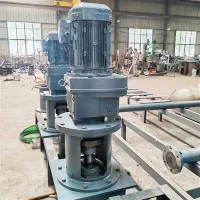
As a supplier of Ball Screw Elevators, I often receive inquiries from customers about how to calculate the starting torque of these essential mechanical devices. Understanding the starting torque is crucial for proper system design, ensuring that the elevator can operate efficiently and safely. In this blog post, I will guide you through the process of calculating the starting torque of a ball screw elevator, providing you with the necessary knowledge to make informed decisions for your applications.
Understanding the Basics of Ball Screw Elevators
Before diving into the calculation of starting torque, it's important to have a basic understanding of how ball screw elevators work. A ball screw elevator consists of a ball screw, a nut, and a housing. The ball screw is a threaded shaft that rotates, causing the nut to move linearly along the screw. This linear motion is used to lift or lower loads in various industrial applications.
Ball screw elevators are known for their high efficiency, precision, and smooth operation. They are commonly used in applications such as automation equipment, machine tools, and material handling systems. However, to ensure optimal performance, it's essential to select the right ball screw elevator for your specific application and calculate the starting torque accurately.
Factors Affecting the Starting Torque
Several factors can affect the starting torque of a ball screw elevator. These factors include:
- Load Weight: The weight of the load being lifted or lowered is one of the most significant factors affecting the starting torque. The heavier the load, the higher the starting torque required to initiate movement.
- Friction: Friction between the ball screw and the nut, as well as other moving parts in the elevator, can increase the starting torque. Factors such as lubrication, surface finish, and the quality of the components can affect the friction coefficient.
- Lead of the Ball Screw: The lead of the ball screw refers to the distance the nut travels in one revolution of the screw. A higher lead requires more torque to start the movement, as the nut has to cover a greater distance in the same amount of time.
- Acceleration: If the load needs to be accelerated quickly, a higher starting torque is required to overcome the inertia of the load.
Calculating the Starting Torque
The starting torque of a ball screw elevator can be calculated using the following formula:
[T = \frac{F \times p}{2\pi \times \eta}]
Where:
- (T) is the starting torque (N·m)
- (F) is the axial force required to move the load (N)
- (p) is the lead of the ball screw (m)
- (\eta) is the efficiency of the ball screw elevator
Step 1: Calculate the Axial Force ((F))
The axial force required to move the load can be calculated using the following formula:
[F = m \times g + F_f]
Where:
- (m) is the mass of the load (kg)
- (g) is the acceleration due to gravity ((9.81 m/s^2))
- (F_f) is the frictional force (N)
The frictional force can be estimated based on the friction coefficient between the ball screw and the nut, as well as other moving parts in the elevator. A typical friction coefficient for a well-lubricated ball screw elevator is around 0.003 to 0.005.
Step 2: Determine the Lead of the Ball Screw ((p))
The lead of the ball screw is usually specified by the manufacturer. It can be measured in millimeters or inches. Make sure to convert the lead to meters before using it in the torque calculation formula.
Step 3: Determine the Efficiency of the Ball Screw Elevator ((\eta))
The efficiency of a ball screw elevator depends on several factors, including the quality of the components, the lubrication, and the operating conditions. A typical efficiency for a ball screw elevator is around 0.9 to 0.95.
Step 4: Calculate the Starting Torque ((T))
Once you have determined the axial force ((F)), the lead of the ball screw ((p)), and the efficiency of the ball screw elevator ((\eta)), you can calculate the starting torque using the formula mentioned earlier.
Example Calculation
Let's assume we have a ball screw elevator with the following specifications:
- Load weight ((m)): 500 kg
- Lead of the ball screw ((p)): 10 mm (0.01 m)
- Efficiency of the ball screw elevator ((\eta)): 0.9
First, we need to calculate the axial force ((F)):
[F = m \times g + F_f]
Assuming a friction coefficient of 0.005, the frictional force ((F_f)) can be calculated as:
[F_f = \mu \times F_n]
Where (\mu) is the friction coefficient and (F_n) is the normal force. In this case, the normal force is equal to the weight of the load ((m \times g)).
[F_f = 0.005 \times 500 \times 9.81 = 24.525 N]
[F = 500 \times 9.81 + 24.525 = 4929.525 N]
Now, we can calculate the starting torque ((T)):
[T = \frac{F \times p}{2\pi \times \eta}]
[T = \frac{4929.525 \times 0.01}{2\pi \times 0.9} \approx 8.67 N·m]
Selecting the Right Ball Screw Elevator
Once you have calculated the starting torque, you can use this information to select the right ball screw elevator for your application. At our company, we offer a wide range of ball screw elevators, including High Load Stainless Steel Screw Jack, Worm Gear Ball Screw Jack, and High Quality Ball Screw Jack. Our experienced team can help you choose the most suitable elevator based on your specific requirements and the calculated starting torque.
Conclusion
Calculating the starting torque of a ball screw elevator is an important step in the design and selection process. By understanding the factors affecting the starting torque and using the appropriate formula, you can ensure that your ball screw elevator operates efficiently and safely. If you have any questions or need assistance with calculating the starting torque or selecting the right ball screw elevator for your application, please don't hesitate to contact us. We are here to help you make the best decision for your project.


References
- "Mechanical Design Handbook," by Robert C. Juvinall and Kurt M. Marshek
- "Ball Screw Design and Application," by Thomson Industries