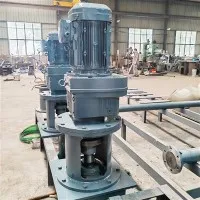
As a supplier of propeller agitators, I've often been asked whether our products can be effectively used in water purification processes. In this blog post, I'll delve into the technical aspects, advantages, and limitations of using propeller agitators for water purification, providing a comprehensive understanding of their applicability.
How Water Purification Works
Before discussing the role of propeller agitators, it's essential to understand the basic principles of water purification. Water purification is a multi - step process that aims to remove contaminants, impurities, and harmful substances from water to make it safe for various uses, such as drinking, industrial applications, and environmental protection.
Typical water purification steps include coagulation, flocculation, sedimentation, filtration, and disinfection. Coagulation and flocculation are crucial steps where chemicals are added to the water to neutralize the charges of suspended particles, causing them to clump together into larger flocs. Sedimentation follows, allowing these flocs to settle at the bottom of the tank. Filtration further removes remaining particles, and disinfection eliminates pathogens.
The Function of Propeller Agitators in Water Purification
Coagulation and Flocculation
Propeller agitators play a vital role in the coagulation and flocculation stages. During coagulation, a coagulant is added to the water, and the propeller agitator rapidly mixes the chemical with the water. The high - speed rotation of the propeller creates a turbulent flow, ensuring that the coagulant is evenly distributed throughout the water volume. This rapid mixing is essential for the coagulant to react with the suspended particles quickly and effectively.
In the flocculation stage, the propeller agitator operates at a lower speed. Gentle agitation helps the small flocs formed during coagulation to collide and combine into larger, more settleable flocs. The slow and controlled mixing provided by the propeller agitator promotes the growth of flocs without breaking them apart, which is crucial for the subsequent sedimentation process.
Disinfection
Propeller agitators can also be used in the disinfection process. When a disinfectant, such as chlorine or ozone, is added to the water, the agitator ensures uniform distribution of the disinfectant. This is important because uneven distribution can lead to areas of under - disinfection, where pathogens may survive, and areas of over - disinfection, which can produce harmful by - products.
Advantages of Using Propeller Agitators in Water Purification
Cost - Effectiveness
Propeller agitators are relatively inexpensive compared to other types of agitators, such as Vertical Turbine Agitator or Turbine Agitator. They have a simple design, which reduces manufacturing costs, and their operation is energy - efficient, resulting in lower operating costs over time.


Easy Installation and Maintenance
The installation of propeller agitators is straightforward. They can be easily mounted on the top or side of a water treatment tank, and their compact size allows for installation in various tank configurations. Maintenance is also relatively simple, mainly involving regular inspection of the propeller blades for wear and tear and lubrication of the motor.
High Mixing Efficiency
Propeller agitators can generate high - velocity flow patterns in the water, which ensures efficient mixing. Their design allows them to create a strong axial flow, which is ideal for distributing chemicals evenly in the water and promoting the formation of flocs during coagulation and flocculation.
Limitations of Propeller Agitators in Water Purification
Limited Mixing in Large Tanks
In very large water treatment tanks, propeller agitators may have limitations in achieving uniform mixing throughout the entire tank volume. The flow created by the propeller may not reach all corners of the tank, leading to areas of poor mixing. In such cases, multiple propeller agitators or other types of agitators, such as Dosing Mixer JB High - speed Submerged Mixer Side - entry Mixer Supply Starch Milk Environmentally Friendly Mixer, may be required.
Not Suitable for High - Viscosity Water
Propeller agitators are designed for low - viscosity fluids. If the water being treated has a high viscosity, for example, due to a high concentration of suspended solids or the presence of certain chemicals, the propeller may not be able to generate sufficient mixing energy. In these situations, a more powerful agitator with a different design may be needed.
Case Studies
Small - Scale Water Treatment Plant
In a small - scale water treatment plant serving a rural community, a propeller agitator was used in the coagulation and flocculation process. The plant treated water from a local river. The propeller agitator was able to quickly mix the coagulant with the water, and the subsequent flocculation process was effective in forming large flocs. After sedimentation and filtration, the water quality met the local drinking water standards. The low cost and easy maintenance of the propeller agitator made it an ideal choice for this small - scale operation.
Industrial Water Recycling Facility
An industrial water recycling facility used propeller agitators in the disinfection process. The facility recycled water from its manufacturing processes. The propeller agitators ensured that the disinfectant was evenly distributed in the water, effectively eliminating pathogens and allowing the recycled water to be reused in non - critical industrial applications.
Conclusion
In conclusion, propeller agitators can be effectively used for water purification, especially in the coagulation, flocculation, and disinfection stages. They offer several advantages, including cost - effectiveness, easy installation and maintenance, and high mixing efficiency. However, they also have limitations, such as limited mixing in large tanks and unsuitability for high - viscosity water.
If you are considering using propeller agitators for your water purification needs, it's important to assess your specific requirements, including tank size, water characteristics, and treatment goals. Our company, as a professional propeller agitator supplier, can provide you with detailed technical advice and customized solutions. We are committed to helping you achieve efficient and cost - effective water purification. If you are interested in our products or have any questions, please feel free to contact us for further discussion and procurement negotiation.
References
- AWWA (American Water Works Association). Water Treatment Plant Design. McGraw - Hill, 2017.
- Metcalf & Eddy. Wastewater Engineering: Treatment and Reuse. McGraw - Hill, 2014.
- WEF (Water Environment Federation). Manual of Practice No. 8: Water Treatment Plant Design. Water Environment Federation, 2018.