Why do some people become agitators? This question has intrigued scholars, sociologists, and psychologists for decades. Agitators, in a broad sense, are individuals who stir up public opinion, challenge the status quo, and advocate for change. While the term "agitator" can sometimes carry a negative connotation, it is important to recognize that many agitators have played crucial roles in social, political, and economic progress throughout history.
The Psychological Drivers of Agitation
One of the primary reasons some people become agitators is rooted in their psychological makeup. Certain personality traits, such as high levels of extraversion, openness to experience, and a strong sense of social justice, can predispose individuals to take on the role of an agitator. Extraverted individuals are more likely to seek out social interactions, express their opinions openly, and rally others to their cause. Their outgoing nature allows them to connect with a wide range of people, build networks, and effectively communicate their ideas.
Openness to experience, another key trait, enables agitators to think outside the box, challenge conventional wisdom, and envision alternative ways of living and organizing society. They are not afraid to explore new ideas, question established norms, and propose innovative solutions to social problems. This willingness to embrace change and take risks is often what drives them to become vocal advocates for reform.
A strong sense of social justice is perhaps the most fundamental psychological factor that motivates agitators. These individuals have a deep-seated belief in fairness, equality, and human rights. They are acutely aware of the injustices and inequalities present in society and feel a moral obligation to do something about it. Whether it is fighting against discrimination, poverty, or environmental degradation, agitators are driven by a desire to create a more just and equitable world.
Social and Political Context
The social and political context in which an individual lives also plays a significant role in determining whether they will become an agitator. In societies where there are high levels of inequality, oppression, and injustice, people are more likely to feel frustrated, angry, and disenfranchised. These feelings can fuel a desire for change and inspire individuals to take action.
For example, during the civil rights movement in the United States, African Americans faced systemic racism, segregation, and discrimination in all aspects of their lives. This blatant injustice led many individuals, such as Martin Luther King Jr., Rosa Parks, and Malcolm X, to become agitators. They used various forms of protest, including marches, boycotts, and sit-ins, to challenge the status quo and demand equal rights for all.
Similarly, in countries experiencing political unrest, economic instability, or authoritarian rule, people often take to the streets to demand democratic reforms, greater political freedoms, and economic opportunities. The Arab Spring, which began in 2010, was a series of protests and uprisings across the Middle East and North Africa. The movement was sparked by a combination of factors, including high unemployment, corruption, and a lack of political representation. Thousands of people, from all walks of life, became agitators, using social media and other forms of communication to organize protests and demand change.
Economic Factors
Economic factors can also contribute to the rise of agitators. In times of economic recession, inflation, or widespread poverty, people are more likely to feel the pinch and become dissatisfied with the existing economic system. They may blame the government, corporations, or the wealthy elite for their economic hardships and demand economic reforms.
For instance, the Occupy Wall Street movement, which began in 2011, was a response to the growing economic inequality in the United States. The movement was sparked by the financial crisis of 2008, which led to widespread job losses, foreclosures, and economic instability. Protesters, who referred to themselves as the "99%," demanded that the government take action to address the economic disparities between the rich and the poor. They called for higher taxes on the wealthy, more regulations on the financial industry, and increased access to education and healthcare.
In addition to economic inequality, globalization and technological advancements have also contributed to the rise of agitators. As the world becomes more interconnected, people are increasingly aware of the economic disparities between different countries and regions. They are also more likely to be affected by global economic trends, such as outsourcing, offshoring, and automation. These changes can lead to job losses, wage stagnation, and a sense of economic insecurity, which can in turn fuel social and political unrest.
The Role of Agitators in Industry
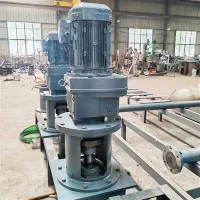
While the term "agitator" is often associated with social and political activism, it also has a technical meaning in the industrial context. In manufacturing and processing industries, agitators are devices used to mix, blend, or stir substances in a tank or vessel. They play a crucial role in ensuring the homogeneity and quality of the final product.
As a supplier of agitators, we understand the importance of these devices in various industries, including chemical, pharmaceutical, food and beverage, and wastewater treatment. Our range of agitators includes Dissolving Kettle Agitator, Side Entry Agitator, and Sewage Treatment Mixer. These agitators are designed to meet the specific needs and requirements of our customers, providing efficient and reliable mixing solutions.
In the chemical industry, for example, agitators are used to mix chemicals in reactors, ensuring that the reaction proceeds smoothly and uniformly. This is essential for producing high-quality chemicals with consistent properties. In the pharmaceutical industry, agitators are used to blend ingredients in the production of drugs, ensuring that the active ingredients are evenly distributed throughout the product. This is crucial for ensuring the effectiveness and safety of the medication.
In the food and beverage industry, agitators are used to mix ingredients in the production of various products, such as sauces, dressings, and beverages. They help to ensure that the products have a consistent texture, flavor, and appearance. In the wastewater treatment industry, agitators are used to mix chemicals and wastewater, promoting the breakdown of pollutants and the treatment of sewage.
Conclusion
In conclusion, the reasons why some people become agitators are complex and multifaceted. Psychological factors, such as personality traits and a strong sense of social justice, play a significant role in motivating individuals to take on the role of an agitator. Social and political context, economic factors, and technological advancements also contribute to the rise of agitators.


In the industrial context, agitators are essential devices that play a crucial role in ensuring the quality and efficiency of manufacturing and processing operations. As a supplier of agitators, we are committed to providing our customers with high-quality products and excellent service. If you are in need of agitators for your industry, we invite you to contact us for further information and to discuss your specific requirements. We look forward to the opportunity to work with you and to help you find the best agitator solutions for your needs.
References
- Bandura, A. (1977). Self-efficacy: Toward a unifying theory of behavioral change. Psychological Review, 84(2), 191-215.
- Cohen, S., & Taylor, L. (1972). Psychological survival: The experience of long-term imprisonment. Penguin.
- Freire, P. (1970). Pedagogy of the oppressed. Continuum.
- Habermas, J. (1981). The theory of communicative action. Beacon Press.
- King, M. L. Jr. (1963). Letter from Birmingham Jail. The Christian Century, 80(23), 785-798.