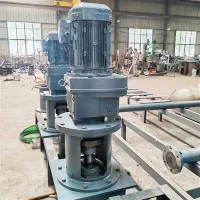
As a trusted supplier of Screw Jack System, I've had the privilege of working closely with various industries, witnessing firsthand the crucial role screw jack systems play in countless applications. One of the most frequently asked questions we encounter is about the running torque of a screw jack system. In this blog post, I'll delve into what running torque is, how it's calculated, and why it's essential for the optimal performance of your screw jack system.
Understanding Running Torque
Running torque, in the context of a screw jack system, refers to the amount of rotational force required to keep the screw jack moving once it has started. It is a critical parameter that directly impacts the efficiency, reliability, and lifespan of the screw jack. The running torque is influenced by several factors, including the load being lifted or moved, the pitch of the screw, the coefficient of friction between the screw and the nut, and the mechanical efficiency of the system.
Factors Affecting Running Torque
Load
The most obvious factor affecting running torque is the load being applied to the screw jack. Naturally, the greater the load, the higher the running torque required to move it. This relationship is linear; as the load increases, so does the running torque. For example, if you double the load on a screw jack, you'll roughly double the running torque needed to operate it.
Screw Pitch
The pitch of the screw is another important factor. The pitch is the distance the screw advances axially in one complete revolution. A finer pitch (smaller distance per revolution) generally requires less running torque because it takes more turns to move the same distance, spreading the load over more rotations. Conversely, a coarser pitch (larger distance per revolution) requires more running torque but can move the load faster.
Coefficient of Friction
The coefficient of friction between the screw and the nut is a measure of how much resistance there is to relative motion between the two surfaces. A higher coefficient of friction means more torque is needed to overcome this resistance and move the load. Factors that can affect the coefficient of friction include the material of the screw and nut, the surface finish, and the presence of lubrication.
Mechanical Efficiency
The mechanical efficiency of the screw jack system also plays a role in determining the running torque. Mechanical efficiency takes into account all the losses in the system, such as friction in the bearings, seals, and other moving parts. A more efficient system will require less running torque to achieve the same output.
Calculating Running Torque
Calculating the running torque of a screw jack system can be complex, as it involves multiple factors. However, a simplified formula can be used to estimate the running torque:


[ T = \frac{F \times p}{2\pi \eta} ]
Where:
- ( T ) is the running torque (in Nm)
- ( F ) is the load (in N)
- ( p ) is the screw pitch (in m)
- ( \eta ) is the mechanical efficiency of the system
It's important to note that this formula provides a rough estimate and may not account for all the factors that can affect running torque in a real-world application. For more accurate calculations, it's recommended to consult the manufacturer's specifications or seek the advice of a qualified engineer.
Importance of Running Torque
Understanding and accurately calculating the running torque of a screw jack system is crucial for several reasons:
System Design
Properly sizing the motor or actuator to provide the necessary running torque is essential for the reliable operation of the screw jack system. If the motor is undersized, it may not be able to provide enough torque to move the load, leading to premature failure or inefficient operation. On the other hand, an oversized motor can be more expensive and may consume more energy than necessary.
Safety
Ensuring that the running torque is within the rated capacity of the screw jack system is a critical safety consideration. Overloading the system can cause excessive wear and tear, leading to component failure and potentially dangerous situations. By calculating the running torque accurately, you can select the appropriate screw jack and ensure that it operates safely under all conditions.
Performance
Optimizing the running torque can improve the overall performance of the screw jack system. A well-designed system with the right amount of running torque will operate smoothly, with minimal vibration and noise. This can result in increased productivity, reduced maintenance costs, and a longer lifespan for the system.
Our Screw Jack Systems
At our company, we offer a wide range of Screw Jack System to meet the diverse needs of our customers. Our JTB Electric Screw Jack is a popular choice for applications requiring high precision and reliability. It features a compact design, high efficiency, and a wide range of load capacities.
For more compact and lightweight applications, our Mini Electric Screw Jack is an excellent option. Despite its small size, it offers impressive performance and can handle loads up to a certain capacity.
Contact Us for Your Screw Jack Needs
If you're in the market for a screw jack system and need help determining the appropriate running torque for your application, our team of experts is here to assist you. We can provide detailed technical information, help you select the right product, and offer customized solutions to meet your specific requirements.
Whether you're working on a small-scale project or a large industrial application, we have the expertise and experience to ensure that you get the best screw jack system for your needs. Contact us today to start the conversation and take the first step towards a more efficient and reliable lifting solution.
References
- "Screw Jack Handbook" - A comprehensive guide to screw jack technology and applications.
- "Mechanical Design Handbook" - A reference book on mechanical engineering principles, including screw jack design and calculation.