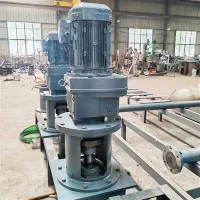
In the industrial machinery realm, worm screw jacks stand out as indispensable components, offering reliable linear motion solutions across diverse applications. As a seasoned worm screw jack supplier, I've witnessed firsthand the critical role that limit switches play in enhancing the functionality, safety, and efficiency of these devices. In this blog post, I'll delve into the purpose of a limit switch on a worm screw jack, exploring its significance and the benefits it brings to various industries.
Understanding Worm Screw Jacks
Before we dive into the role of limit switches, let's briefly recap what worm screw jacks are and how they work. A Worm Gear Screw Jack is a mechanical device that converts rotary motion into linear motion. It consists of a worm gear, a screw, and a nut. When the worm gear is rotated, it drives the screw, causing the nut to move along the screw axis, resulting in linear displacement. These jacks are known for their high load capacity, precise positioning, and self-locking feature, making them ideal for applications where heavy loads need to be lifted, lowered, or positioned accurately.
The Function of Limit Switches
A limit switch is an electromechanical device that monitors the position of a moving object and triggers an action when the object reaches a predefined limit. In the context of a worm screw jack, limit switches are used to control the travel of the screw and prevent it from overextending or retracting beyond safe limits. They act as safety mechanisms, protecting the jack and the connected equipment from damage due to over-travel.
Key Purposes of Limit Switches on Worm Screw Jacks
1. Safety Enhancement
One of the primary purposes of a limit switch on a worm screw jack is to enhance safety. By setting specific limits for the screw's travel, limit switches prevent the jack from operating beyond its designed range. This is crucial in applications where over-travel can lead to serious consequences, such as equipment damage, structural failure, or even personal injury. For example, in a lifting application, if the screw extends beyond its maximum limit, it could cause the load to become unstable and fall, posing a significant safety risk. Limit switches ensure that such scenarios are avoided by automatically stopping the jack's operation when the predefined limits are reached.
2. Protection of Equipment
Limit switches also play a vital role in protecting the worm screw jack and the associated equipment from damage. When a jack operates beyond its intended limits, it can put excessive stress on the components, leading to premature wear and tear, mechanical failure, or even breakage. By stopping the jack's movement at the appropriate time, limit switches help to prevent these issues, extending the lifespan of the equipment and reducing maintenance costs. For instance, if a screw is allowed to run into a mechanical stop without a limit switch, it can cause damage to the screw, nut, or other internal components, resulting in costly repairs or replacements.
3. Precise Positioning
In addition to safety and equipment protection, limit switches enable precise positioning of the load. By defining the exact limits of the screw's travel, they allow for accurate control of the jack's movement, ensuring that the load is positioned at the desired location with high precision. This is particularly important in applications where precise positioning is critical, such as in automation systems, manufacturing processes, or scientific experiments. For example, in a CNC machining center, a worm screw jack with limit switches can be used to position a tool or workpiece with micron-level accuracy, ensuring high-quality machining results.
4. Automation and Control
Limit switches are essential components in automated systems that use worm screw jacks. They can be integrated with control systems, such as programmable logic controllers (PLCs) or motor drives, to automate the operation of the jack. By providing feedback on the position of the screw, limit switches enable the control system to make decisions and adjust the jack's operation accordingly. This allows for seamless integration of the jack into larger automated processes, improving productivity and efficiency. For example, in a conveyor system, limit switches can be used to detect the position of a pallet or container, triggering the jack to lift or lower the load at the appropriate time.
Types of Limit Switches Used with Worm Screw Jacks
There are several types of limit switches that can be used with worm screw jacks, each with its own advantages and applications. Some of the most common types include:
1. Mechanical Limit Switches
Mechanical limit switches are the simplest and most widely used type of limit switch. They consist of a mechanical actuator, such as a lever or a roller, that is triggered when it comes into contact with the moving object. When the actuator is pressed or moved, it closes or opens an electrical circuit, sending a signal to the control system to stop the jack's operation. Mechanical limit switches are reliable, durable, and cost-effective, making them suitable for a wide range of applications.
2. Proximity Sensors
Proximity sensors are non-contact limit switches that use electromagnetic fields, infrared light, or ultrasonic waves to detect the presence of an object. They offer several advantages over mechanical limit switches, including faster response times, higher accuracy, and no physical contact with the moving object, which reduces wear and tear. Proximity sensors are commonly used in applications where high precision and reliability are required, such as in high-speed automation systems or cleanroom environments.
3. Optical Limit Switches
Optical limit switches use light beams to detect the presence of an object. They consist of a light emitter and a light receiver, and when the light beam is interrupted by the moving object, the receiver sends a signal to the control system. Optical limit switches are highly sensitive and can detect objects at a distance, making them suitable for applications where precise positioning or detection of small objects is required.
Installation and Configuration of Limit Switches
Proper installation and configuration of limit switches are crucial to ensure their effective operation. When installing limit switches on a worm screw jack, it's important to follow the manufacturer's instructions and guidelines. Here are some general steps to consider:
- Determine the Mounting Location: Select a suitable location for mounting the limit switches based on the travel limits of the screw and the requirements of the application. The switches should be positioned in such a way that they can accurately detect the position of the screw without interfering with its movement.
- Mount the Limit Switches: Securely mount the limit switches using the appropriate mounting hardware. Make sure the switches are firmly attached and properly aligned to ensure reliable operation.
- Connect the Electrical Wiring: Connect the electrical wiring of the limit switches to the control system according to the wiring diagram provided by the manufacturer. Ensure that the wiring is properly insulated and protected to prevent electrical hazards.
- Set the Limit Positions: Adjust the limit switches to set the desired travel limits of the screw. This can usually be done by adjusting the position of the actuator or the sensitivity of the sensor. Make sure to test the limit switches after setting the positions to ensure that they are functioning correctly.
Conclusion
In conclusion, limit switches are essential components of worm screw jacks, serving multiple purposes that enhance safety, protect equipment, enable precise positioning, and facilitate automation. As a worm screw jack supplier, I highly recommend the use of limit switches in all applications to ensure the reliable and efficient operation of the jacks. By understanding the purpose and functionality of limit switches, you can make informed decisions when selecting and installing them, ensuring that your worm screw jacks perform optimally and meet the requirements of your specific application.
If you're interested in learning more about worm screw jacks or have any questions about limit switches, I'd be more than happy to assist you. Please feel free to contact me to discuss your specific needs and explore the best solutions for your application. We're committed to providing high-quality worm screw jacks and comprehensive support to help you achieve your goals.


References
- Machinery's Handbook, 31st Edition
- Industrial Automation Handbook
- Worm Screw Jack Manufacturer's Technical Documentation