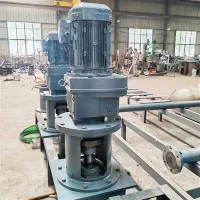
Hey there! As a supplier of hardened gear reducers, I often get asked about the parallelism requirements for their installation. It's a crucial topic because getting the parallelism right can significantly impact the performance and lifespan of these reducers. So, let's dive into it!
Why Parallelism Matters
First off, why do we even care about parallelism? Well, a hardened gear reducer is designed to transfer power efficiently from one shaft to another while reducing speed and increasing torque. When the shafts aren't parallel, it can lead to a whole bunch of problems.


For starters, misaligned shafts can cause uneven loading on the gears. This means that some teeth of the gears will bear more stress than others. Over time, this uneven stress can lead to premature wear and tear on the gears. You might end up with chipped teeth, which not only reduces the efficiency of the reducer but can also lead to complete gear failure if left unaddressed.
Another issue is increased vibration. When the shafts aren't parallel, the gears won't mesh smoothly. This can cause the reducer to vibrate more than it should. Excessive vibration can not only be annoying but can also damage other components in the system, such as bearings and seals. It can even lead to loosening of bolts and other fasteners, which can pose a safety risk.
Parallelism Requirements
So, what are the actual parallelism requirements for installing a hardened gear reducer? Well, it depends on a few factors, such as the type of reducer, the application, and the manufacturer's specifications.
Type of Reducer
There are different types of hardened gear reducers, each with its own parallelism requirements. For example, a Helical Gear Parallel Shaft Reducer is designed to have its input and output shafts parallel. The parallelism tolerance for these reducers is typically very tight, usually within a few thousandths of an inch. This is because helical gears rely on smooth meshing to transfer power efficiently, and even a small misalignment can cause problems.
On the other hand, a Helical Gear Worm Gear Reducer has a different design. The worm gear and the helical gear have a specific relationship, and the parallelism requirements are more focused on ensuring proper engagement between the two. The parallelism tolerance for these reducers may be slightly more forgiving than for parallel shaft reducers, but it still needs to be within the manufacturer's specified range.
A Planetary Gear Reducer also has its own unique parallelism requirements. In a planetary gear system, multiple gears are arranged in a specific way around a central sun gear. The parallelism of the shafts and the alignment of the gears are crucial for smooth operation. The tolerance for parallelism in planetary gear reducers is often very precise to ensure even loading and efficient power transfer.
Application
The application in which the gear reducer is used also plays a role in determining the parallelism requirements. For example, in a high-precision application such as a robotic arm or a CNC machine, the parallelism requirements will be much stricter. These applications require precise movement and control, and even a small misalignment can affect the accuracy of the system.
On the other hand, in a less critical application, such as a conveyor belt in a warehouse, the parallelism requirements may be more relaxed. However, it's still important to maintain a reasonable level of parallelism to ensure the long-term reliability of the reducer.
Manufacturer's Specifications
The manufacturer of the hardened gear reducer will typically provide specific parallelism requirements in the installation manual. These requirements are based on the design and engineering of the reducer and should be followed closely. Ignoring the manufacturer's specifications can void the warranty and may lead to premature failure of the reducer.
Measuring and Achieving Parallelism
Now that we know why parallelism matters and what the requirements are, how do we measure and achieve parallelism during installation?
Measuring Parallelism
There are several methods for measuring parallelism. One common method is to use a dial indicator. A dial indicator is a precision instrument that can measure small displacements. To measure the parallelism of two shafts, you can mount the dial indicator on one shaft and move it along the other shaft. The dial indicator will show any variations in the distance between the two shafts, which indicates misalignment.
Another method is to use a laser alignment tool. Laser alignment tools are more accurate and easier to use than dial indicators. They work by emitting a laser beam that is aligned with one shaft. The laser beam is then reflected off a target on the other shaft, and the tool measures the position of the reflected beam to determine the parallelism of the two shafts.
Achieving Parallelism
Once you've measured the parallelism and identified any misalignment, you need to take steps to correct it. This may involve adjusting the position of the reducer or the connected equipment. You can use shims or adjustable mounts to make small adjustments to the position of the reducer.
It's also important to ensure that the base or foundation on which the reducer is mounted is level and stable. An uneven or unstable base can cause the reducer to shift over time, leading to misalignment.
Conclusion
In conclusion, parallelism is a critical factor in the installation of a hardened gear reducer. Getting the parallelism right can ensure the efficient operation, long lifespan, and reliability of the reducer. By understanding the parallelism requirements based on the type of reducer, the application, and the manufacturer's specifications, and by using the right tools to measure and achieve parallelism, you can avoid many common problems associated with misaligned shafts.
If you're in the market for a hardened gear reducer or have any questions about parallelism or installation, feel free to reach out. We're here to help you find the right solution for your needs and ensure a smooth installation process.
References
- Gear Reducer Installation Manuals
- Engineering textbooks on mechanical power transmission