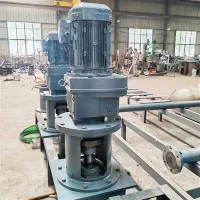
The mounting type of a ball screw elevator is a crucial aspect that determines its performance, functionality, and suitability for various applications. As a leading supplier of Ball Screw Elevators, we understand the importance of different mounting types and how they can impact the overall operation of the equipment. In this blog post, we will explore the different mounting types of ball screw elevators, their advantages, applications, and why choosing the right mounting type is essential for your project.
Understanding Ball Screw Elevators
Before delving into the mounting types, let's briefly understand what a ball screw elevator is. A ball screw elevator, also known as a ball screw jack, is a mechanical device used to convert rotational motion into linear motion. It consists of a screw, a nut, and a series of ball bearings that roll between the screw and the nut. This design reduces friction and enables high precision and efficiency in linear movement. Ball screw elevators are widely used in industries such as automation, manufacturing, aerospace, and robotics for tasks that require accurate positioning, heavy load lifting, and smooth linear motion.
Common Mounting Types of Ball Screw Elevators
1. Flange Mounting
Flange mounting is one of the most common mounting types for ball screw elevators. In this configuration, the elevator is attached to a flat surface using a flange, which is a flat, circular plate with holes for bolts. The flange is typically located at the base of the elevator and provides a stable and secure connection to the mounting surface.
Advantages:
- Stability: Flange mounting offers excellent stability, making it suitable for applications where the elevator needs to support heavy loads or operate in high-vibration environments.
- Easy Installation: The flange design allows for easy installation and alignment of the elevator, reducing installation time and costs.
- Versatility: Flange-mounted ball screw elevators can be used in a wide range of applications, including machine tools, industrial automation systems, and material handling equipment.
Applications:
Flange-mounted ball screw elevators are commonly used in applications such as:
- Machine Tools: For precise positioning of cutting tools, workpieces, and other components in machining operations.
- Automation Systems: To control the linear movement of robotic arms, conveyor belts, and other automated equipment.
- Material Handling: In lifting and lowering heavy loads in warehouses, factories, and distribution centers.
You can find a High Load Stainless Steel Screw Jack with flange mounting options on our website, which is designed to handle heavy loads and provide reliable performance in various industrial applications.
2. Foot Mounting
Foot mounting is another popular mounting type for ball screw elevators. In foot mounting, the elevator is supported by a set of feet or brackets that are attached to the base of the elevator. The feet are then bolted to the mounting surface, providing a stable and secure connection.
Advantages:
- Flexibility: Foot mounting offers more flexibility in terms of mounting options compared to flange mounting. The feet can be designed to fit different mounting surfaces and orientations, allowing for greater customization.
- Accessibility: The open design of foot-mounted elevators provides better access to the internal components, making maintenance and inspection easier.
- Cost-Effective: Foot mounting is generally more cost-effective than flange mounting, especially for applications where stability requirements are not as high.
Applications:
Foot-mounted ball screw elevators are commonly used in applications such as:
- Light Industrial Equipment: For positioning and lifting operations in light industrial machinery, such as packaging machines, printing presses, and assembly lines.
- Laboratory Equipment: To control the linear movement of scientific instruments, such as microscopes, spectrometers, and chromatography columns.
- Automotive Manufacturing: In robotic welding cells, assembly lines, and other automotive manufacturing processes.
Our High Quality Ball Screw Jack is available with foot mounting options, providing a reliable and cost-effective solution for various industrial applications.
3. Torque-Arm Mounting
Torque-arm mounting is a specialized mounting type that is used to prevent the rotation of the ball screw elevator during operation. In this configuration, a torque arm is attached to the elevator and connected to a fixed point or a load. The torque arm absorbs the rotational forces generated by the elevator, ensuring that the load moves only in a linear direction.
Advantages:
- Precision: Torque-arm mounting provides high precision and accuracy in linear movement by preventing rotational backlash and ensuring that the load moves in a straight line.
- Load Stability: By eliminating rotational movement, torque-arm mounting helps to maintain the stability of the load, especially in applications where the load is subjected to external forces or vibrations.
- Safety: Torque-arm mounting enhances the safety of the system by preventing unexpected rotation of the elevator, which can cause damage to the equipment or pose a risk to personnel.
Applications:
Torque-arm mounted ball screw elevators are commonly used in applications such as:
- Aerospace and Aviation: For precise positioning of aircraft components, such as landing gear, flap systems, and control surfaces.
- Medical Equipment: In surgical robots, imaging systems, and other medical devices that require high precision and accuracy in linear movement.
- Semiconductor Manufacturing: To control the movement of wafer handling equipment, lithography machines, and other semiconductor manufacturing tools.
We offer Worm Gear Ball Screw Jack with torque-arm mounting options, which are ideal for applications that require high precision and load stability.


Choosing the Right Mounting Type
Choosing the right mounting type for your ball screw elevator is essential to ensure optimal performance and reliability. Here are some factors to consider when selecting a mounting type:
- Load Requirements: Consider the weight, size, and center of gravity of the load that the elevator needs to support. Heavy loads may require a more stable mounting type, such as flange mounting or torque-arm mounting.
- Precision Requirements: If your application requires high precision and accuracy in linear movement, torque-arm mounting may be the best choice. Flange mounting can also provide good precision, but it may be less suitable for applications where rotational forces need to be eliminated.
- Space Constraints: Consider the available space for mounting the elevator. Foot mounting may be a better option if space is limited, as it offers more flexibility in terms of mounting orientation.
- Environmental Conditions: If the elevator will be operating in a harsh environment, such as high temperatures, high humidity, or corrosive chemicals, choose a mounting type and materials that are resistant to these conditions.
- Cost: Consider your budget and the cost of the mounting type, including the cost of the elevator, mounting hardware, and installation. Foot mounting is generally more cost-effective than flange mounting or torque-arm mounting.
Conclusion
In conclusion, the mounting type of a ball screw elevator plays a critical role in its performance, functionality, and suitability for various applications. As a leading supplier of Ball Screw Elevators, we offer a wide range of mounting options to meet the needs of different customers and industries. Whether you need a flange-mounted elevator for heavy load applications, a foot-mounted elevator for light industrial equipment, or a torque-arm mounted elevator for high-precision applications, we have the right solution for you.
If you are interested in learning more about our Ball Screw Elevators or need help choosing the right mounting type for your project, please contact us. Our team of experts will be happy to assist you and provide you with the best solutions for your specific requirements.
References
- "Ball Screw Technology Handbook," Thomson Industries, Inc.
- "Mechanical Design Handbook," CRC Press.
- "Motion Control Handbook," ISA - The Instrumentation, Systems, and Automation Society.