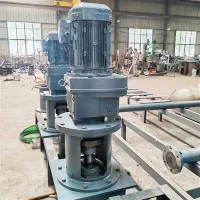
Hey there! As a supplier of chemical agitators, I often get asked about the installation height of a chemical agitator in a tank. It's a crucial question because getting the height right can make a huge difference in the performance of the agitator and the overall efficiency of your chemical mixing process.
First off, let's understand why the installation height matters. The height at which you install the agitator affects how well it can mix the contents of the tank. If it's too high, it might not reach all the layers of the liquid or solid mixture in the tank, leading to uneven mixing. On the other hand, if it's too low, it could cause issues like excessive turbulence near the bottom of the tank, which might damage the tank or the agitator itself.
Factors Affecting the Installation Height
There are several factors that you need to consider when determining the installation height of a chemical agitator.
Tank Geometry
The shape and size of the tank play a big role. For example, in a cylindrical tank, the ideal installation height might be different compared to a rectangular or square tank. In a cylindrical tank, a common rule of thumb is to install the agitator at a height where the impeller is about one-third to one-half of the tank's diameter from the bottom. This allows for good circulation of the liquid throughout the tank.
If you're dealing with a tall and narrow tank, you might need to install the agitator a bit higher to ensure that the mixing action reaches the upper layers of the liquid. Conversely, in a short and wide tank, a lower installation height might be more appropriate to achieve uniform mixing.
Viscosity of the Mixture
The viscosity of the chemical mixture in the tank is another important factor. If you're mixing a low - viscosity liquid, like water or a thin chemical solution, the agitator can be installed at a relatively higher height. The low viscosity allows the liquid to flow easily, and the agitator can create a large circulation pattern even from a higher position.
However, if you're dealing with a high - viscosity mixture, such as a thick paste or a heavy oil, the agitator needs to be installed closer to the bottom of the tank. High - viscosity fluids don't flow as easily, and a lower installation height ensures that the agitator can exert enough force to mix the contents effectively.
Type of Agitator
Different types of chemical agitators have different optimal installation heights. For example, Side Entry Mixers are typically installed on the side of the tank, usually at a height that allows the impeller to be submerged in the liquid. The height is often determined by the size of the tank and the desired mixing pattern. Side entry mixers are great for large tanks where top - mounted agitators might not be practical.
Reactor Agitator are used in chemical reactors where precise mixing is required. These agitators are usually installed at a height that is carefully calculated based on the reaction kinetics and the properties of the reactants. The goal is to ensure that the mixing action promotes the chemical reaction evenly throughout the tank.
Stainless Steel Sewage Mixer are designed for mixing sewage or wastewater. They are often installed at a height that allows them to break up solids and keep the sewage in suspension. A lower installation height is usually preferred to deal with the heavier solids that tend to settle at the bottom of the tank.
Determining the Optimal Installation Height
Now that we've discussed the factors that affect the installation height, let's talk about how to determine the optimal height for your specific situation.
Conduct a Mixing Study
One of the best ways to determine the right installation height is to conduct a mixing study. This can involve using computational fluid dynamics (CFD) simulations or physical scale models. CFD simulations can provide detailed information about the flow patterns and mixing efficiency at different installation heights. Physical scale models, on the other hand, allow you to observe the mixing action in a real - world setting, albeit on a smaller scale.
Consider the Manufacturer's Recommendations
The manufacturer of the chemical agitator usually provides guidelines on the recommended installation height. These recommendations are based on extensive testing and experience with the specific agitator model. It's a good idea to follow these guidelines as a starting point and then make adjustments based on your specific tank and mixture characteristics.
Trial and Error
In some cases, you might need to use a trial - and - error approach. Start by installing the agitator at the recommended height and then observe the mixing performance. If you notice uneven mixing or other issues, you can adjust the height accordingly. This might take a few attempts, but it can be an effective way to find the optimal installation height for your particular application.
Importance of Correct Installation Height
Getting the installation height of the chemical agitator right has several benefits.
Improved Mixing Efficiency
A correctly installed agitator ensures that the chemical mixture is mixed uniformly. This leads to better product quality, as all the components are evenly distributed. In a chemical reaction, uniform mixing can improve the reaction rate and yield, saving you time and money.


Reduced Energy Consumption
When the agitator is installed at the optimal height, it can achieve the desired mixing effect with less energy. This is because it doesn't have to work as hard to overcome the resistance of the liquid or solid mixture. Over time, this can result in significant energy savings, which is not only good for your bottom line but also for the environment.
Longer Agitator Lifespan
Proper installation height can also extend the lifespan of the agitator. When the agitator is installed at the right height, it experiences less stress and wear. This reduces the likelihood of mechanical failures and the need for frequent maintenance or replacement.
Conclusion
In conclusion, the installation height of a chemical agitator in a tank is a critical factor that can significantly impact the performance of your mixing process. By considering factors such as tank geometry, viscosity of the mixture, and type of agitator, and using methods like mixing studies, following manufacturer's recommendations, or trial - and - error, you can determine the optimal installation height for your specific application.
If you're in the market for a chemical agitator or need more advice on installation heights, don't hesitate to reach out. We're here to help you make the best choice for your chemical mixing needs.
References
- Perry, R. H., & Green, D. W. (1997). Perry's Chemical Engineers' Handbook. McGraw - Hill.
- Paul, E. L., Atiemo - Obeng, V. A., & Kresta, S. M. (2004). Handbook of Industrial Mixing: Science and Practice. John Wiley & Sons.