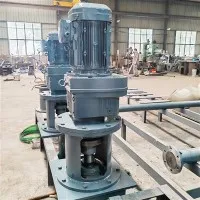
The formation of by - products in chemical reactions is a critical aspect that can significantly affect the efficiency, quality, and cost - effectiveness of industrial processes. As a supplier of reactor agitators, I have witnessed firsthand how these seemingly simple devices can have a profound impact on the generation of by - products. In this blog, we will explore the various ways in which a reactor agitator influences the formation of by - products.
1. Mixing Intensity and By - product Formation
One of the primary functions of a reactor agitator is to ensure proper mixing of reactants. The intensity of mixing plays a crucial role in determining the reaction kinetics and, consequently, the formation of by - products.
When the mixing intensity is too low, reactants may not be evenly distributed throughout the reactor. This can lead to local concentrations of reactants that are much higher or lower than the average concentration. In areas of high reactant concentration, the reaction rate may be much faster, increasing the likelihood of side reactions and the formation of by - products. For example, in a polymerization reaction, if the monomers are not well - mixed, regions of high monomer concentration may experience rapid polymerization, leading to the formation of branched polymers or polymers with non - uniform molecular weights, which are considered by - products.
On the other hand, excessive mixing intensity can also cause problems. High - speed agitation can generate high shear forces, which may break chemical bonds or disrupt the reaction mechanism. This can result in the formation of unwanted reaction intermediates that can further react to form by - products. For instance, in a catalytic reaction, the high shear forces from an overly aggressive agitator may damage the catalyst surface, reducing its selectivity and increasing the formation of by - products.
2. Temperature Distribution and By - product Formation
A reactor agitator also helps in maintaining a uniform temperature distribution within the reactor. Temperature is a critical factor in chemical reactions, as it affects the reaction rate and the equilibrium position. Uneven temperature distribution can lead to variations in reaction rates in different parts of the reactor, promoting the formation of by - products.
If the agitator is not functioning properly, hot spots may develop in the reactor. These hot spots can cause the reaction to proceed at a much faster rate in those areas, leading to the formation of over - reacted products or decomposition products. For example, in an exothermic reaction, if the heat generated is not effectively dissipated due to poor agitation, the temperature in certain regions of the reactor may rise significantly, causing side reactions such as thermal decomposition of the reactants or products.
Conversely, cold spots can also occur in the reactor if the agitator fails to mix the coolant or heat transfer medium evenly. In these cold spots, the reaction rate may be too slow, and the reactants may accumulate, increasing the probability of side reactions and the formation of by - products.
3. Residence Time Distribution and By - product Formation
The residence time of reactants in the reactor is another important factor influenced by the agitator. The residence time distribution (RTD) describes how long different fluid elements spend in the reactor. A well - designed agitator can help achieve a more uniform RTD, which is beneficial for minimizing by - product formation.
If the RTD is broad, some reactant molecules may spend too much time in the reactor, leading to over - reaction and the formation of by - products. For example, in a continuous - flow reactor, if the agitator does not promote proper back - mixing, some fluid elements may have a much longer residence time than others. These long - residence - time elements may continue to react, producing by - products such as over - oxidized or over - reduced species.
On the other hand, a narrow RTD can ensure that most reactant molecules have a similar reaction time, reducing the likelihood of over - reaction and by - product formation. A properly functioning agitator can help create a more uniform flow pattern within the reactor, resulting in a narrower RTD.
4. Impact of Agitator Design on By - product Formation
The design of the reactor agitator, including the type of impeller, its size, and the number of impellers, can also have a significant impact on by - product formation.
Different types of impellers have different flow patterns and mixing characteristics. For example, radial - flow impellers, such as the Rushton turbine, create a strong radial flow, which is suitable for mixing liquids with high viscosity or for promoting mass transfer between phases. Axial - flow impellers, on the other hand, generate a strong axial flow, which is better for achieving uniform vertical mixing in the reactor. Choosing the wrong type of impeller can lead to poor mixing and increased by - product formation.
The size of the impeller also matters. An impeller that is too small may not be able to provide sufficient mixing energy, while an impeller that is too large may cause excessive shear forces. Additionally, the number of impellers in the reactor can affect the mixing efficiency. Multiple impellers can be used to improve the mixing in large - scale reactors, but if they are not properly arranged, they may create complex flow patterns that can lead to uneven mixing and by - product formation.
5. Our Solutions as a Reactor Agitator Supplier
As a supplier of reactor agitators, we understand the importance of minimizing by - product formation in industrial processes. We offer a wide range of high - quality agitators, including Stainless Steel Sewage Mixer, Industrial Agitators, and Side Entry Tank Mixers.
Our agitators are designed with advanced engineering techniques to ensure optimal mixing performance. We use computational fluid dynamics (CFD) simulations to predict the flow patterns and mixing characteristics of our agitators in different reactor geometries. This allows us to customize the agitator design according to the specific requirements of each customer, such as the type of reaction, the viscosity of the reactants, and the desired mixing intensity.
We also provide comprehensive technical support to our customers. Our team of experts can help customers select the most suitable agitator for their application, optimize the operating conditions, and troubleshoot any problems related to by - product formation. By working closely with our customers, we can help them improve the efficiency of their processes, reduce the formation of by - products, and ultimately increase their profitability.
Conclusion
In conclusion, a reactor agitator has a significant impact on the formation of by - products in chemical reactions. Through proper mixing, temperature control, and residence time management, a well - designed agitator can help minimize the formation of by - products and improve the quality and efficiency of industrial processes. As a reactor agitator supplier, we are committed to providing our customers with the best - in - class agitators and technical support to help them achieve their production goals.
If you are interested in learning more about our reactor agitators or have any questions regarding by - product formation in your processes, please do not hesitate to contact us for further discussion and potential procurement. We look forward to working with you to optimize your industrial processes.


References
- Levenspiel, O. (1999). Chemical Reaction Engineering. Wiley.
- Paul, E. L., Atiemo - Obeng, V. A., & Kresta, S. M. (2004). Handbook of Industrial Mixing: Science and Practice. Wiley.
- Doraiswamy, L. K., & Sharma, M. M. (1984). Heterogeneous Reactions: Analysis, Examples, and Reactor Design. Wiley.