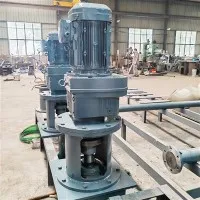
Hey there! I'm a supplier of propeller agitators, and while these nifty devices have their fair share of advantages, they're not without their drawbacks. In this blog, I'll be spilling the beans on the disadvantages of propeller agitators.
1. Limited Mixing Depth
One of the most significant drawbacks of propeller agitators is their limited mixing depth. Propeller agitators work by creating a flow pattern in the fluid. They're great at generating high - speed, localized mixing near the propeller. However, as you move further away from the propeller, especially in deeper tanks, the effectiveness of the mixing drops off significantly.
Imagine you've got a tall storage tank filled with a liquid that needs to be thoroughly mixed. A propeller agitator might do a decent job of mixing the liquid in the immediate vicinity of the propeller, but the bottom layers of the tank may remain relatively unmixed. This can be a real problem in industries where a homogeneous mixture is crucial, like in the Dissolving Kettle Agitator applications. If the components in a dissolving kettle aren't well - mixed, it can lead to inconsistent product quality.
2. High Shear Stress Issues
Propeller agitators can generate high shear stress in the fluid. Shear stress is the force that causes one layer of fluid to slide over another. While some applications, like in Chemical Reactor Agitator scenarios, might require a certain level of shear to initiate chemical reactions, excessive shear can be a problem.
For instance, if you're mixing delicate substances such as polymers or biological materials, high shear stress can break down the molecular structure of these materials. This can change their physical and chemical properties, leading to a product that doesn't meet the desired specifications. In a biological fermentation process, high shear stress can damage the cells, reducing the overall productivity of the process.
3. Energy Inefficiency
When it comes to energy consumption, propeller agitators aren't always the most efficient option. To achieve a certain level of mixing, they often need to run at relatively high speeds. Running at high speeds requires more power, which in turn increases the energy costs.
In large - scale industrial applications, where agitators run continuously, these energy costs can add up quickly. For example, in a Sewage Treatment Mixer system, if a propeller agitator is used to mix the sewage and treatment chemicals, the high energy consumption can be a significant financial burden over time. There are other types of agitators that can achieve similar mixing results with less energy input, making them a more cost - effective choice in the long run.
4. Poor Handling of Viscous Fluids
Propeller agitators struggle when it comes to mixing viscous fluids. Viscous fluids have a high resistance to flow, and the flow patterns created by a propeller agitator may not be sufficient to move these thick fluids effectively.
In industries where viscous materials are common, such as the paint or adhesive manufacturing, a propeller agitator may not be able to provide the necessary mixing. The propeller may end up just spinning in a small pocket of fluid, without being able to disperse the components throughout the entire batch. This can lead to clumping and uneven distribution of ingredients, resulting in a sub - standard product.
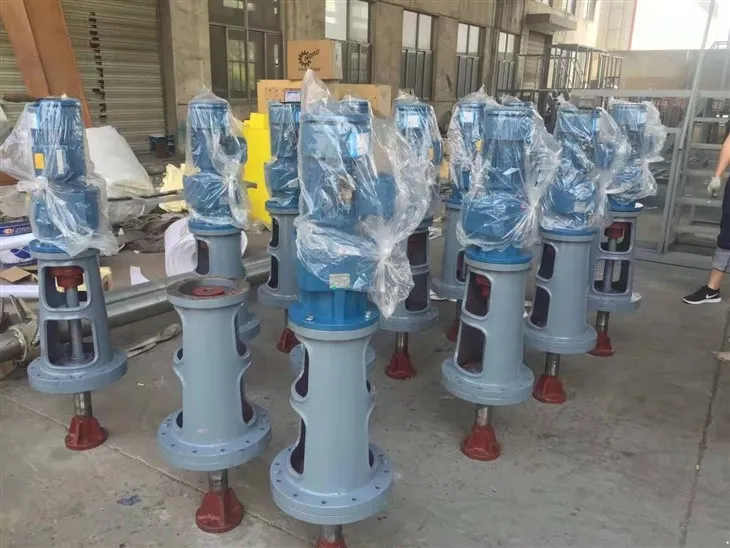

5. Noise and Vibration
Propeller agitators can be quite noisy and cause significant vibration during operation. The high - speed rotation of the propeller in the fluid creates turbulence, which in turn generates noise. This noise can be a nuisance in a workplace environment, especially if the agitator is located in an area where workers are present.
Moreover, the vibration caused by the propeller agitator can also have negative effects. It can loosen connections and fittings over time, leading to potential leaks or mechanical failures. In a chemical processing plant, a leaking agitator can be a serious safety hazard, as it can release harmful chemicals into the environment.
6. Maintenance Requirements
Propeller agitators require regular maintenance to ensure their proper functioning. The moving parts of the agitator, such as the propeller and the motor, are subject to wear and tear. The propeller can get damaged due to the high - speed contact with the fluid and any solid particles present in it.
Replacing worn - out parts can be costly, both in terms of the parts themselves and the labor required for the replacement. Additionally, downtime for maintenance can disrupt production schedules, leading to lost productivity. In a manufacturing facility where production runs are tightly scheduled, any unplanned downtime can have a significant impact on the bottom line.
7. Limited Adaptability
Propeller agitators are designed for specific types of mixing applications. They may not be easily adaptable to different tank sizes, shapes, or fluid properties. For example, if you have a tank with an irregular shape, a propeller agitator may not be able to create an effective mixing pattern.
In industries where the production requirements change frequently, such as in the food and beverage industry, where different products with varying viscosities and densities are produced, a propeller agitator may not be the most versatile option. You may need to invest in multiple agitators to meet the different mixing needs, which can be a costly and space - consuming solution.
Conclusion
So, there you have it - the main disadvantages of propeller agitators. While they do have their place in certain applications, it's important to be aware of these drawbacks when considering using them. If you're facing any of these issues in your mixing processes, or if you're looking for a more suitable agitator solution, don't hesitate to reach out. We're here to help you find the best agitator for your specific needs. Whether it's for a Dissolving Kettle Agitator, Sewage Treatment Mixer, or Chemical Reactor Agitator application, we can provide you with expert advice and high - quality products. Contact us today to start the procurement and negotiation process!
References
- Perry, R. H., & Green, D. W. (Eds.). (1997). Perry's Chemical Engineers' Handbook. McGraw - Hill.
- Paul, E. L., Atiemo - Obeng, V. A., & Kresta, S. M. (2004). Handbook of Industrial Mixing: Science and Practice. Wiley.