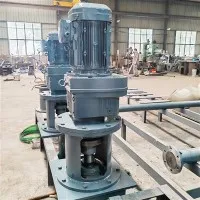
Cycloidal reducers, known for their high torque capacity, compact design, and excellent durability, have emerged as a critical component in modern robotics. As a cycloidal reducer supplier, I have witnessed firsthand the diverse applications of these reducers in the field of robotics. In this blog post, I will explore the various applications of cycloidal reducers in robotics and discuss how they contribute to the performance and functionality of robotic systems.
Industrial Robots
Industrial robots are widely used in manufacturing processes for tasks such as welding, painting, material handling, and assembly. These robots require high precision and repeatability to perform their tasks accurately. Cycloidal reducers play a crucial role in industrial robots by providing high torque transmission with low backlash. The low backlash characteristic ensures that the robot can move precisely and repeatably, reducing errors and improving the quality of the manufactured products.
For example, in welding applications, the robot needs to move the welding torch with high precision to create a consistent weld. A cycloidal reducer can provide the necessary torque and precision to move the torch smoothly and accurately, resulting in high-quality welds. Similarly, in material handling applications, the robot needs to lift and move heavy objects with precision. The high torque capacity of cycloidal reducers allows the robot to handle heavy loads without sacrificing accuracy.


Collaborative Robots (Cobots)
Collaborative robots, or cobots, are designed to work alongside humans in a shared workspace. These robots need to be safe, flexible, and easy to use. Cycloidal reducers are well-suited for cobots due to their compact design and high torque density. The compact design allows the cobot to have a smaller footprint, making it easier to integrate into existing workspaces. The high torque density ensures that the cobot can perform tasks that require high force, such as lifting and moving heavy objects.
In addition, cycloidal reducers have a high level of reliability and durability, which is essential for cobots that are used in industrial environments. The low maintenance requirements of cycloidal reducers also make them a cost-effective solution for cobot applications. For example, in a collaborative assembly line, the cobot can use a cycloidal reducer to perform tasks such as tightening screws or inserting components with high precision.
Service Robots
Service robots are used in a variety of applications, including healthcare, hospitality, and logistics. These robots need to be able to navigate through complex environments and interact with humans in a safe and efficient manner. Cycloidal reducers can help service robots achieve these goals by providing high torque and precision in a compact package.
For example, in healthcare applications, service robots can be used to assist with patient care, such as transporting medical supplies or providing physical therapy. The high torque capacity of cycloidal reducers allows the robot to move heavy equipment and patients with ease. The low backlash characteristic ensures that the robot can move precisely, reducing the risk of injury to the patient. In hospitality applications, service robots can be used to deliver food and drinks to guests. The compact design of cycloidal reducers allows the robot to navigate through narrow corridors and crowded spaces.
Mobile Robots
Mobile robots, such as autonomous guided vehicles (AGVs) and unmanned aerial vehicles (UAVs), are used in a variety of applications, including logistics, agriculture, and surveillance. These robots need to be able to move autonomously and navigate through different terrains. Cycloidal reducers can provide the necessary torque and precision for mobile robots to perform these tasks.
In AGVs, cycloidal reducers can be used to drive the wheels or tracks, providing the necessary power to move the vehicle. The high torque capacity of cycloidal reducers allows the AGV to carry heavy loads and navigate through different terrains. In UAVs, cycloidal reducers can be used to control the pitch, roll, and yaw of the aircraft, providing the necessary stability and control.
Advantages of Cycloidal Reducers in Robotics
There are several advantages of using cycloidal reducers in robotics, including:
- High Torque Capacity: Cycloidal reducers can provide high torque transmission in a compact package, making them suitable for applications that require high force.
- Low Backlash: The low backlash characteristic of cycloidal reducers ensures that the robot can move precisely and repeatably, reducing errors and improving the quality of the work.
- Compact Design: Cycloidal reducers have a compact design, which allows them to be easily integrated into robotic systems without taking up too much space.
- High Efficiency: Cycloidal reducers have a high efficiency, which means that they can convert most of the input power into output power, reducing energy consumption.
- Durability: Cycloidal reducers are designed to be durable and reliable, making them suitable for use in industrial environments.
Our Product Range
As a cycloidal reducer supplier, we offer a wide range of cycloidal reducers to meet the needs of different robotic applications. Our product range includes Cycloidal Pin Gear Speed Reducer, Cycloidal Gear Reducer, and Planetary Cycloidal Gear Speed Reducer. These reducers are designed to provide high performance, reliability, and durability in a compact package.
Our cycloidal reducers are made from high-quality materials and are manufactured using advanced production techniques to ensure the highest level of quality and precision. We also offer custom design and manufacturing services to meet the specific requirements of our customers.
Contact Us for Purchase and Collaboration
If you are interested in our cycloidal reducers or have any questions about their applications in robotics, please feel free to contact us. Our team of experts is ready to assist you in selecting the right reducer for your robotic application and providing you with the best possible service. We look forward to working with you to help you achieve your robotic goals.
References
- "Cycloidal Gear Drives: Principles, Design, and Applications" by F. Litvin and G. Feng.
- "Robotics: Modelling, Planning and Control" by B. Siciliano, L. Sciavicco, L. Villani, and G. Oriolo.
- "Industrial Robotics: Technology, Programming, and Applications" by S. P. Rao.