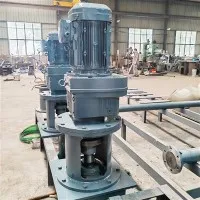
As a supplier of Cubic Screw Jacks, I often receive inquiries from customers about the maintenance of these useful mechanical devices. One of the most common questions is whether it is necessary to lubricate a cubic screw jack, and if so, how often. In this blog post, I will delve into these topics based on scientific knowledge and practical experience.
The Necessity of Lubrication for Cubic Screw Jacks
Cubic screw jacks are essential components in many industrial and mechanical applications. They are used to lift, lower, or position heavy loads with precision. The basic working principle of a screw jack involves the conversion of rotational motion into linear motion through a screw and nut mechanism. During this process, the screw and nut are subject to significant friction and wear.
Reducing Friction
Friction is the enemy of any moving mechanical part. In a cubic screw jack, the friction between the screw and the nut can cause several problems. Firstly, it increases the amount of force required to operate the jack. This means that more energy is wasted in overcoming the frictional resistance, leading to higher power consumption. Secondly, excessive friction can generate a large amount of heat. High temperatures can damage the materials of the screw and nut, reducing their hardness and strength, and ultimately shortening their service life. Lubrication forms a thin film between the screw and the nut, which separates the two surfaces and reduces direct contact, thereby significantly reducing friction.
Preventing Wear and Tear
The continuous contact and relative movement between the screw and the nut can cause wear over time. Wear can lead to dimensional changes in the screw and nut, which may affect the accuracy and stability of the jack's operation. Lubrication acts as a protective layer, reducing the abrasion between the two surfaces. It can also wash away any debris or contaminants that may enter the screw - nut interface, preventing them from causing additional damage.
Corrosion Protection
In many industrial environments, cubic screw jacks are exposed to moisture, chemicals, and other corrosive substances. These can cause corrosion on the surface of the screw and nut, which not only weakens the mechanical properties of the components but also affects the smooth operation of the jack. Lubricants often contain anti - corrosion additives that can form a protective barrier on the metal surface, preventing corrosion from occurring.
How Often to Lubricate a Cubic Screw Jack
The frequency of lubrication depends on several factors, including the operating conditions, the type of lubricant used, and the design of the screw jack.
Operating Conditions
- Load and Speed: If the cubic screw jack is operating under heavy loads and high speeds, the friction and wear between the screw and the nut will be more severe. In such cases, more frequent lubrication is required. For example, in a manufacturing plant where a screw jack is used to lift heavy machinery parts continuously, lubrication may be needed every few days or even daily. On the other hand, if the jack is used for light - load and low - speed applications, such as in a laboratory setting for adjusting the position of a small instrument, lubrication can be carried out less frequently, perhaps once every few months.
- Environment: The environment in which the screw jack operates also plays a crucial role. In a dirty or dusty environment, contaminants are more likely to enter the screw - nut interface, increasing the need for more frequent lubrication. Additionally, in a humid or corrosive environment, the lubricant may degrade more quickly, and more frequent lubrication is necessary to maintain its protective properties. For instance, in a mining or construction site, where the jack is exposed to dust and moisture, lubrication should be performed more often compared to a clean indoor workshop.
Type of Lubricant
- Grease: Grease is a commonly used lubricant for cubic screw jacks. It has good adhesion and can stay in place for a relatively long time. However, the consistency of grease may change over time due to temperature variations and mechanical stress. High - quality greases with good oxidation resistance can last longer. Generally, if a high - quality grease is used, lubrication may be required every 3 - 6 months under normal operating conditions. But if the operating conditions are harsh, such as high temperatures or heavy loads, the interval may need to be shortened to 1 - 2 months.
- Oil: Oil lubricants provide better cooling and flushing properties compared to grease. They can quickly dissipate heat and remove contaminants. However, oil has a lower viscosity and may leak or evaporate more easily. For oil - lubricated screw jacks, more frequent lubrication is usually required. Under normal conditions, oil lubrication may need to be carried out every 1 - 2 months, and in severe operating conditions, it may need to be done weekly or even more frequently.
Design of the Screw Jack
Some cubic screw jacks are designed with sealed or semi - sealed structures, which can prevent contaminants from entering and retain the lubricant better. These types of jacks may require less frequent lubrication compared to open - type screw jacks. Additionally, the material and surface treatment of the screw and nut can also affect the lubrication interval. For example, screw jacks with special coatings or treated surfaces may have lower friction coefficients and better wear resistance, allowing for longer lubrication intervals.
Recommended Lubrication Procedures
When lubricating a cubic screw jack, it is important to follow the correct procedures to ensure effective lubrication.
- Clean the Screw and Nut: Before applying new lubricant, it is necessary to clean the screw and nut thoroughly. Use a suitable cleaning agent to remove any old lubricant, debris, or contaminants. This can be done using a brush or a cloth. Make sure the surfaces are dry before applying new lubricant.
- Apply the Lubricant: For grease lubrication, use a grease gun to apply the grease evenly along the length of the screw. Make sure the grease penetrates into the threads of the screw and nut. For oil lubrication, pour the oil slowly onto the screw, and rotate the screw to ensure that the oil is evenly distributed.
- Operate the Jack: After applying the lubricant, operate the jack a few times to allow the lubricant to spread evenly throughout the screw - nut interface. This will help to form a uniform lubricating film.
Our Product Range and Call to Action
As a leading supplier of cubic screw jacks, we offer a wide range of high - quality products to meet the diverse needs of our customers. Our Stainless Steel Screw Jack is made of high - grade stainless steel, which provides excellent corrosion resistance and durability, making it suitable for harsh environments. Our Small Electric Screw Jack and Mini Electric Screw Jack are ideal for applications where space is limited or precise control is required.
If you are interested in our cubic screw jacks or have any questions about their maintenance and lubrication, please feel free to contact us. We have a team of professional engineers who can provide you with detailed technical support and guidance. We look forward to establishing long - term partnerships with you and helping you find the best solutions for your mechanical lifting and positioning needs.


References
- "Mechanical Design Handbook", CRC Press
- "Lubrication Engineering Handbook", McGraw - Hill Education