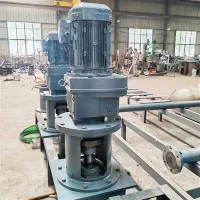
When it comes to the chemical, pharmaceutical, food, and many other industries, the reactor agitator is a crucial piece of equipment. As a reactor agitator supplier, we understand the significance of evaluating the quality of these agitators for our clients. In this blog post, I'll share some key aspects to consider when evaluating the quality of a reactor agitator.


1. Mixing Performance
The primary function of a reactor agitator is to mix substances evenly within the reactor. Therefore, mixing performance is the most fundamental aspect to assess.
Homogeneity of Mixing
One of the key indicators of mixing performance is the homogeneity of the mixture. In a well - functioning agitator, all components should be uniformly distributed throughout the reactor. This can be measured by taking samples from different locations within the reactor at the end of the mixing process and analyzing their composition. The smaller the variation in composition between samples, the better the mixing homogeneity.
For instance, in a chemical reaction where multiple reactants need to be combined precisely, a high - quality agitator ensures that every part of the reaction mixture has the same concentration of reactants. This is essential for achieving consistent reaction outcomes and high - quality products.
Mixing Time
The time it takes for the agitator to achieve a homogeneous mixture is also an important factor. Shorter mixing times indicate higher efficiency. A good agitator should be able to reduce the mixing time without sacrificing the quality of the mixture. This can be determined through practical experiments or by referring to the manufacturer's specifications.
2. Power Consumption
Power consumption is directly related to the operating cost of the reactor agitator. A high - quality agitator should be energy - efficient.
Efficiency of Power Use
Efficient agitators are designed to convert electrical energy into mechanical mixing energy with minimal losses. This means that they can achieve the required mixing performance with relatively low power input. When evaluating an agitator, look at its power consumption under different operating conditions. Manufacturers often provide power consumption curves or performance data that show how the power consumption changes with factors such as agitator speed, viscosity of the mixture, and reactor volume.
Comparison with Industry Standards
Compare the power consumption of the agitator you are considering with industry standards. If an agitator consumes significantly more power than similar products on the market while providing the same or inferior mixing performance, it may not be a high - quality option.
3. Structural Design and Build Quality
The structural design and build quality of a reactor agitator play a crucial role in its durability and reliability.
Material Selection
The materials used in the construction of the agitator must be suitable for the specific application. For example, in corrosive environments, such as in the Desulfurization Agitator used in desulfurization processes, the agitator should be made of corrosion - resistant materials like stainless steel or special alloys. In food or pharmaceutical applications, the materials must meet strict hygiene standards.
Structural Integrity
The agitator should have a strong and stable structure. This includes the design of the shaft, impellers, and support frame. A well - designed shaft should be able to withstand the torque and bending forces generated during operation without breaking or deforming. The impellers should be properly balanced to prevent excessive vibration, which can not only damage the agitator itself but also affect the overall performance of the reactor.
Sealing Performance
Good sealing is essential to prevent leakage of the mixture from the reactor. A high - quality agitator should have reliable sealing mechanisms, such as mechanical seals or gland packing seals. The sealing performance should be evaluated based on its ability to prevent leaks under different pressures and temperatures.
4. Agitator Speed and Control
The ability to control the agitator speed is crucial for achieving optimal mixing results in different processes.
Speed Range
A high - quality agitator should have a wide speed range. Different processes may require different agitator speeds. For example, in a gentle mixing process, a lower speed may be sufficient, while in a high - shear mixing application, a higher speed is needed. A wide speed range allows the agitator to be used in a variety of processes.
Speed Control Accuracy
Accurate speed control is also important. The agitator should be able to maintain a stable speed under different load conditions. This can be achieved through advanced control systems, such as variable frequency drives (VFDs). The accuracy of speed control can be evaluated by measuring the actual speed of the agitator over a period of time and comparing it with the set speed.
5. Maintenance and Serviceability
Ease of maintenance and serviceability are important factors to consider when evaluating the quality of a reactor agitator.
Accessibility for Maintenance
The agitator should be designed in such a way that it is easy to access for maintenance and repair. This includes easy removal of impellers, seals, and other components. For example, if the impellers can be quickly and easily removed without disassembling the entire agitator, it will save a lot of time and effort during maintenance.
Availability of Spare Parts
As a reactor agitator supplier, we ensure that our clients have easy access to spare parts. A high - quality agitator should have a good supply chain for spare parts, so that any damaged components can be replaced in a timely manner. This helps to minimize downtime and keep the production process running smoothly.
Technical Support
Good technical support is also a sign of a high - quality product. Our company provides comprehensive technical support to our clients, including installation guidance, troubleshooting, and performance optimization. When evaluating a reactor agitator, consider the level of technical support that the supplier can offer.
6. Compatibility with Reactor
The agitator must be compatible with the reactor in which it will be installed.
Size and Shape Compatibility
The size and shape of the agitator should be suitable for the reactor. For example, in a tall and narrow reactor, a different type of agitator may be required compared to a short and wide reactor. The agitator should be able to cover the entire volume of the reactor effectively to ensure uniform mixing.
Compatibility with Reactor Operating Conditions
The agitator should be able to operate under the specific conditions of the reactor, such as temperature, pressure, and viscosity of the mixture. For example, in a Chemical Agitator used in high - temperature chemical reactions, the agitator materials and components should be able to withstand the high - temperature environment.
7. Safety Features
Safety is of utmost importance in any industrial equipment, and reactor agitators are no exception.
Over - speed Protection
A high - quality agitator should be equipped with over - speed protection mechanisms. This can prevent the agitator from operating at speeds that are too high, which could cause damage to the equipment or pose a safety hazard to the operators.
Emergency Stop Function
An emergency stop function is essential. In case of an emergency, the operator should be able to quickly stop the agitator to prevent accidents.
Protection Against Electrical Hazards
The agitator should have proper electrical insulation and grounding to protect against electrical hazards. This is especially important in wet or corrosive environments.
Conclusion
Evaluating the quality of a reactor agitator involves considering multiple aspects, including mixing performance, power consumption, structural design, speed control, maintenance, compatibility, and safety features. As a reactor agitator supplier, we are committed to providing our clients with high - quality agitators that meet their specific needs. If you are in the process of selecting a reactor agitator for your application, we encourage you to reach out to us for a more in - depth discussion. Whether you need a Desulfurization Agitator, Chemical Agitator, or Dissolving Kettle Agitator, we have the expertise and products to meet your requirements. Contact us today to start the procurement negotiation process and find the perfect agitator for your reactor.
References
- Perry, R. H., & Green, D. W. (1997). Perry's Chemical Engineers' Handbook. McGraw - Hill.
- Rushton, J. H., Costich, E. W., & Everett, H. J. (1950). Power characteristics of mixing impellers. Chemical Engineering Progress, 46(7), 395 - 404.
- Paul, E. L., Atiemo - Obeng, V. A., & Kresta, S. M. (Eds.). (2004). Handbook of industrial mixing: science and practice. John Wiley & Sons.