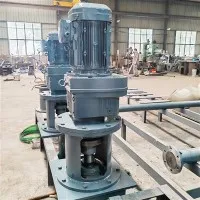
Fluid density is a key factor that impacts the performance of chemical agitators. As a supplier of chemical agitators, I've seen firsthand how different fluid densities can make or break the efficiency of these machines. In this blog, I'll dive into how fluid density affects the performance of a chemical agitator and what you need to know when choosing the right one for your application.
Understanding Fluid Density
Before we get into the nitty - gritty of how density affects agitator performance, let's quickly go over what fluid density is. Density is basically the mass of a substance per unit volume. In the context of fluids used in chemical processes, it can vary widely depending on factors like the type of chemicals, temperature, and pressure.
For example, water at room temperature has a density of about 1000 kg/m³. But if you're dealing with a thick chemical slurry or a high - viscosity oil, the density can be significantly higher. On the other hand, some light solvents might have a lower density than water.
Impact on Agitator Power Requirements
One of the most significant ways fluid density affects agitator performance is through its impact on power requirements. The power needed to operate an agitator is directly related to the density of the fluid. As the density of the fluid increases, so does the power required to move it.
Think of it like trying to stir a thick milkshake versus a glass of water. The milkshake, which is denser, requires more effort to stir. Similarly, an agitator working with a high - density fluid has to work harder to create the necessary flow and mixing.
If you use an agitator with insufficient power for a high - density fluid, it won't be able to achieve proper mixing. The fluid may not circulate well, leading to uneven distribution of chemicals and incomplete reactions. On the flip side, using an overly powerful agitator for a low - density fluid can be a waste of energy and may even cause issues like excessive splashing or foaming.
Flow Patterns
Fluid density also plays a big role in determining the flow patterns inside the mixing vessel. In low - density fluids, the agitator can create relatively fast and efficient flow patterns. The fluid can easily move around the impeller and circulate throughout the tank.
However, in high - density fluids, creating the same flow patterns becomes more challenging. The increased density makes the fluid more resistant to movement, and it may form stagnant zones in the tank. These stagnant areas can be a major problem as they lead to poor mixing and can result in inconsistent product quality.
To overcome this, agitators for high - density fluids often need to be designed with specific impellers and configurations. For example, a Turbine Agitator can be a good choice as it's designed to create strong radial and axial flows, which can help break up the stagnant zones and improve mixing in high - density fluids.
Mixing Time
Mixing time is another performance aspect affected by fluid density. Generally, higher - density fluids take longer to mix compared to lower - density ones. This is because the increased mass and viscosity of the high - density fluid make it more difficult for the agitator to disperse and blend the components evenly.
If you're on a tight production schedule, this longer mixing time can be a real headache. It can slow down your overall production process and increase costs. To reduce the mixing time for high - density fluids, you may need to consider using a more powerful agitator or multiple agitators working in tandem.
Wear and Tear
Fluid density also influences the wear and tear on the agitator components. High - density fluids can put more stress on the impeller, shaft, and bearings. The increased resistance from the fluid means the impeller has to work harder, which can lead to faster wear.
The bearings, which support the shaft and impeller, also experience more load in high - density applications. This can cause premature bearing failure if the agitator is not properly designed or maintained.
For applications involving high - density fluids, it's crucial to choose an agitator with robust components that can withstand the extra stress. For instance, a Industrial Top Entry Agitator is often built with heavy - duty materials and strong bearings to handle the challenges of high - density mixing.
Choosing the Right Agitator Based on Fluid Density
As a chemical agitator supplier, I often get asked how to choose the right agitator for a specific fluid density. Here are some key points to consider:


- Know your fluid density: Measure the density of the fluid accurately. Make sure to account for any changes in density due to temperature or other factors during the mixing process.
- Consider power requirements: Based on the fluid density, calculate the power needed for proper mixing. It's better to over - estimate slightly to ensure the agitator can handle the job effectively.
- Type of impeller: Different impellers work better for different fluid densities. For low - density fluids, a simple paddle impeller might be sufficient, while high - density fluids may require a more complex impeller design like a turbine or a helical impeller.
- Agitator configuration: In some cases, multiple agitators or a specific agitator placement within the tank can improve mixing efficiency for high - density fluids.
Real - World Applications
Let's take a look at some real - world applications where fluid density has a major impact on agitator performance.
In the wastewater treatment industry, a Stainless Steel Sewage Mixer is often used to mix sewage, which is a high - density and viscous fluid. The mixer has to be powerful enough to create a uniform flow and blend the sewage with chemicals for treatment. If the mixer is under - powered or not designed correctly, the treatment process can be ineffective, leading to poor water quality.
In the chemical manufacturing of heavy polymers, the high - density polymer fluids require specialized agitators to ensure proper mixing. These agitators need to be able to handle the high - viscosity and density of the polymers to prevent clumping and ensure consistent product quality.
Contact Us for Your Agitator Needs
If you're in the market for a chemical agitator and need help choosing the right one based on your fluid density requirements, don't hesitate to reach out. We have a wide range of agitators suitable for different fluid densities and applications. Whether you need a small - scale agitator for a laboratory or a large - scale industrial one, we've got you covered. Contact us today to start the procurement discussion and let us find the perfect agitator for your chemical processes.
References
- Levenspiel, O. (1999). Chemical Reaction Engineering. John Wiley & Sons.
- Perry, R. H., & Green, D. W. (2007). Perry's Chemical Engineers' Handbook. McGraw - Hill.