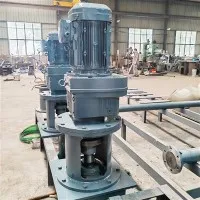
The corrosion resistance of an agitator is a critical factor that significantly impacts its performance and lifespan, especially in industries where the agitator is exposed to harsh chemical environments. As a Propeller Agitator supplier, I have witnessed firsthand how the choice of blade material can make or break the agitator's ability to withstand corrosion. In this blog, I will delve into the various ways in which the agitator's blade material affects its corrosion resistance.
Understanding Corrosion in Agitators
Before we explore the role of blade materials, it's essential to understand what corrosion is and how it occurs in agitators. Corrosion is a natural process that involves the deterioration of a material due to chemical reactions with its environment. In the context of agitators, this usually means the reaction of the blade material with the substances being stirred, such as acids, alkalis, or salts.
There are several types of corrosion that can affect agitators, including uniform corrosion, pitting corrosion, crevice corrosion, and stress corrosion cracking. Uniform corrosion occurs when the entire surface of the blade is attacked evenly, leading to a gradual thinning of the material. Pitting corrosion, on the other hand, results in the formation of small holes or pits on the blade surface, which can penetrate deep into the material and cause structural failure. Crevice corrosion occurs in areas where there are gaps or crevices, such as between the blade and the shaft, and stress corrosion cracking happens when a combination of stress and a corrosive environment causes cracks to form in the material.
The Impact of Blade Material on Corrosion Resistance
The choice of blade material is crucial in determining the agitator's corrosion resistance. Different materials have different chemical compositions and properties, which affect their ability to resist corrosion. Here are some of the most common blade materials used in agitators and how they perform in terms of corrosion resistance:
Stainless Steel
Stainless steel is one of the most widely used materials for agitator blades due to its excellent corrosion resistance, strength, and durability. It contains chromium, which forms a thin, protective oxide layer on the surface of the material, preventing further corrosion. The higher the chromium content, the better the corrosion resistance. Additionally, stainless steel can also contain other elements such as nickel, molybdenum, and titanium, which further enhance its corrosion resistance in specific environments.
For example, 316 stainless steel, which contains molybdenum, is highly resistant to pitting and crevice corrosion in chloride-containing environments, making it suitable for use in applications such as Desulfurization Agitator systems, where the agitator is exposed to sulfuric acid and other corrosive substances. However, stainless steel is not immune to corrosion, and in some cases, it may still be susceptible to stress corrosion cracking in the presence of certain chemicals and high temperatures.
Carbon Steel
Carbon steel is a cost-effective option for agitator blades, but it has relatively poor corrosion resistance compared to stainless steel. It is primarily composed of iron and carbon, and without proper protection, it can rust quickly when exposed to moisture and oxygen. However, carbon steel can be coated with various protective coatings, such as epoxy, polyurethane, or zinc, to improve its corrosion resistance.
These coatings act as a barrier between the steel surface and the corrosive environment, preventing direct contact and reducing the risk of corrosion. In some cases, carbon steel blades may also be used in applications where the corrosive environment is relatively mild, and the agitator is not expected to be in continuous contact with the corrosive substances. For example, in some Side-entry Stirring Device applications where the liquid being stirred is not highly corrosive, carbon steel blades with a protective coating may be sufficient.
Fiberglass Reinforced Plastic (FRP)
FRP is a composite material made of a polymer matrix reinforced with fiberglass. It is lightweight, strong, and has excellent corrosion resistance, making it a popular choice for agitator blades in corrosive environments. FRP blades are resistant to a wide range of chemicals, including acids, alkalis, and solvents, and they do not rust or corrode like metal blades.
However, FRP blades have some limitations. They are not as strong as metal blades, and they may be more susceptible to damage from impact or abrasion. Additionally, the quality of FRP blades can vary depending on the manufacturing process and the type of resin used. It is important to choose a high-quality FRP blade from a reputable manufacturer to ensure its long-term performance and corrosion resistance.
Titanium
Titanium is a highly corrosion-resistant metal that is often used in applications where the agitator is exposed to extremely harsh chemical environments. It forms a stable oxide layer on its surface, which provides excellent protection against corrosion. Titanium is resistant to a wide range of acids, including hydrochloric acid, sulfuric acid, and nitric acid, as well as seawater and other chloride-containing solutions.
However, titanium is also a relatively expensive material, and its high cost may limit its use in some applications. Additionally, titanium blades require special handling and installation procedures to prevent damage to the protective oxide layer. Despite these challenges, titanium is an excellent choice for applications where corrosion resistance is of utmost importance, such as in the chemical and pharmaceutical industries.
Factors to Consider When Choosing Blade Material
When choosing the blade material for an agitator, several factors need to be considered, including the type of corrosive environment, the operating conditions, the cost, and the expected lifespan of the agitator. Here are some guidelines to help you make an informed decision:
Corrosive Environment
The first step in choosing the blade material is to identify the type of corrosive environment the agitator will be exposed to. This includes the type of chemicals, the concentration, the temperature, and the pH level. Different materials have different resistance to different chemicals, so it is important to choose a material that is compatible with the specific corrosive environment.
For example, if the agitator will be used in a sulfuric acid environment, stainless steel or titanium may be the best choices, while in a caustic soda environment, carbon steel with a protective coating or FRP may be suitable.
Operating Conditions
The operating conditions of the agitator, such as the speed, the torque, and the agitation intensity, also need to be considered. High-speed agitators may require stronger and more durable blade materials, while low-speed agitators may be able to use lighter and less expensive materials. Additionally, if the agitator will be operating in a high-temperature environment, the material's thermal stability needs to be taken into account.
Cost
Cost is always a factor in any purchasing decision. While it is important to choose a blade material that provides adequate corrosion resistance, it is also necessary to balance the cost with the performance and the expected lifespan of the agitator. In some cases, a more expensive material may be justified if it can significantly extend the agitator's lifespan and reduce maintenance costs.
Expected Lifespan
The expected lifespan of the agitator is another important consideration. If the agitator is expected to be in service for a long time, it may be worth investing in a higher-quality and more corrosion-resistant blade material. On the other hand, if the agitator is only needed for a short-term project, a less expensive material may be sufficient.
Conclusion
In conclusion, the blade material of an agitator plays a crucial role in determining its corrosion resistance. Different materials have different properties and performance characteristics, and the choice of material should be based on the specific corrosive environment, the operating conditions, the cost, and the expected lifespan of the agitator. As a Propeller Agitator supplier, we offer a wide range of blade materials to meet the diverse needs of our customers. Whether you need a Four Blade Propeller Agitator for a mild corrosive environment or a high-performance agitator for a harsh chemical application, we can help you choose the right blade material to ensure the long-term performance and reliability of your agitator.


If you are interested in learning more about our Propeller Agitators or need assistance in selecting the appropriate blade material for your application, please feel free to contact us. Our team of experts is ready to provide you with professional advice and support to help you make the best decision for your business.
References
- Fontana, M. G., & Greene, N. D. (1967). Corrosion Engineering. McGraw-Hill.
- Uhlig, H. H., & Revie, R. W. (1985). Corrosion and Corrosion Control. Wiley.
- ASM Handbook, Volume 13A: Corrosion: Fundamentals, Testing, and Protection. ASM International.