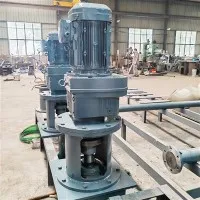
In the dynamic landscape of the pharmaceutical industry, the pursuit of excellence in production processes is unwavering. One crucial element that often goes unnoticed but plays a pivotal role in pharmaceutical manufacturing is the reactor agitator. As a trusted reactor agitator supplier, I am excited to delve into the question: Can a reactor agitator be used in pharmaceutical industries?
The Role of Reactor Agitators in Pharmaceutical Manufacturing
Pharmaceutical manufacturing involves a series of complex processes, including mixing, blending, emulsifying, and suspending various substances. These processes are critical for ensuring the uniformity, stability, and quality of pharmaceutical products. Reactor agitators are designed to facilitate these processes by providing efficient and consistent mixing within reactors.
One of the primary functions of a reactor agitator is to promote mass transfer and heat transfer within the reactor. In pharmaceutical manufacturing, many reactions are exothermic or endothermic, and proper heat transfer is essential for maintaining the desired reaction temperature. By ensuring uniform mixing, the agitator helps to distribute heat evenly throughout the reactor, preventing hot spots or cold spots that could affect the reaction kinetics and product quality.
Moreover, reactor agitators are used to disperse solid particles, dissolve gases, and create homogeneous mixtures. In the production of pharmaceuticals, it is often necessary to mix different ingredients, such as active pharmaceutical ingredients (APIs), excipients, solvents, and additives, to achieve the desired formulation. A well-designed agitator can ensure that these ingredients are thoroughly mixed, resulting in a consistent and high-quality product.
Types of Reactor Agitators Suitable for Pharmaceutical Industries
There are several types of reactor agitators available in the market, each with its own unique features and applications. When selecting a reactor agitator for pharmaceutical industries, it is important to consider factors such as the type of reaction, the viscosity of the fluid, the size and shape of the reactor, and the desired mixing intensity.
One commonly used type of reactor agitator in pharmaceutical industries is the Vertical Turbine Agitator. Vertical turbine agitators are characterized by their vertical shaft and impellers, which are designed to create a radial flow pattern within the reactor. This type of agitator is suitable for applications where high shear mixing is required, such as emulsification, dispersion, and dissolution.
Another popular type of reactor agitator is the Stainless Steel Sewage Mixer. Stainless steel sewage mixers are made of high-quality stainless steel, which makes them resistant to corrosion and suitable for use in pharmaceutical manufacturing processes that involve corrosive chemicals or high-pressure environments. These mixers are typically used for mixing liquids with low to medium viscosity and can be customized to meet the specific requirements of the pharmaceutical industry.
In addition to vertical turbine agitators and stainless steel sewage mixers, there are also other types of reactor agitators available, such as paddle agitators, anchor agitators, and propeller agitators. Each type of agitator has its own advantages and disadvantages, and the selection of the appropriate agitator depends on the specific application and process requirements.
Advantages of Using Reactor Agitators in Pharmaceutical Industries
The use of reactor agitators in pharmaceutical industries offers several advantages, including improved product quality, increased production efficiency, and reduced manufacturing costs.
One of the main advantages of using reactor agitators is the improvement in product quality. By ensuring uniform mixing and dispersion of ingredients, reactor agitators help to eliminate variations in product composition and properties, resulting in a more consistent and high-quality product. This is particularly important in the pharmaceutical industry, where product quality and safety are of utmost importance.
In addition to improving product quality, reactor agitators also help to increase production efficiency. By providing efficient mixing and heat transfer, agitators can reduce the reaction time and improve the overall productivity of the manufacturing process. This can lead to significant cost savings for pharmaceutical companies, as they can produce more products in less time.


Another advantage of using reactor agitators is the reduction in manufacturing costs. By ensuring uniform mixing and dispersion of ingredients, agitators can reduce the amount of raw materials and energy required for the manufacturing process. This can lead to lower production costs and increased profitability for pharmaceutical companies.
Challenges and Considerations in Using Reactor Agitators in Pharmaceutical Industries
While reactor agitators offer many benefits in pharmaceutical industries, there are also some challenges and considerations that need to be addressed.
One of the main challenges in using reactor agitators in pharmaceutical industries is the need for strict compliance with regulatory requirements. The pharmaceutical industry is highly regulated, and manufacturers are required to comply with various regulations and standards, such as Good Manufacturing Practices (GMP), to ensure the safety and quality of their products. When selecting a reactor agitator, it is important to ensure that it meets all the relevant regulatory requirements and is designed and manufactured in accordance with GMP guidelines.
Another challenge is the need for proper maintenance and cleaning of the reactor agitator. In pharmaceutical manufacturing, it is essential to prevent cross-contamination between different batches of products. Therefore, the reactor agitator needs to be thoroughly cleaned and sanitized between each batch to ensure that there is no residue or contamination left behind. This requires a proper cleaning and maintenance schedule, as well as the use of appropriate cleaning agents and techniques.
In addition to regulatory compliance and maintenance, another consideration in using reactor agitators in pharmaceutical industries is the selection of the appropriate materials of construction. The materials used in the construction of the agitator need to be compatible with the pharmaceutical products being processed and should not leach any harmful substances into the product. This requires careful consideration of the chemical properties of the pharmaceutical products and the materials of construction of the agitator.
Conclusion
In conclusion, reactor agitators can be effectively used in pharmaceutical industries to improve product quality, increase production efficiency, and reduce manufacturing costs. As a reactor agitator supplier, we understand the unique requirements and challenges of the pharmaceutical industry and offer a wide range of high-quality agitators that are designed to meet the specific needs of pharmaceutical manufacturers.
If you are a pharmaceutical manufacturer looking for a reliable reactor agitator supplier, we invite you to contact us for more information. Our team of experts will be happy to assist you in selecting the appropriate agitator for your application and provide you with the necessary support and guidance throughout the purchasing process.
References
- Perry, R. H., & Green, D. W. (Eds.). (2008). Perry's Chemical Engineers' Handbook. McGraw-Hill.
- Walas, S. M. (1990). Chemical Process Equipment: Selection and Design. Butterworth-Heinemann.
- Tatterson, G. B. (1991). Fluid Mixing and Gas Dispersion in Agitated Tanks. McGraw-Hill.