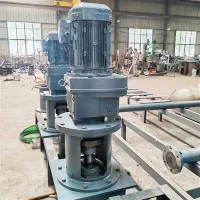
Hey there! As a cycloidal reducer supplier, I often get asked if these bad boys can be used in a marine environment. Well, let's dive right into it and see if cycloidal reducers are a good fit for the high - seas.
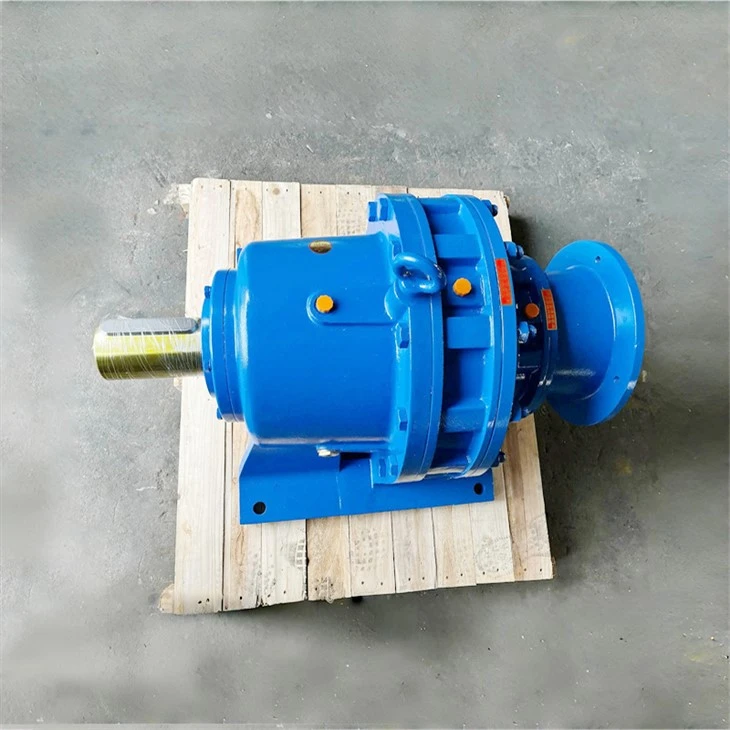
First off, let's understand what a cycloidal reducer is. Cycloidal reducers are known for their high torque capacity, compact size, and excellent shock - load resistance. There are different types, like the Cycloidal Pin Wheel Reducer, Planetary Cycloidal Gear Speed Reducer, and Cycloidal Pin Gear Speed Reducer. These reducers work on the principle of a cycloidal disc rotating in an eccentric motion within a set of pins or rollers, which translates to a very efficient speed reduction mechanism.
Now, the marine environment is a tough one. It's full of challenges that can make or break a piece of equipment. The most obvious one is corrosion. Saltwater is extremely corrosive, and any metal parts in a reducer can quickly start to rust and deteriorate if not properly protected. But here's the good news: many of our cycloidal reducers can be designed with corrosion - resistant materials. We can use stainless steel for critical components, or apply special coatings that act as a barrier between the metal and the saltwater. This helps to significantly extend the lifespan of the reducer in a marine setting.
Another challenge in the marine environment is vibration. Boats and ships are constantly moving, and this movement creates vibrations that can affect the performance of mechanical equipment. Cycloidal reducers are well - suited to handle these vibrations. Their unique design distributes the load evenly across multiple contact points, which means they can better withstand the shocks and vibrations associated with a moving vessel. This also reduces the wear and tear on the internal components, leading to less maintenance and longer service intervals.
Temperature variations are also a factor. In the marine environment, you can go from the cold depths of the ocean to the hot sun on the deck. Cycloidal reducers are designed to operate within a wide range of temperatures. We use high - quality lubricants that can maintain their viscosity and performance in both cold and hot conditions. This ensures that the reducer continues to function smoothly, regardless of the temperature outside.
Dust and debris are also present in the marine environment. Seawater can carry sand, dirt, and other particles that can find their way into the reducer. To combat this, we can design our cycloidal reducers with sealed enclosures. These enclosures prevent dust and debris from entering the internal components, protecting the gears and bearings from damage.
When it comes to installation, our cycloidal reducers are relatively easy to install on marine vessels. They are compact in size, which means they don't take up a lot of space. This is a huge advantage on a boat or ship, where space is often at a premium. Plus, their simple design makes them easy to integrate into existing systems.
Now, let's talk about the applications. There are several areas on a marine vessel where cycloidal reducers can be used. One common application is in winches. Winches are used for tasks like raising and lowering anchors, pulling in fishing nets, or handling cargo. Cycloidal reducers can provide the high torque needed for these heavy - duty tasks, while also being able to handle the intermittent operation and the shock loads associated with winch use.
Another application is in steering systems. A reliable steering system is crucial for the safety of a vessel. Cycloidal reducers can offer precise control and high efficiency, ensuring that the steering mechanism responds accurately to the commands from the helm.
They can also be used in propulsion systems, especially in smaller boats or auxiliary propulsion units. Their high - torque output and compact size make them a great choice for powering propellers or thrusters.
So, to sum it up, yes, cycloidal reducers can definitely be used in a marine environment. With the right design, materials, and protection, they can withstand the harsh conditions of the sea and provide reliable performance for a long time.
If you're in the marine industry and are looking for a high - quality cycloidal reducer, we'd love to talk to you. Whether you need a Cycloidal Pin Wheel Reducer, a Planetary Cycloidal Gear Speed Reducer, or a Cycloidal Pin Gear Speed Reducer, we've got you covered. Reach out to us to discuss your specific requirements and let's find the perfect solution for your marine application.
References:

- General knowledge of cycloidal reducer technology and marine engineering principles