

The maximum allowable input power of a cycloidal reducer is a critical parameter that significantly impacts its performance and application scope. As a supplier of cycloidal reducers, understanding this parameter is essential for providing customers with the most suitable products for their specific needs.
Understanding Cycloidal Reducers
Cycloidal reducers are a type of speed - reducing device known for their high reduction ratios, compact size, and high torque transmission capabilities. They operate on a unique principle where a cycloidal disc rotates eccentrically within a housing filled with pins. The interaction between the cycloidal disc and the pins results in a reduction of the input speed and an increase in torque output.
There are different types of cycloidal reducers available in the market, such as the Cycloidal Pin Wheel Reducer and the XWD Series Cycloidal Gear Reducer. Each type has its own design characteristics and performance parameters, which ultimately affect the maximum allowable input power.
Factors Affecting the Maximum Allowable Input Power
1. Material and Manufacturing Quality
The materials used in the construction of a cycloidal reducer play a crucial role in determining its maximum allowable input power. High - quality materials with excellent mechanical properties, such as high - strength steel for the cycloidal disc and pins, can withstand greater forces and torques. Advanced manufacturing processes ensure precise dimensions and smooth surfaces, reducing friction and wear. This allows the reducer to handle higher input powers without premature failure.
2. Heat Dissipation
As the input power increases, the amount of heat generated within the reducer also rises. Efficient heat dissipation is necessary to maintain the optimal operating temperature of the reducer. Overheating can lead to a decrease in the lubricant's viscosity, which in turn increases friction and wear. Reducers with better heat dissipation designs, such as larger surface areas or built - in cooling fins, can handle higher input powers.
3. Lubrication
Proper lubrication is essential for the smooth operation of a cycloidal reducer. A high - quality lubricant reduces friction between the moving parts, minimizes wear, and helps dissipate heat. The type of lubricant, its viscosity, and the lubrication method (e.g., splash lubrication or forced - feed lubrication) all affect the reducer's ability to handle input power. Insufficient or improper lubrication can lead to increased power losses and reduced maximum allowable input power.
4. Reduction Ratio
The reduction ratio of a cycloidal reducer is the ratio of the input speed to the output speed. Higher reduction ratios generally result in higher torque outputs but may also limit the maximum allowable input power. This is because the internal forces within the reducer increase as the reduction ratio increases, and the components need to be able to withstand these forces.
Determining the Maximum Allowable Input Power
Manufacturers typically provide the maximum allowable input power ratings for their cycloidal reducers in the product specifications. These ratings are determined through a combination of theoretical calculations and practical testing.

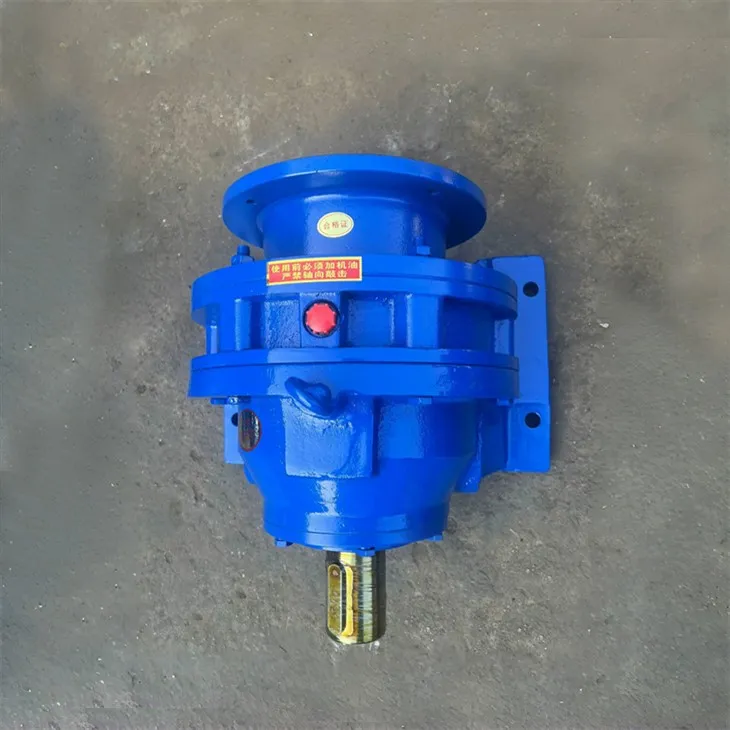
Theoretical calculations involve analyzing the mechanical stresses and forces acting on the various components of the reducer, such as the cycloidal disc, pins, and bearings. Finite element analysis (FEA) is often used to simulate the behavior of the components under different loads and input powers.
Practical testing is also essential to validate the theoretical calculations. Manufacturers conduct tests on prototypes and production - level reducers under various operating conditions to measure factors such as temperature rise, power consumption, and wear. The results of these tests are used to refine the maximum allowable input power ratings.
Importance of Staying within the Maximum Allowable Input Power
Exceeding the maximum allowable input power can have serious consequences for the cycloidal reducer. It can lead to accelerated wear of the components, increased heat generation, and ultimately, premature failure of the reducer. This not only results in costly repairs or replacements but also causes downtime in the equipment where the reducer is installed.
For example, if a cycloidal reducer is used in a conveyor system and the input power exceeds its maximum allowable rating, the cycloidal disc may experience excessive stress and crack. The pins may also wear out quickly, leading to a loss of torque transmission efficiency. In a worst - case scenario, the entire reducer may fail, causing the conveyor system to stop working.
Applications and Maximum Allowable Input Power
Cycloidal reducers are used in a wide range of applications, each with its own power requirements.
1. Industrial Automation
In industrial automation, cycloidal reducers are used in robotic arms, conveyors, and packaging machinery. These applications often require high - precision motion control and varying levels of torque. The maximum allowable input power of the reducer needs to be selected based on the specific requirements of the application. For example, a robotic arm that needs to lift heavy objects may require a cycloidal reducer with a relatively high maximum allowable input power.
2. Renewable Energy
In wind turbines, cycloidal reducers are used to convert the low - speed, high - torque rotation of the blades into high - speed rotation suitable for generators. The input power from the wind can vary significantly, and the reducer needs to be able to handle the maximum power that the wind turbine can generate. Cycloidal Gear Reducer designs with high maximum allowable input powers are preferred in these applications.
Choosing the Right Cycloidal Reducer Based on Input Power
When selecting a cycloidal reducer for a specific application, it is crucial to accurately determine the required input power. This involves considering factors such as the load characteristics, the required speed and torque, and the duty cycle of the application.
Once the required input power is determined, it is important to choose a reducer with a maximum allowable input power rating that is slightly higher than the required power. This provides a safety margin to account for any unexpected variations in the operating conditions, such as sudden increases in load or temperature.
Conclusion
The maximum allowable input power of a cycloidal reducer is a complex parameter that is influenced by multiple factors, including material quality, heat dissipation, lubrication, and reduction ratio. As a cycloidal reducer supplier, we understand the importance of providing accurate information about this parameter to our customers. By carefully considering the specific requirements of each application and selecting the appropriate cycloidal reducer, we can ensure optimal performance and long - term reliability.
If you are in the market for a cycloidal reducer and need assistance in choosing the right product based on your input power requirements, please feel free to contact us for more information and to start a procurement discussion. Our team of experts is ready to help you find the most suitable solution for your needs.
References
- Budynas, R. G., & Nisbett, J. K. (2011). Shigley's Mechanical Engineering Design. McGraw - Hill.
- Norton, R. L. (2012). Design of Machinery: An Introduction to the Synthesis and Analysis of Mechanisms and Machines. Pearson.
- Manufacturer's product catalogs for cycloidal reducers.


