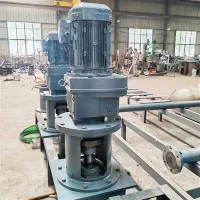
As a supplier of reactor agitators, I've had the privilege of delving deep into the intricate world of their acoustic properties. Understanding these properties is not only crucial for the design and optimization of agitators but also for ensuring their efficient and safe operation in various industrial applications.
The Basics of Acoustic Properties in Reactor Agitators
Acoustic properties in reactor agitators refer to the way these devices interact with sound waves during their operation. When an agitator is in motion, it creates a series of fluid - dynamic phenomena that generate sound. This sound can provide valuable insights into the agitator's performance, including its mixing efficiency, mechanical integrity, and the state of the fluid being mixed.
One of the primary acoustic features of a reactor agitator is the noise it produces. The noise level can vary significantly depending on several factors. The design of the agitator blades plays a vital role. For example, agitators with poorly designed blades may cause turbulent flow patterns that result in high - frequency noise. These high - frequency sounds are often associated with inefficiencies in the mixing process, as they can indicate that the blades are not effectively moving the fluid in the reactor.
The rotational speed of the agitator is another critical factor. As the speed increases, the noise level generally rises as well. This is because higher speeds lead to more intense fluid - blade interactions, creating more vigorous turbulence and thus more noise. However, it's not just about the quantity of noise; the frequency spectrum of the noise can also reveal important information. A sudden change in the frequency distribution of the noise could signal a problem, such as a damaged blade or an imbalance in the agitator shaft.
The Role of Fluid Properties
The acoustic properties of a reactor agitator are also heavily influenced by the properties of the fluid inside the reactor. Viscosity is one of the most significant fluid properties in this regard. In a highly viscous fluid, the agitator has to work harder to move the fluid, which can result in a lower - frequency, more intense noise. The thick fluid resists the movement of the agitator blades, causing a build - up of pressure around the blades and creating a distinct acoustic signature.
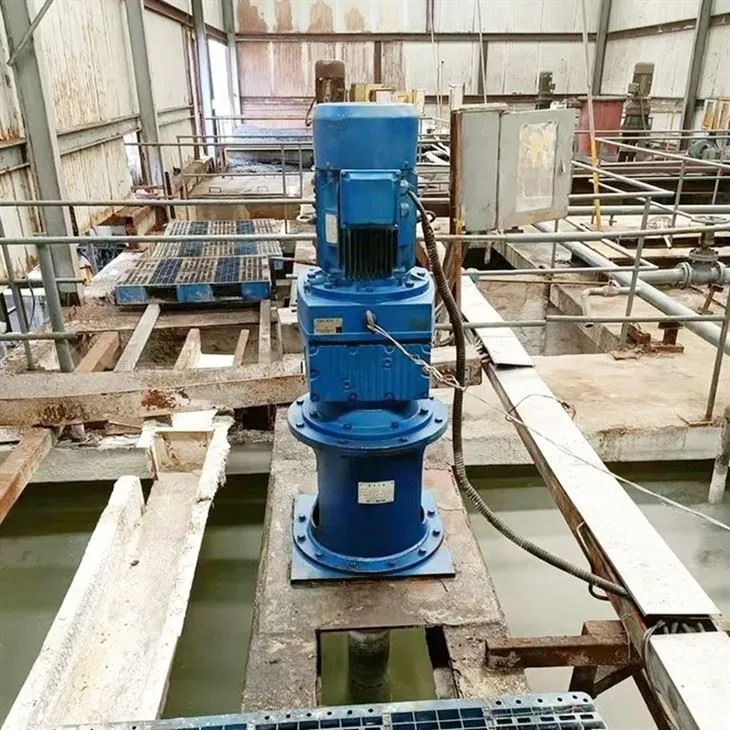
On the other hand, in low - viscosity fluids, the agitator can move more freely. The resulting noise is typically of a higher frequency and lower intensity. The fluid flows more easily around the blades, and the turbulence generated is less severe compared to high - viscosity fluids.
The density of the fluid also affects the acoustic behavior. Denser fluids require more energy to be moved by the agitator. This can lead to increased noise levels, especially if the agitator is not properly sized or designed for the specific density of the fluid. For instance, if a light - duty agitator is used in a reactor with a very dense fluid, it may struggle to operate efficiently, and the increased stress on the agitator can be heard as louder and more irregular noise.
Acoustic Monitoring for Performance Evaluation
Acoustic monitoring has emerged as a powerful tool for evaluating the performance of reactor agitators. By analyzing the sound generated by the agitator, we can detect early signs of wear and tear, mechanical failures, and process inefficiencies.
For example, a change in the pitch or tone of the noise can indicate that the agitator blades are starting to wear. As the blades become dull or damaged, the way they interact with the fluid changes, which in turn alters the acoustic properties. This early detection can save significant costs in terms of maintenance and production downtime.
In addition, acoustic monitoring can help optimize the mixing process. By adjusting the rotational speed or blade design based on the acoustic feedback, we can achieve a more uniform and efficient mixing. This is particularly important in industries where precise mixing is critical, such as the pharmaceutical and chemical industries.

Our Product Offerings and Acoustic Considerations
At our company, we take the acoustic properties of our reactor agitators very seriously. We offer a wide range of agitators, including the Dissolving Kettle Agitator and [Stainless Steel Sewage Mixer](/agitators/stainless - steel - sewage - mixer.html), in addition to our high - quality [Reactor Agitator](/agitators/reactor - agitator.html).
When designing our agitators, we conduct extensive acoustic testing to ensure that they operate quietly and efficiently. We use advanced computational fluid dynamics (CFD) simulations to predict the acoustic behavior of the agitators under different operating conditions. This allows us to optimize the blade design, rotational speed, and other parameters to minimize noise while maximizing mixing performance.
Our Dissolving Kettle Agitator is designed to handle a variety of fluids with different viscosities and densities. The unique blade design reduces turbulence and noise, ensuring a smooth and efficient mixing process. The Stainless Steel Sewage Mixer, on the other hand, is built to withstand the harsh conditions of sewage treatment plants. Its robust construction and optimized blade geometry result in low - noise operation even in challenging environments.
Our Reactor Agitator is the flagship product in our lineup. It combines state - of - the - art technology with years of engineering expertise. The agitator is designed to provide precise and uniform mixing in a wide range of industrial reactors. We have paid special attention to its acoustic properties, and through continuous research and development, we have been able to reduce the noise level significantly while improving its overall performance.
Contact Us for Your Agitator Needs
If you are in the market for a high - quality reactor agitator, we invite you to reach out to us. Our team of experts is ready to assist you in selecting the right agitator for your specific application. We understand that every industrial process is unique, and we are committed to providing customized solutions that meet your exact requirements.
Whether you need a Dissolving Kettle Agitator for your chemical plant, a Stainless Steel Sewage Mixer for your wastewater treatment facility, or a Reactor Agitator for your large - scale industrial reactor, we have the expertise and the products to serve you. Contact us today to start a discussion about your agitator needs and to learn more about how our products can enhance the efficiency and performance of your operations.
References
- "Fluid Mechanics and Mixing in Agitated Vessels" by John R. Grace, et al.
- "Acoustic Monitoring of Industrial Equipment" by Peter J. Thomas.
- "Design and Optimization of Reactor Agitators" by Maria A. Lopez.