

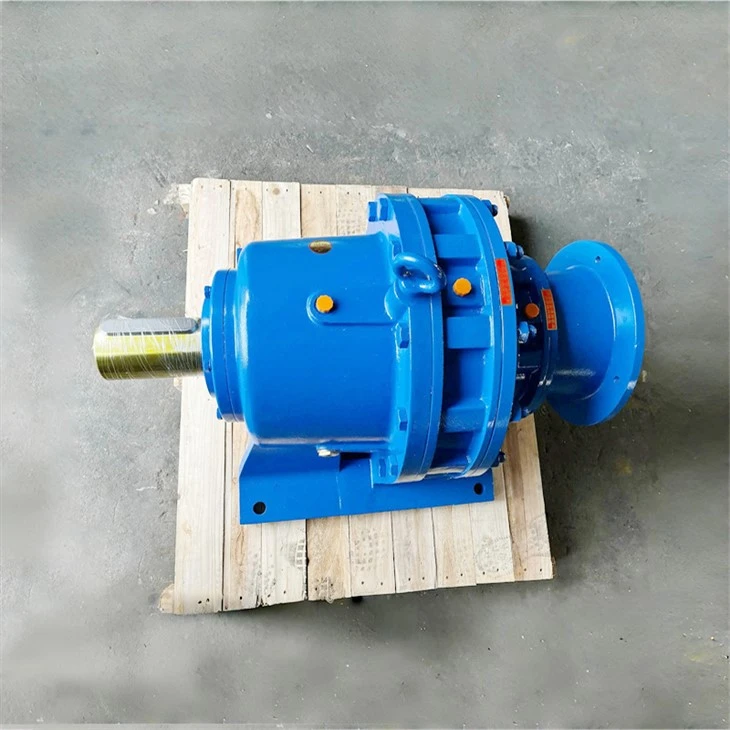
Hey there! As a cycloidal reducer supplier, I often get asked about how to measure the efficiency of these nifty pieces of machinery. Cycloidal reducers, like the Cycloidal Pin Wheel Reducer, Cycloidal Gear Reducer, and Planetary Cycloidal Gear Speed Reducer, are known for their high torque, compact size, and smooth operation. But measuring their efficiency is crucial to ensure you're getting the most out of your investment.
What is Efficiency Anyway?
Before we dive into the nitty - gritty of measuring efficiency, let's quickly go over what efficiency means in the context of a cycloidal reducer. Efficiency is basically the ratio of the output power to the input power. In simple terms, it tells you how much of the power you put into the reducer actually gets transferred to the output shaft. A more efficient reducer wastes less energy as heat and other losses, which is great for your bottom line and the environment.
Factors Affecting Cycloidal Reducer Efficiency
There are several factors that can impact the efficiency of a cycloidal reducer. First up is friction. Friction occurs between the moving parts inside the reducer, like the cycloidal discs and the pins. The more friction there is, the more energy is lost as heat, and the lower the efficiency.
Another factor is the quality of the materials used. High - quality materials with good wear resistance can reduce friction and improve efficiency over the long term. The design of the reducer also plays a huge role. A well - designed cycloidal reducer will have optimal gear ratios, clearances, and lubrication channels, all of which contribute to better efficiency.

Measuring Input and Output Power
To measure the efficiency of a cycloidal reducer, you first need to measure the input and output power. Measuring the input power is relatively straightforward. You can use a power meter to measure the electrical power going into the motor that drives the reducer. Just make sure the motor is running under normal operating conditions.
For the output power, things get a bit more complicated. You can measure the torque and speed at the output shaft of the reducer. The power at the output shaft (P_out) can be calculated using the formula: P_out = (2π × N × T) / 60, where N is the rotational speed in revolutions per minute (RPM) and T is the torque in Newton - meters (Nm).
Measuring Torque
There are a few different ways to measure torque at the output shaft. One common method is to use a torque transducer. This device can be attached to the output shaft and will directly measure the torque. Another option is to use a dynamometer. A dynamometer can measure both torque and speed, which is handy for calculating the output power.
Measuring Speed
Measuring the speed of the output shaft is usually done with a tachometer. You can use either a contact or non - contact tachometer. A contact tachometer needs to be physically touching the output shaft, while a non - contact tachometer uses infrared or laser technology to measure the speed without touching the shaft.
Calculating Efficiency
Once you have the input power (P_in) and the output power (P_out), you can calculate the efficiency (η) using the formula: η = (P_out / P_in) × 100%. This will give you the efficiency as a percentage. For example, if the input power is 1000 watts and the output power is 900 watts, the efficiency is (900 / 1000) × 100% = 90%.
Testing Under Different Conditions
It's important to test the cycloidal reducer under different operating conditions. For example, you should test it at different loads and speeds. A reducer might have different efficiencies at low loads compared to high loads. By testing under a variety of conditions, you can get a more accurate picture of how the reducer will perform in real - world applications.
Using Software for Efficiency Analysis
There are also software tools available that can help you analyze the efficiency of a cycloidal reducer. These tools can take into account factors like friction, gear meshing, and lubrication to simulate the performance of the reducer. They can also help you optimize the design of the reducer to improve efficiency.
Importance of Regular Maintenance
Regular maintenance is key to keeping your cycloidal reducer operating at peak efficiency. Make sure to keep the reducer properly lubricated. The right lubricant can reduce friction and wear, which in turn improves efficiency. Also, check for any signs of wear and tear on the parts. Worn - out parts can increase friction and reduce efficiency.
Comparing Different Cycloidal Reducers
If you're in the market for a cycloidal reducer, comparing the efficiency of different models is a must. Look for manufacturers that provide efficiency data for their reducers. Keep in mind that the efficiency can vary depending on the size, design, and application of the reducer.
Conclusion
Measuring the efficiency of a cycloidal reducer is an important step in ensuring that you're getting the best performance and value from your investment. By understanding the factors that affect efficiency, measuring the input and output power correctly, and testing under different conditions, you can accurately assess the efficiency of your cycloidal reducer.
If you're interested in purchasing a high - efficiency cycloidal reducer or have any questions about measuring efficiency, feel free to reach out to us. We're here to help you make the right choice for your application.
References
- "Handbook of Mechanical Engineering", various authors
- "Gear Design and Application" by Dudley, Darle W.


