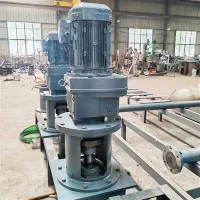
As a supplier of Chemical Agitators, I've had the privilege of witnessing firsthand the critical role that various components play in the efficient operation of these machines. Among these components, the gearbox stands out as a key element that significantly influences the performance and functionality of a chemical agitator. In this blog post, I'll delve into the role of the gearbox in a chemical agitator, exploring its functions, types, and the impact it has on the overall operation of the equipment.
Understanding the Basics of a Chemical Agitator
Before we dive into the role of the gearbox, let's briefly understand what a chemical agitator is. A chemical agitator is a device used to mix, blend, or stir various chemicals in a tank or vessel. It is widely used in industries such as chemical manufacturing, pharmaceuticals, food and beverage, and wastewater treatment. The primary goal of a chemical agitator is to ensure uniform mixing of the chemicals, which is essential for achieving consistent product quality, efficient chemical reactions, and proper heat transfer.


There are different types of chemical agitators available in the market, each designed to meet specific application requirements. Some common types include Propeller Agitator, paddle agitators, turbine agitators, and anchor agitators. These agitators are powered by a motor, which provides the necessary rotational force to drive the agitator blades or impellers.
The Role of the Gearbox in a Chemical Agitator
The gearbox in a chemical agitator serves several important functions that are crucial for the proper operation of the equipment. Here are some of the key roles of the gearbox:
Speed Reduction
One of the primary functions of the gearbox is to reduce the speed of the motor and increase the torque. Most electric motors operate at high speeds, typically ranging from 1,500 to 3,600 revolutions per minute (RPM). However, in a chemical agitator, the agitator blades or impellers need to rotate at a much lower speed to ensure efficient mixing. The gearbox uses a series of gears to reduce the speed of the motor output shaft to the desired speed for the agitator. This speed reduction allows for better control of the mixing process and prevents excessive splashing or turbulence in the tank.
Torque Amplification
In addition to speed reduction, the gearbox also amplifies the torque provided by the motor. Torque is the rotational force that is required to turn the agitator blades or impellers. When the speed is reduced, the torque is increased proportionally according to the gear ratio. This increased torque is necessary to overcome the resistance of the liquid being mixed and to ensure that the agitator can operate smoothly even under heavy loads. Without a gearbox, the motor would not be able to provide enough torque to drive the agitator effectively, especially in applications where the viscosity of the liquid is high.
Direction Control
The gearbox also allows for control of the direction of rotation of the agitator. In some applications, it may be necessary to reverse the direction of rotation of the agitator blades or impellers to achieve better mixing results. The gearbox can be designed to provide forward and reverse rotation options, which can be controlled manually or automatically depending on the requirements of the process.
Power Transmission
Another important role of the gearbox is to transmit the power from the motor to the agitator shaft. The gearbox uses a series of gears and shafts to transfer the rotational energy from the motor to the agitator, ensuring that the power is transmitted efficiently and without any loss. This efficient power transmission is essential for the reliable operation of the chemical agitator and for minimizing energy consumption.
Types of Gearboxes Used in Chemical Agitators
There are several types of gearboxes that are commonly used in chemical agitators, each with its own advantages and disadvantages. Here are some of the most common types of gearboxes:
Helical Gearboxes
Helical gearboxes are one of the most widely used types of gearboxes in chemical agitators. They use helical gears, which have teeth that are cut at an angle to the axis of rotation. This design allows for smoother and quieter operation compared to other types of gears, as the teeth engage gradually rather than all at once. Helical gearboxes also have a higher load-carrying capacity and are more efficient than spur gearboxes, making them suitable for applications where high torque and speed reduction are required.
Worm Gearboxes
Worm gearboxes are another popular choice for chemical agitators, especially in applications where a high gear ratio is required. They use a worm gear, which is a type of screw gear, and a worm wheel. The worm gear meshes with the worm wheel at a right angle, providing a high reduction ratio in a compact design. Worm gearboxes are known for their self-locking feature, which means that they can prevent the agitator from rotating in the reverse direction when the power is turned off. However, they are less efficient than helical gearboxes and may generate more heat during operation.
Planetary Gearboxes
Planetary gearboxes are a more advanced type of gearbox that offers several advantages over traditional gearboxes. They use a system of planetary gears, which are arranged around a central sun gear. This design allows for a high power density, compact size, and high efficiency. Planetary gearboxes are also capable of providing multiple output speeds and directions, making them suitable for applications where variable speed and direction control are required. However, they are more expensive than other types of gearboxes and may require more maintenance.
Impact of the Gearbox on the Performance of a Chemical Agitator
The choice of gearbox can have a significant impact on the performance of a chemical agitator. A well-designed and properly selected gearbox can improve the efficiency, reliability, and durability of the agitator, while a poorly chosen gearbox can lead to problems such as excessive noise, vibration, and premature wear. Here are some of the ways in which the gearbox can affect the performance of a chemical agitator:
Mixing Efficiency
The gearbox plays a crucial role in determining the mixing efficiency of the chemical agitator. By providing the right speed and torque, the gearbox ensures that the agitator blades or impellers can rotate at the optimal speed to achieve uniform mixing of the chemicals. A gearbox with a high gear ratio can provide the necessary torque to overcome the resistance of the liquid being mixed, even in applications where the viscosity is high. This results in better mixing efficiency and more consistent product quality.
Reliability and Durability
The reliability and durability of the gearbox are also important factors that can affect the performance of the chemical agitator. A high-quality gearbox that is designed and manufactured to withstand the harsh operating conditions of the chemical industry will be more reliable and less likely to fail. This reduces the downtime of the agitator and ensures that the production process can continue uninterrupted. Additionally, a durable gearbox will require less maintenance and replacement, which can save on costs in the long run.
Energy Efficiency
The efficiency of the gearbox can also have a significant impact on the energy consumption of the chemical agitator. A more efficient gearbox will transfer the power from the motor to the agitator with less loss, resulting in lower energy consumption. This not only reduces the operating costs of the agitator but also helps to minimize the environmental impact of the process.
Conclusion
In conclusion, the gearbox is a critical component of a chemical agitator that plays a vital role in its performance and functionality. By providing speed reduction, torque amplification, direction control, and power transmission, the gearbox ensures that the agitator can operate efficiently and effectively. The choice of gearbox depends on several factors, including the application requirements, the viscosity of the liquid being mixed, and the desired speed and torque. As a Chemical Agitator supplier, we understand the importance of selecting the right gearbox for each application to ensure optimal performance and reliability.
If you are in the market for a chemical agitator or need more information about the role of the gearbox in a chemical agitator, please feel free to contact us. Our team of experts will be happy to assist you in selecting the right equipment for your specific needs and to provide you with the best possible solutions.
References
- Chemical Engineering Handbook, Perry & Green
- Gearbox Design and Application Manual, AGMA